AMD Ryzen 7 H 255 specifications and in-depth review

AMD Ryzen 7 H 255

Manufacturer: AMD

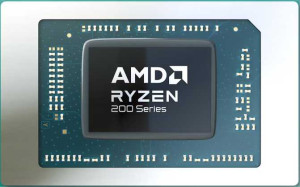
The AMD Ryzen 7 255H is a mid-range processor designed for both laptop and desktop platforms, manufactured using a 4 nm semiconductor process. It ships with 8 cores and 16 threads, a base clock of 3.8 GHz, and a turbo frequency reaching up to 4.9 GHz, making it a versatile option across a range of computing workloads. The chip carries a thermal design power rating of 45W and supports a maximum operating temperature of 100 °C.

On the memory side, the Ryzen 7 255H supports DDR5 RAM at speeds up to 7500 MHz across two channels, with a maximum addressable capacity of 256 GB. Cache configuration includes 8 MB of L2 and 16 MB of L3 cache. The integrated Radeon 780M graphics runs at a base clock of 800 MHz with a turbo of 2600 MHz, supporting up to four displays, DirectX 12, OpenGL 4.6, and OpenCL 2.1, backed by 768 shading units. The processor also supports PCIe 4.0 and a broad set of instruction sets including AVX2, FMA3, AES, and SSE 4.2, with multithreading enabled by default.

Pros
  • Supports DDR5 memory at speeds up to 7500 MHz across two channels, enabling high memory bandwidth
  • Can address up to 256 GB of RAM, accommodating heavily memory-intensive workloads
  • The Radeon 780M integrated graphics supports up to four displays simultaneously and is compatible with DirectX 12, OpenGL 4.6, and OpenCL 2.1
  • A turbo clock speed of 4.9 GHz across 8 cores with 16 threads allows for solid multi-threaded throughput
  • Built on a 4 nm semiconductor process, which contributes to a compact and efficient chip design
  • Compatible with both laptop and desktop platforms, offering deployment flexibility
Cons
  • The clock multiplier is locked, removing the option to adjust clock speeds through that method
  • Does not support ECC memory, limiting its suitability for error-sensitive or mission-critical workloads
  • A 45W TDP may generate meaningful heat in thermally constrained laptop chassis
  • Does not use big.LITTLE heterogeneous core architecture, meaning all cores operate under the same design without differentiated efficiency and performance clusters
Who is this for?

This processor is well-suited for users who need a capable chip across both laptop and desktop form factors, particularly those running multi-threaded workloads that benefit from 8 cores, 16 threads, and a turbo frequency of 4.9 GHz. The Radeon 780M integrated graphics with support for up to four displays and DirectX 12 makes it a reasonable fit for light creative or productivity setups that require multi-monitor configurations without a discrete GPU. Additionally, its support for DDR5 memory at up to 7500 MHz and a maximum of 256 GB RAM makes it appropriate for memory-intensive applications such as data processing, content creation, or virtualization tasks.

Who is this NOT for?

Users who require overclocking capabilities will find this chip limiting, as its multiplier is locked and clock speed tuning through that method is not possible. The absence of ECC memory support makes it a poor fit for error-sensitive or mission-critical computing environments such as scientific computation, financial systems, or server workloads where data integrity is essential. Additionally, users in thermally constrained thin-and-light laptops may encounter challenges managing the 45W TDP, as sustained performance under load could be limited by chassis cooling capacity.

General info:

Type Laptop, Desktop
Has integrated graphics
Thermal Design Power (TDP) 45W
semiconductor size 4 nm
CPU temperature 100 °C
PCI Express (PCIe) version 4
Supports 64-bit

The AMD Ryzen 7 255H is designed for both laptop and desktop platforms, built on a 4 nm semiconductor process that contributes to its compact fabrication. It operates with a Thermal Design Power (TDP) of 45W and can sustain a maximum CPU temperature of 100 °C. The processor supports 64-bit computing, includes integrated graphics, and is compatible with PCIe 4.0, offering a modern connectivity standard for supported components.

Performance:

CPU speed 8 x 3.8 GHz
CPU threads 16 threads
turbo clock speed 4.9GHz
Has an unlocked multiplier
L2 cache 8 MB
L3 cache 16 MB
L2 core 1 MB/core
L3 core 2 MB/core
Uses big.LITTLE technology
clock multiplier 38

The processor features 8 cores running at a base clock of 3.8 GHz, paired with 16 threads for handling concurrent workloads, and a clock multiplier of 38. It can reach a turbo clock speed of 4.9 GHz under load, though the multiplier is locked, meaning clock speed adjustments through that method are not available. The chip does not use big.LITTLE heterogeneous core architecture. On the cache side, it provides 8 MB of L2 cache at 1 MB per core and 16 MB of L3 cache at 2 MB per core, giving the processor a reasonable amount of fast-access memory to support its workload throughput.

Benchmarks:

PassMark result 28797
PassMark result (single) 3556

In PassMark testing, the processor achieves a multi-threaded score of 28,797, reflecting its overall throughput across all cores and threads. Its single-threaded PassMark result of 3,556 indicates the per-core performance level the chip delivers under a single-thread workload.

Integrated graphics:

GPU clock speed 800 MHz
GPU name Radeon 780M
GPU turbo 2600 MHz
DirectX version DirectX 12
supported displays 4
OpenGL version 4.6
OpenCL version 2.1
texture mapping units (TMUs) 48
render output units (ROPs) 32
shading units 768

The integrated Radeon 780M graphics runs at a base clock of 800 MHz and can boost up to a turbo frequency of 2600 MHz. It is equipped with 768 shading units, 48 texture mapping units (TMUs), and 32 render output units (ROPs), and can drive up to 4 displays simultaneously. API support covers DirectX 12, OpenGL 4.6, and OpenCL 2.1, providing a broad range of compatibility for graphics and compute workloads.

Memory:

RAM speed (max) 7500 MHz
DDR memory version 5
memory channels 2
maximum memory amount 256GB
Supports ECC memory

The processor supports DDR5 memory at speeds up to 7500 MHz, operating across two memory channels for bandwidth distribution. It can address a maximum of 256 GB of RAM, providing substantial headroom for memory-intensive workloads. ECC memory is not supported by this processor.

Features:

instruction sets MMX, F16C, FMA3, AES, AVX, AVX2, SSE 4.1, SSE 4.2
uses multithreading
Has NX bit

The processor includes multithreading support and carries the NX bit for hardware-level memory protection. It is compatible with a broad set of instruction sets including MMX, AVX, AVX2, FMA3, AES, F16C, SSE 4.1, and SSE 4.2, covering a wide range of general-purpose, floating-point, encryption, and SIMD processing capabilities.
Final Verdict

The AMD Ryzen 7 255H presents a well-rounded specification profile for users seeking a versatile processor across both laptop and desktop deployments. Its combination of 8 cores, 16 threads, and a turbo frequency of 4.9 GHz paired with DDR5 memory support up to 7500 MHz positions it as a capable option for productivity, content creation, and moderately demanding multi-threaded workloads. The integrated Radeon 780M graphics adds genuine utility for multi-display setups without requiring a discrete GPU, though users with overclocking ambitions or ECC memory requirements will need to look elsewhere. Built on a 4 nm process with a 45W TDP, the chip balances efficiency and output reasonably well, though thermal management remains a consideration in constrained environments. Overall, the Ryzen 7 255H is a competent and flexible processor that suits a broad range of everyday and semi-professional use cases, provided its hardware limitations are accounted for in the target deployment.

Popular Comparisons

AMD Ryzen 7 H 255
AMD Ryzen 7 H 255
VS
AMD Ryzen 7 8745H
AMD Ryzen 7 8745H
AMD Ryzen 7 H 255
AMD Ryzen 7 H 255
VS
AMD Ryzen 7 8845HS
AMD Ryzen 7 8845HS
AMD Ryzen 7 H 255
AMD Ryzen 7 H 255
VS
AMD Ryzen 7 8745HS
AMD Ryzen 7 8745HS
AMD Ryzen 7 H 255
AMD Ryzen 7 H 255
VS
AMD Ryzen 7 8745HX
AMD Ryzen 7 8745HX
AMD Ryzen 7 H 255
AMD Ryzen 7 H 255
VS
AMD Ryzen 5 Pro 7535U
AMD Ryzen 7 H 255
AMD Ryzen 7 H 255
VS
Intel Core Ultra 5 225H
AMD Ryzen 7 H 255
AMD Ryzen 7 H 255
VS
AMD Ryzen AI 9 H 365
AMD Ryzen 7 H 255
AMD Ryzen 7 H 255
VS
AMD Ryzen 9 H 270
AMD Ryzen 9 H 270
AMD Ryzen 7 H 255
AMD Ryzen 7 H 255
VS
AMD Ryzen 9 8945HS
AMD Ryzen 9 8945HS
AMD Ryzen 7 H 255
AMD Ryzen 7 H 255
VS
AMD Ryzen AI 9 HX 370
AMD Ryzen 7 H 255
AMD Ryzen 7 H 255
VS
AMD Ryzen AI 7 H 350