AMD Ryzen 7 Pro 250 specifications and in-depth review

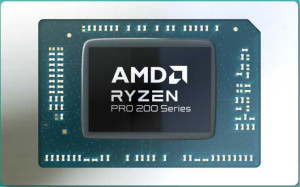
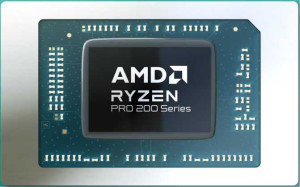
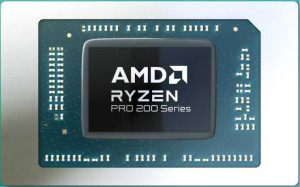
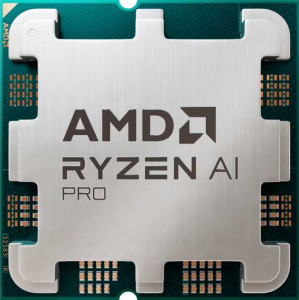
AMD Ryzen 7 Pro 250

Manufacturer: AMD

The AMD Ryzen 7 Pro 250 is a versatile CPU designed for both desktop and laptop systems. It features a base clock speed of 3.3 GHz and can boost up to 5.1 GHz, offering solid performance for a range of applications. With 16 threads, it is well-suited for multitasking and demanding workloads.

In terms of memory, the Ryzen 7 Pro 250 supports up to 256GB of DDR5 RAM with a maximum speed of 7500 MHz. It also includes integrated Radeon 780M graphics with a clock speed of 800 MHz, capable of boosting up to 2700 MHz. The processor supports PCIe 4.0 and operates with a 28W TDP, ensuring efficient power consumption.

Pros
  • Supports up to 256GB of DDR5 RAM with a maximum speed of 7500 MHz, offering high memory capacity and speed for demanding tasks.
  • Integrated Radeon 780M graphics with turbo boost up to 2700 MHz, providing decent graphical performance without needing a dedicated GPU.
  • Supports PCIe 4.0 for faster data transfer, improving overall system performance in compatible devices.
  • Includes multithreading support, which allows for better performance in multitasking and parallel computing applications.
  • Has NX bit support for enhanced security by preventing the execution of certain types of malicious code.
Cons
  • Lacks support for ECC memory, which may be a limitation for applications requiring error-correction capabilities.
  • Does not support big.LITTLE technology, limiting its potential for power efficiency in multi-core workloads.
  • CPU multiplier is locked, preventing users from overclocking the processor for additional performance gains.
Who is this for?

The AMD Ryzen 7 Pro 250 is ideal for users who require efficient multitasking and moderate graphical performance. With 16 threads and support for up to 256GB of DDR5 RAM, it can handle demanding workloads like office applications, content creation, and light gaming. The integrated Radeon 780M graphics make it suitable for systems where a discrete GPU isn't needed, and its PCIe 4.0 support ensures good data transfer speeds for modern applications and workflows.

Who is this NOT for?

This processor may not be suitable for users needing high-end gaming or professional-grade video rendering, as it lacks a dedicated GPU and has limited graphics performance. Additionally, the absence of ECC memory support may make it less reliable for applications requiring data integrity, such as in scientific computing or server environments. The locked CPU multiplier also means overclocking enthusiasts will be limited in performance tuning potential.

General info:

Type Desktop, Laptop
Has integrated graphics
release date January 2025
Thermal Design Power (TDP) 28W
semiconductor size 4 nm
CPU temperature 100 °C
PCI Express (PCIe) version 4
Supports 64-bit

The AMD Ryzen 7 Pro 250 is designed for both desktop and laptop systems, offering a 4 nm semiconductor size for efficient performance. It features integrated graphics and supports PCIe 4.0 for fast data transfer. With a thermal design power (TDP) of just 28W, it ensures lower power consumption while maintaining solid performance. Additionally, this processor supports 64-bit architecture for enhanced compatibility with modern applications.

Performance:

CPU speed 8 x 3.3 GHz
CPU threads 16 threads
turbo clock speed 5.1GHz
Has an unlocked multiplier
L2 cache 8 MB
L3 cache 16 MB
L1 cache 512 KB
L2 core 1 MB/core
L3 core 2 MB/core
Uses big.LITTLE technology
clock multiplier 33

The AMD Ryzen 7 Pro 250 delivers solid performance with a base CPU speed of 8 x 3.3 GHz and the ability to boost up to 5.1 GHz. It features 16 threads for efficient multitasking and processing. The processor also includes an L2 cache of 8 MB and an L3 cache of 16 MB, optimizing data access and speed. However, it does not support big.LITTLE technology, nor does it have an unlocked multiplier for overclocking.

Benchmarks:

PassMark result 23279
PassMark result (single) 3795

The AMD Ryzen 7 Pro 250 achieves a PassMark result of 23279, indicating solid overall performance. Its single-threaded PassMark score is 3795, reflecting its ability to handle individual tasks effectively, making it suitable for a range of applications.

Integrated graphics:

GPU clock speed 800 MHz
GPU name Radeon 780M
GPU turbo 2700 MHz
DirectX version DirectX 12
supported displays 4
OpenGL version 4.6
OpenCL version 2.1
texture mapping units (TMUs) 48
render output units (ROPs) 32
shading units 768

The AMD Ryzen 7 Pro 250 features integrated Radeon 780M graphics with a base GPU clock speed of 800 MHz, which can turbo boost up to 2700 MHz. It supports up to 4 displays and is compatible with DirectX 12, OpenGL 4.6, and OpenCL 2.1. With 768 shading units and 48 texture mapping units (TMUs), it delivers decent graphical performance for integrated solutions.

Memory:

RAM speed (max) 7500 MHz
DDR memory version 5
memory channels 2
maximum memory amount 256GB
Supports ECC memory

The AMD Ryzen 7 Pro 250 supports DDR5 memory, with a maximum RAM speed of 7500 MHz and a maximum memory capacity of 256GB. It utilizes two memory channels to optimize data transfer and performance. However, it does not support ECC memory, making it less suitable for applications that require error-correction capabilities.

Features:

instruction sets MMX, F16C, FMA3, AES, AVX, AVX2, SSE 4.1, SSE 4.2
uses multithreading
Has NX bit

The AMD Ryzen 7 Pro 250 processor supports a variety of instruction sets, including MMX, AVX, and SSE 4.2, enabling compatibility with a wide range of applications. It also supports multithreading, enhancing performance in tasks that benefit from concurrent execution. Additionally, the processor includes the NX bit feature for improved security by preventing the execution of code in certain memory regions.

Final Verdict

The AMD Ryzen 7 Pro 250 is a solid processor for users seeking strong multitasking capabilities and moderate graphical performance. With 16 threads and support for up to 256GB of DDR5 RAM, it is well-suited for office productivity, content creation, and light gaming. Its integrated Radeon 780M graphics and PCIe 4.0 support provide additional value for systems without dedicated GPUs. While it lacks ECC memory support and overclocking potential, it remains a reliable choice for general computing needs where security and multitasking efficiency are key priorities.

Popular Comparisons

AMD Ryzen 7 Pro 250
AMD Ryzen 7 Pro 250
VS
AMD Ryzen 3 210
AMD Ryzen 3 210
AMD Ryzen 7 Pro 250
AMD Ryzen 7 Pro 250
VS
AMD Ryzen 5 Pro 220
AMD Ryzen 5 Pro 220
AMD Ryzen 7 Pro 250
AMD Ryzen 7 Pro 250
VS
AMD Ryzen 7 9700X
AMD Ryzen 7 9700X
AMD Ryzen 7 Pro 250
AMD Ryzen 7 Pro 250
VS
AMD Ryzen 5 Pro 215
AMD Ryzen 5 Pro 215
AMD Ryzen 7 Pro 250
AMD Ryzen 7 Pro 250
VS
AMD Ryzen 5 8640HS
AMD Ryzen 5 8640HS
AMD Ryzen 7 Pro 250
AMD Ryzen 7 Pro 250
VS
Intel Core Ultra 7 155U
AMD Ryzen 7 Pro 250
AMD Ryzen 7 Pro 250
VS
AMD Ryzen AI 7 350
AMD Ryzen AI 7 350
AMD Ryzen 7 Pro 250
AMD Ryzen 7 Pro 250
VS
AMD Ryzen AI 7 Pro 360
AMD Ryzen 7 Pro 250
AMD Ryzen 7 Pro 250
VS
Intel Core Ultra 5 235H
AMD Ryzen 7 Pro 250
AMD Ryzen 7 Pro 250
VS
Intel Core Ultra 7 255H
AMD Ryzen 7 Pro 250
AMD Ryzen 7 Pro 250
VS
Intel Core Ultra 7 255U
AMD Ryzen 7 Pro 250
AMD Ryzen 7 Pro 250
VS
AMD Ryzen AI Max Pro 385
AMD Ryzen 7 Pro 250
AMD Ryzen 7 Pro 250
VS
Intel Core i9-14901TE
AMD Ryzen 7 Pro 250
AMD Ryzen 7 Pro 250
VS
AMD Ryzen AI 5 330
AMD Ryzen AI 5 330
AMD Ryzen 7 Pro 250
AMD Ryzen 7 Pro 250
VS
AMD Ryzen AI 7 Pro 350
AMD Ryzen 7 Pro 250
AMD Ryzen 7 Pro 250
VS
Intel Core Ultra 7 258V
AMD Ryzen 7 Pro 250
AMD Ryzen 7 Pro 250
VS
Intel Core Ultra 7 268V
AMD Ryzen 7 Pro 250
AMD Ryzen 7 Pro 250
VS
Intel Core 5 210H
Intel Core 5 210H
AMD Ryzen 7 Pro 250
AMD Ryzen 7 Pro 250
VS
Intel Core Ultra 5 125H
AMD Ryzen 7 Pro 250
AMD Ryzen 7 Pro 250
VS
Intel Core 7 150U
Intel Core 7 150U