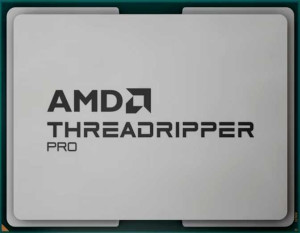
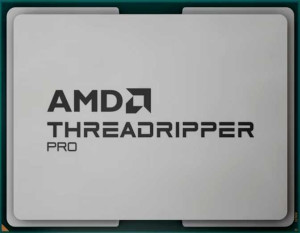
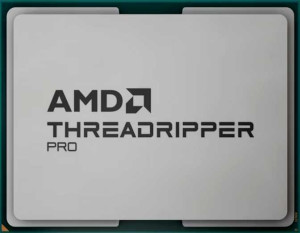
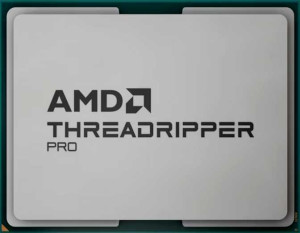
AMD Ryzen 9 9950X3D specifications and in-depth review

AMD Ryzen 9 9950X3D

Manufacturer: AMD

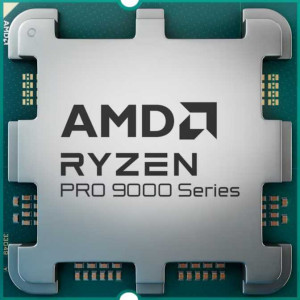
The AMD Ryzen 9 9950X3D is a desktop processor built around the AM5 socket, designed to deliver substantial multi-threaded throughput across demanding workloads. With 16 cores and 32 threads, it operates at a base clock of 4.3 GHz per core and can reach a turbo frequency of 5.7 GHz. The chip includes an unlocked multiplier, giving users direct control over clock speed adjustments. Fabricated on a 4nm process node, it packs roughly 70.9 billion transistors into its die and carries a rated TDP of 170W, with a maximum junction temperature of 95°C.

On the memory side, the Ryzen 9 9950X3D supports DDR5 RAM at speeds up to 5600 MHz across two channels, with a maximum addressable capacity of 192GB and optional ECC support. Its cache hierarchy consists of 1280KB of L1, 16MB of L2 at 1MB per core, and a substantial 128MB of L3 at 8MB per core. The processor connects to the platform via PCIe 5.0 and is compatible with X670, B650, and X870 chipsets. It also integrates graphics with a GPU turbo of 2200 MHz and supports instruction sets including AVX2, FMA3, AES, and SSE 4.2, alongside full 64-bit and multithreading capabilities.

Pros
  • Supports DDR5 memory at up to 5600 MHz with a maximum capacity of 192GB, accommodating memory-intensive workloads
  • The 128MB of L3 cache across 16 cores provides a large on-chip memory pool that can reduce latency in data-heavy tasks
  • An unlocked multiplier gives users direct control over clock frequency adjustments without additional workarounds
  • ECC memory support adds a layer of data integrity protection useful in reliability-sensitive environments
  • Integrated graphics with a 2200 MHz GPU turbo frequency means the platform can output display signal without a discrete GPU
  • PCIe 5.0 connectivity enables compatibility with the latest high-bandwidth expansion hardware
Cons
  • A 170W TDP places substantial demands on cooling solutions, requiring robust thermal management to sustain peak operation
  • The 32-thread design does not use big.LITTLE technology, meaning there is no distinction between efficiency and performance cores for background task optimization
  • With a maximum junction temperature of 95°C, sustained heavy loads require careful attention to airflow and cooler capacity
Who is this for?

This processor is well-suited to users running heavily multi-threaded workloads such as video encoding, 3D rendering, or large-scale data processing, where its 16 cores, 32 threads, and 128MB of L3 cache can be fully utilized. The support for ECC memory and up to 192GB of DDR5 RAM makes it a strong fit for workstation environments where memory capacity and data integrity are critical requirements. Users who want fine-grained control over system tuning will also benefit from the unlocked multiplier, while the PCIe 5.0 interface accommodates high-bandwidth storage and expansion needs on compatible X670, B650, or X870 platforms.

Who is this NOT for?

Users with modest computing needs — such as basic web browsing, document editing, or light media consumption — would find little practical benefit from the capabilities this chip is built around, as the 170W TDP demands a substantial cooling and power delivery setup that goes well beyond what simpler use cases justify. It is also a poor fit for those working within thermally constrained or small form factor builds, where sustaining the processor near its 95°C maximum junction temperature without adequate airflow becomes a real concern. Additionally, users seeking a processor with distinct efficiency cores for optimized background task handling will find this chip's uniform core architecture without big.LITTLE technology less adaptable to mixed-load scenarios that benefit from heterogeneous core designs.

General info:

Type Desktop
CPU socket AM5
chipset X670, B650, X870
Has integrated graphics
Thermal Design Power (TDP) 170W
semiconductor size 4 nm
CPU temperature 95 °C
PCI Express (PCIe) version 5
number of transistors 70913 million
Supports 64-bit

The AMD Ryzen 9 9950X3D is a desktop processor built for the AM5 socket, compatible with X670, B650, and X870 chipsets. It is fabricated on a 4nm process node and integrates approximately 70,913 million transistors, reflecting a dense and modern die design. The chip carries a Thermal Design Power rating of 170W and operates within a maximum temperature threshold of 95°C. It includes integrated graphics, supports 64-bit computing, and connects to the platform through PCIe 5.0.

Performance:

CPU speed 16 x 4.3 GHz
CPU threads 32 threads
turbo clock speed 5.7GHz
Has an unlocked multiplier
L2 cache 16 MB
L3 cache 128 MB
L1 cache 1280 KB
L2 core 1 MB/core
L3 core 8 MB/core
Uses big.LITTLE technology
clock multiplier 43

The processor runs 16 cores at a base speed of 4.3 GHz each, supporting 32 threads in total, and can reach a turbo clock speed of 5.7 GHz under load. It does not use big.LITTLE technology, meaning all cores share a uniform architecture. The chip features an unlocked multiplier with a clock multiplier value of 43, allowing for manual frequency adjustments. Its cache structure consists of 1280 KB of L1, 16 MB of L2 at 1 MB per core, and 128 MB of L3 cache at 8 MB per core, providing a substantial amount of fast on-chip memory across the core complex.

Benchmarks:

PassMark result 70250
PassMark result (single) 4737
Geekbench 6 result (multi) 22526
Geekbench 6 result (single) 3402

In standardized benchmark testing, the processor achieves a PassMark multi-threaded score of 70,250 alongside a single-threaded PassMark result of 4,737, reflecting its per-core responsiveness under lighter workloads. On the Geekbench 6 platform, it records a multi-core score of 22,526 and a single-core score of 3,402, providing a broader view of its performance across both parallel and sequential tasks.

Integrated graphics:

GPU turbo 2200 MHz

The integrated graphics unit supports a GPU turbo frequency of 2200 MHz, representing the maximum boost speed the on-chip graphics can reach under suitable conditions.

Memory:

RAM speed (max) 5600 MHz
DDR memory version 5
memory channels 2
maximum memory amount 192GB
Supports ECC memory

The processor supports DDR5 memory running at speeds of up to 5600 MHz across two channels, offering a solid bandwidth foundation for memory-intensive tasks. It can address a maximum of 192GB of RAM, making it suitable for configurations that require large working memory pools. Additionally, the platform supports ECC memory, which enables error detection and correction for use cases where data integrity is a priority.

Features:

instruction sets MMX, F16C, FMA3, AES, AVX, AVX2, SSE 4.1, SSE 4.2
uses multithreading
Has NX bit

The processor supports a broad set of instruction sets including MMX, F16C, FMA3, AES, AVX, AVX2, SSE 4.1, and SSE 4.2, enabling hardware-level acceleration for a range of computational tasks such as floating-point operations, encryption, and vectorized data processing. It also features multithreading, allowing each physical core to handle two threads simultaneously for improved throughput across parallel workloads. Additionally, the chip includes an NX bit, which provides a hardware-based layer of protection against certain types of malicious code execution.


Final Verdict

The AMD Ryzen 9 9950X3D is a desktop processor built around a clear set of priorities: high core count, extensive cache capacity, and a capable memory subsystem. Its 16 cores paired with 128MB of L3 cache and DDR5 support up to 192GB make it a well-rounded option for workstation-class tasks where sustained throughput and data access speed matter. The unlocked multiplier and PCIe 5.0 connectivity add meaningful flexibility for users who want to tune their system or take advantage of the latest platform hardware. That said, its 170W thermal envelope and the absence of heterogeneous core architecture mean it demands thoughtful system planning and is best directed at users with genuinely demanding, parallel-heavy workflows. For those operating in that space, the Ryzen 9 9950X3D represents a technically cohesive and well-specified option within the AM5 ecosystem.

Popular Comparisons

AMD Ryzen 9 9950X3D
AMD Ryzen 9 9950X3D
VS
AMD Ryzen 9 9900X3D
AMD Ryzen 9 9900X3D
AMD Ryzen 9 9950X3D
AMD Ryzen 9 9950X3D
VS
AMD Ryzen 7 9800X3D
AMD Ryzen 7 9800X3D
AMD Ryzen 9 9950X3D
AMD Ryzen 9 9950X3D
VS
AMD Ryzen 9 9950X
AMD Ryzen 9 9950X
AMD Ryzen 9 9950X3D
AMD Ryzen 9 9950X3D
VS
AMD Ryzen 9 9900X
AMD Ryzen 9 9900X
AMD Ryzen 9 9950X3D
AMD Ryzen 9 9950X3D
VS
AMD Ryzen 7 9700F
AMD Ryzen 7 9700F
AMD Ryzen 9 9950X3D
AMD Ryzen 9 9950X3D
VS
AMD Ryzen Threadripper 9960X
AMD Ryzen 9 9950X3D
AMD Ryzen 9 9950X3D
VS
AMD Ryzen Threadripper 9970X
AMD Ryzen 9 9950X3D
AMD Ryzen 9 9950X3D
VS
AMD Ryzen Threadripper 9980X
AMD Ryzen 9 9950X3D
AMD Ryzen 9 9950X3D
VS
AMD Ryzen Threadripper Pro 9965WX
AMD Ryzen 9 9950X3D
AMD Ryzen 9 9950X3D
VS
AMD Ryzen Threadripper Pro 9955WX
AMD Ryzen 9 9950X3D
AMD Ryzen 9 9950X3D
VS
AMD Ryzen Threadripper Pro 9945WX
AMD Ryzen 9 9950X3D
AMD Ryzen 9 9950X3D
VS
AMD Ryzen Threadripper Pro 9995WX
AMD Ryzen 9 9950X3D
AMD Ryzen 9 9950X3D
VS
Apple M3 Ultra (32-core CPU / 80-core GPU)
AMD Ryzen 9 9950X3D
AMD Ryzen 9 9950X3D
VS
Intel Core Ultra 9 285K
AMD Ryzen 9 9950X3D
AMD Ryzen 9 9950X3D
VS
Intel Core i9-14900K
AMD Ryzen 9 9950X3D
AMD Ryzen 9 9950X3D
VS
Intel Core Ultra 9 275HX
AMD Ryzen 9 9950X3D
AMD Ryzen 9 9950X3D
VS
Intel Core i9-14900KS
AMD Ryzen 9 9950X3D
AMD Ryzen 9 9950X3D
VS
Intel Core i7-14700K
AMD Ryzen 9 9950X3D
AMD Ryzen 9 9950X3D
VS
AMD Ryzen AI Max Plus Pro 395
AMD Ryzen 9 9950X3D
AMD Ryzen 9 9950X3D
VS
Intel Core Ultra 9 285HX
AMD Ryzen 9 9950X3D
AMD Ryzen 9 9950X3D
VS
Apple M4 Max (16-core CPU / 40-core GPU)
AMD Ryzen 9 9950X3D
AMD Ryzen 9 9950X3D
VS
Apple M4 Max (14-core CPU / 32-core GPU)
AMD Ryzen 9 9950X3D
AMD Ryzen 9 9950X3D
VS
Apple M4 (8-core CPU)
AMD Ryzen 9 9950X3D
AMD Ryzen 9 9950X3D
VS
AMD Ryzen Threadripper 7970X
AMD Ryzen 9 9950X3D
AMD Ryzen 9 9950X3D
VS
AMD Ryzen AI Max Plus 395
AMD Ryzen 9 9950X3D
AMD Ryzen 9 9950X3D
VS
Apple M5
Apple M5
AMD Ryzen 9 9950X3D
AMD Ryzen 9 9950X3D
VS
AMD Ryzen 9 9955HX3D
AMD Ryzen 9 9950X3D
AMD Ryzen 9 9950X3D
VS
Apple M4 Pro (14-core CPU / 20-core GPU)
AMD Ryzen 9 9950X3D
AMD Ryzen 9 9950X3D
VS
AMD Ryzen Threadripper 7960X