AMD Ryzen AI 7 445 specifications and in-depth review

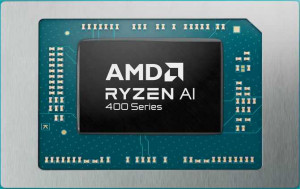
AMD Ryzen AI 7 445

Manufacturer: AMD

The AMD Ryzen AI 7 445 is a processor designed for both desktop and laptop platforms, combining a compact 4nm fabrication process with a hybrid core architecture that leverages big.LITTLE technology for varied workload handling. With a 28W thermal design power, it strikes a balance between performance headroom and power efficiency, making it a practical consideration across a range of computing form factors.

On the performance side, the chip reaches a turbo clock speed of 4.6GHz across its 12 threads and supports DDR5 memory at speeds up to 8000MHz with a maximum capacity of 256GB across two channels. The integrated Radeon 840M GPU supports up to four displays simultaneously and is compatible with DirectX 12 and OpenGL 4.6. The processor also includes a broad instruction set covering AVX2, AES, FMA3, and others, alongside PCIe 4.0 support for peripheral connectivity.

Pros
  • Supports DDR5 memory at speeds up to 8000 MHz, allowing for fast data throughput in compatible systems
  • Can address up to 256GB of RAM across two channels, providing substantial headroom for memory-intensive workloads
  • The integrated Radeon 840M GPU supports up to four simultaneous displays, useful for multi-monitor setups without a discrete card
  • big.LITTLE architecture allows the processor to distribute tasks across different core types, adapting to varied workload demands
  • Broad instruction set coverage including AVX2, AES, and FMA3 enables acceleration across a range of compute and encryption tasks
  • Compatible with both desktop and laptop platforms, offering flexibility across different system configurations
Cons
  • The multiplier is locked, so there is no option to adjust clock speeds through overclocking
  • Does not support ECC memory, limiting suitability for applications that require error-correcting RAM
  • With only 8MB of L3 cache, demanding tasks that benefit from larger cache pools may see reduced efficiency
  • A 28W TDP, while efficient, may constrain sustained peak performance under prolonged heavy workloads
Who is this for?

This processor suits users who need a versatile chip that works across both desktop and laptop builds, particularly those who value integrated multi-display support through the Radeon 840M without relying on a discrete GPU. The combination of DDR5 compatibility at up to 8000 MHz and a 256GB maximum memory ceiling makes it a reasonable fit for professionals running memory-intensive applications such as data processing or content workflows. Its big.LITTLE architecture and 28W TDP also make it well-suited for thin-and-light laptop designs where balancing responsiveness with power efficiency is a priority.

Who is this NOT for?

Users looking to push clock speeds beyond factory settings will find this chip limiting, as the locked multiplier rules out any overclocking flexibility. The 8MB L3 cache may also prove insufficient for workloads that are highly cache-sensitive, such as certain simulation or rendering pipelines where larger cache pools make a meaningful difference. Additionally, the absence of ECC memory support makes this processor unsuitable for environments that demand data integrity under continuous operation, such as server deployments or mission-critical computing tasks.

General info:

Type Desktop, Laptop
Has integrated graphics
Thermal Design Power (TDP) 28W
semiconductor size 4 nm
CPU temperature 100 °C
PCI Express (PCIe) version 4
Supports 64-bit

The AMD Ryzen AI 7 445 is designed for both desktop and laptop platforms and is built on a 4nm semiconductor process, which contributes to its relatively modest 28W thermal design power. It supports 64-bit computing and includes integrated graphics, while its maximum rated operating temperature sits at 100°C. Connectivity is handled through PCIe 4.0, covering modern peripheral and storage interface requirements.

Performance:

CPU speed 2 x 2 & 4 x 2 GHz
CPU threads 12 threads
turbo clock speed 4.6GHz
Has an unlocked multiplier
L2 cache 6 MB
L3 cache 8 MB
Uses big.LITTLE technology

The processor operates across multiple core configurations with a base CPU speed of 2 x 2 and 4 x 2 GHz, employing big.LITTLE technology to distribute workloads across different core types, and can reach a turbo clock speed of 4.6GHz when conditions allow. It offers 12 threads in total, supporting parallel task handling across its core layout. Cache resources include 6MB of L2 and 8MB of L3 cache, providing tiered memory access to help sustain throughput. The multiplier is locked, meaning clock speed adjustments through overclocking are not supported.

Benchmarks:

Integrated graphics:

GPU name Radeon 840M
GPU turbo 2900 MHz
DirectX version DirectX 12
supported displays 4
OpenGL version 4.6
OpenCL version 2.1

The integrated graphics solution is the Radeon 840M, which reaches a turbo frequency of 2900 MHz and can drive up to 4 displays simultaneously. It supports DirectX 12 for modern graphics workloads, alongside OpenGL 4.6 and OpenCL 2.1, the latter enabling general-purpose compute tasks to be offloaded to the GPU where applicable.

Memory:

RAM speed (max) 8000 MHz
DDR memory version 5
memory channels 2
maximum memory amount 256GB
Supports ECC memory

The processor supports DDR5 memory running at speeds up to 8000 MHz across two memory channels, with a maximum addressable capacity of 256GB. ECC memory is not supported, so the configuration is oriented toward standard consumer and mainstream workstation use rather than error-correcting applications.

Features:

instruction sets MMX, F16C, FMA3, AES, AVX, AVX2, SSE 4.1, SSE 4.2
uses multithreading
Has NX bit

The processor includes multithreading support and carries the NX bit for hardware-level memory protection against certain classes of malicious code execution. Its instruction set support spans MMX, SSE 4.1, SSE 4.2, AES, F16C, FMA3, AVX, and AVX2, covering a broad range of compute, encryption, and floating-point acceleration capabilities across compatible software workloads.
Final Verdict

The AMD Ryzen AI 7 445 presents a well-rounded specification set for users seeking a dual-platform processor that covers both desktop and laptop deployments without compromise. Its DDR5 support at up to 8000 MHz paired with a 256GB memory ceiling gives it meaningful headroom for demanding workloads, while the Radeon 840M integration with four-display output adds practical versatility for users who do not require discrete graphics. The locked multiplier and modest L3 cache do place a ceiling on its appeal for performance-focused or cache-intensive use cases, and the absence of ECC support narrows its viability in reliability-critical environments. That said, for mainstream professional and productivity-oriented builds where power efficiency, broad instruction set coverage, and multi-display flexibility are the primary considerations, the Ryzen AI 7 445 is a technically coherent and well-defined choice.