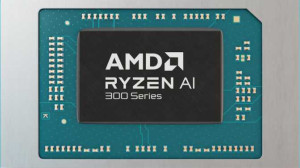
AMD Ryzen AI 9 HX 370 specifications and in-depth review

AMD Ryzen AI 9 HX 370

Manufacturer: AMD

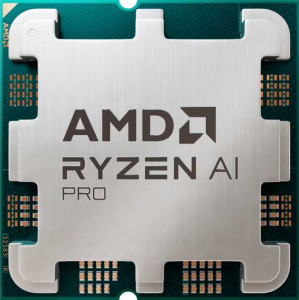
The AMD Ryzen AI 9 HX 370 is a 12-core, 24-thread processor built on a 4 nm process node and rated for both laptop and desktop platforms. It operates with a base clock of 2 GHz per core and a turbo frequency of 5.1 GHz, all within a 28W TDP — a figure that reflects its orientation toward efficiency-conscious builds. The processor includes integrated Radeon 890M graphics, making it a self-contained solution for systems that do not require a discrete GPU.

The Radeon 890M features 16 execution units, 1,024 shading units, 64 texture mapping units, and 32 render output units, with a base GPU clock of 800 MHz boosting to 2,900 MHz. It supports DirectX 12, OpenGL 4.6, OpenCL 2.1, and up to four simultaneous displays. On the memory side, the processor works with DDR5 RAM at up to 7,500 MHz across two channels, with a maximum capacity of 256GB, though ECC memory is not supported. Cache totals 12 MB of L2 and 24 MB of L3, and the chip supports a full suite of instruction set extensions including AVX2, AES, and FMA3, along with NX bit and multithreading. The multiplier is locked and the chip connects via PCIe 4.0.

Pros
  • The integrated Radeon 890M with 1,024 shading units and a 2,900 MHz turbo clock removes the need for a discrete GPU in systems where integrated graphics are sufficient
  • DDR5 memory support at up to 7,500 MHz across two channels enables fast memory bandwidth for data-intensive workloads
  • A 5.1 GHz turbo frequency delivers strong single-threaded responsiveness within a 28W thermal envelope
  • Support for up to 256GB of RAM provides substantial headroom for memory-intensive professional workloads
  • The Radeon 890M supports up to four simultaneous displays, making it viable for multi-monitor setups without a dedicated graphics card
  • A broad instruction set including AVX2, AES, and FMA3 supports vectorized, encrypted, and floating-point compute workloads natively
Cons
  • The clock multiplier is locked, so manual overclocking is not an option
  • ECC memory is not supported, limiting the platform for use cases where memory error correction is a hard requirement
  • With 24 MB of L3 cache spread across 12 cores at 2 MB per core, cache-sensitive workloads may encounter more memory traffic compared to chips with larger per-core L3 allocations
  • The PassMark single-core score of 3,872 reflects moderate single-threaded throughput for tasks that are not well-parallelized
Who is this for?

The AMD Ryzen AI 9 HX 370 is well-suited to users who need a compact, thermally efficient processor capable of handling multi-threaded workloads without a discrete GPU. Its integrated Radeon 890M with support for four simultaneous displays makes it a practical fit for productivity-focused laptop and desktop builds where a self-contained graphics solution is desirable. The combination of a 5.1 GHz turbo clock and DDR5 memory at up to 7,500 MHz serves users who run data-intensive or mixed workloads that benefit from both fast per-core responsiveness and high memory bandwidth. The platform also suits those who need large memory configurations, given the 256GB capacity ceiling across its dual-channel DDR5 interface.

Who is this NOT for?

This processor is less suited to users who require ECC memory support, as the platform does not offer error-correcting memory, which rules it out for workloads where data integrity under sustained load is a firm requirement. The locked clock multiplier makes it a poor match for enthusiast users who want to push clock frequencies beyond the factory-set turbo limit. Additionally, users running workloads that are highly cache-sensitive may find the 24 MB of L3 cache at 2 MB per core somewhat constrained, as cache-heavy tasks could generate increased memory traffic compared to configurations with more generous per-core L3 allocations.

General info:

Type Laptop, Desktop
Has integrated graphics
Thermal Design Power (TDP) 28W
semiconductor size 4 nm
CPU temperature 100 °C
PCI Express (PCIe) version 4
Supports 64-bit

The AMD Ryzen AI 9 HX 370 is designed for both laptop and desktop platforms, built on a 4 nm process node with a thermal design power of 28W and a maximum junction temperature of 100 °C. It includes integrated graphics, supports 64-bit computing, and connects via PCIe 4.0.

Performance:

CPU speed 12 x 2 GHz
CPU threads 24 threads
turbo clock speed 5.1GHz
Has an unlocked multiplier
L2 cache 12 MB
L3 cache 24 MB
L2 core 1 MB/core
L3 core 2 MB/core
Uses big.LITTLE technology
clock multiplier 20

The processor runs 12 cores at a base frequency of 2 GHz each, supporting 24 threads through simultaneous multithreading, and can boost up to a turbo clock of 5.1 GHz. The clock multiplier is set at 20 and is locked, so manual overclocking is not available. Cache consists of 12 MB of L2 at 1 MB per core and 24 MB of L3 at 2 MB per core. The chip does not use big.LITTLE heterogeneous core architecture, meaning all cores share a uniform configuration.

Benchmarks:

PassMark result 35142
PassMark result (single) 3872
Geekbench 6 result (multi) 13283
Geekbench 6 result (single) 2593

In standardized testing, the processor recorded a PassMark multi-core score of 35,142 and a single-core score of 3,872. Geekbench 6 results show a multi-core score of 13,283 and a single-core score of 2,593, reflecting the chip's balance between sustained multi-threaded throughput and single-core responsiveness within its 28W thermal envelope.

Integrated graphics:

GPU clock speed 800 MHz
GPU name Radeon 890M
GPU turbo 2900 MHz
GPU execution units 16
DirectX version DirectX 12
supported displays 4
OpenGL version 4.6
OpenCL version 2.1
texture mapping units (TMUs) 64
render output units (ROPs) 32
shading units 1024

The integrated Radeon 890M GPU runs at a base clock of 800 MHz and boosts up to 2,900 MHz across 16 execution units. It includes 1,024 shading units, 64 texture mapping units, and 32 render output units, and can drive up to four simultaneous displays. API support covers DirectX 12, OpenGL 4.6, and OpenCL 2.1, giving it a broad compatibility footprint for general computing, display output, and GPU-accelerated workloads.

Memory:

RAM speed (max) 7500 MHz
DDR memory version 5
memory channels 2
maximum memory amount 256GB
Supports ECC memory

The processor supports DDR5 memory across two channels, with a maximum RAM speed of 7,500 MHz and a capacity ceiling of 256GB. ECC memory is not supported on this platform.

Features:

instruction sets MMX, F16C, FMA3, AES, AVX, AVX2, SSE 4.1, SSE 4.2
uses multithreading
Has NX bit

The processor supports multithreading and includes the NX bit for hardware-enforced memory protection against certain classes of exploits. Its instruction set extensions span a broad range of compute capabilities, including AVX2, AES, and FMA3, alongside MMX, F16C, AVX, SSE 4.1, and SSE 4.2, covering vectorized operations, hardware-accelerated encryption, and extended floating-point math.
Final Verdict

The AMD Ryzen AI 9 HX 370 is a well-rounded processor that strikes a practical balance between thermal efficiency and multi-threaded capability, making it a coherent choice for laptop and desktop builds that need to do a lot without relying on dedicated graphics. The integrated Radeon 890M with a 5.1 GHz turbo clock and DDR5 memory support at up to 7,500 MHz gives the platform genuine versatility across productivity, display-rich, and compute-oriented workloads, all within a 28W envelope. Its limitations — a locked multiplier, no ECC support, and a modest per-core L3 cache allocation — mean it is not the right fit for every use case, but for users whose needs align with an efficient, self-contained multi-core platform, the Ryzen AI 9 HX 370 delivers a technically cohesive and capable solution.
Popular Comparisons

AMD Ryzen AI 9 HX 370
VS
AMD Ryzen 7 8745H
AMD Ryzen 7 8745H
AMD Ryzen AI 9 HX 370
VS
AMD Ryzen 7 8840HX
AMD Ryzen 7 8840HX
AMD Ryzen AI 9 HX 370
VS
AMD Ryzen 9 9955HX
AMD Ryzen 9 9955HX
AMD Ryzen AI 9 HX 370
VS
AMD Ryzen 9 9955HX3D
AMD Ryzen AI 9 HX 370
VS
AMD Ryzen AI 7 Pro 360
AMD Ryzen AI 9 HX 370
VS
AMD Ryzen AI 7 350
AMD Ryzen AI 7 350
AMD Ryzen AI 9 HX 370
VS
AMD Ryzen 7 8840U
AMD Ryzen 7 8840U
AMD Ryzen AI 9 HX 370
VS
AMD Ryzen 9 7940HX
AMD Ryzen 9 7940HX
AMD Ryzen AI 9 HX 370
VS
AMD Ryzen 9 8945HS
AMD Ryzen 9 8945HS
AMD Ryzen AI 9 HX 370
VS
AMD Ryzen 9 8945H
AMD Ryzen 9 8945H
AMD Ryzen AI 9 HX 370
VS
AMD Ryzen 7 H 255
AMD Ryzen 7 H 255
AMD Ryzen AI 9 HX 370
VS
AMD Ryzen 7 H 260
AMD Ryzen 7 H 260
AMD Ryzen AI 9 HX 370
VS
AMD Ryzen AI 9 H 365
AMD Ryzen AI 9 HX 370
VS
AMD Ryzen 9 8945HX
AMD Ryzen 9 8945HX
AMD Ryzen AI 9 HX 370
VS
AMD Ryzen 9 8940HX
AMD Ryzen 9 8940HX
AMD Ryzen AI 9 HX 370
VS
AMD Ryzen AI 9 365
AMD Ryzen AI 9 365
AMD Ryzen AI 9 HX 370
VS
AMD Ryzen 7 Pro 8840HS
AMD Ryzen AI 9 HX 370
VS
AMD Ryzen 9 7945HX3D
AMD Ryzen AI 9 HX 370
VS
AMD Ryzen 7 Pro 7840U
AMD Ryzen AI 9 HX 370
VS
AMD Ryzen AI Z2 Extreme
AMD Ryzen AI 9 HX 370
VS
AMD Ryzen AI Max Pro 380
AMD Ryzen AI 9 HX 370
VS
AMD Ryzen AI Max Plus Pro 395
AMD Ryzen AI 9 HX 370
VS
AMD Ryzen Z2 Extreme
AMD Ryzen AI 9 HX 370
VS
Intel Core Ultra 7 265HX
AMD Ryzen AI 9 HX 370
VS
Intel Core Ultra 7 255HX
AMD Ryzen AI 9 HX 370
VS
Intel Core Ultra 9 285HX
AMD Ryzen AI 9 HX 370
VS
Apple M4 Pro (12-core CPU / 16-core GPU)
AMD Ryzen AI 9 HX 370
VS
AMD Ryzen AI 9 HX 375
AMD Ryzen AI 9 HX 370
VS
AMD Ryzen AI 9 HX Pro 375
AMD Ryzen AI 9 HX 370
VS
Intel Core i9-14900HX
AMD Ryzen AI 9 HX 370
VS
Intel Core Ultra 9 185H
AMD Ryzen AI 9 HX 370
VS
AMD Ryzen AI Max Plus 395
AMD Ryzen AI 9 HX 370
VS
Intel Core Ultra 9 275HX
AMD Ryzen AI 9 HX 370
VS
Intel N250
Intel N250
AMD Ryzen AI 9 HX 370
VS
AMD Ryzen AI Max 390
AMD Ryzen AI 9 HX 370
VS
Apple M3 (8-core CPU / 10-core GPU)
AMD Ryzen AI 9 HX 370
VS
AMD Ryzen AI Max 385
AMD Ryzen AI 9 HX 370
VS
Intel Core Ultra 9 285H
AMD Ryzen AI 9 HX 370
VS
Intel Core Ultra 5 235H
AMD Ryzen AI 9 HX 370
VS
AMD Ryzen AI 9 HX Pro 370
AMD Ryzen AI 9 HX 370
VS
Intel Core Ultra 7 266V
AMD Ryzen AI 9 HX 370
VS
Intel Core i7-14650HX
AMD Ryzen AI 9 HX 370
VS
Intel Core i7-14700HX
AMD Ryzen AI 9 HX 370
VS
AMD Ryzen Z1 Extreme
AMD Ryzen AI 9 HX 370
VS
Apple M2 Ultra (76-core GPU)