AMD Ryzen AI 9 HX Pro 475 specifications and in-depth review

AMD Ryzen AI 9 HX Pro 475

Manufacturer: AMD

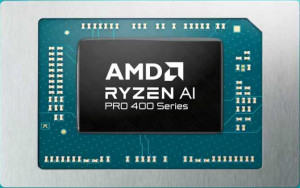
The AMD Ryzen AI 9 HX Pro 475 is a processor designed for both laptop and desktop platforms, combining a compact 4nm semiconductor process with a hybrid core architecture that leverages big.LITTLE technology. It operates with a base configuration of 4 cores at 2GHz and 8 cores at 2GHz, scaling up to a 5.2GHz turbo clock speed across its 24 threads, making it a versatile option for multithreaded workloads.

On the memory side, the Ryzen AI 9 HX Pro 475 supports DDR5 RAM at speeds up to 8533MHz across two channels, with a maximum capacity of 256GB and optional ECC support. The integrated Radeon 890M graphics engine runs at a base of 400MHz with a turbo ceiling of 3100MHz, backed by 1024 shading units, 64 TMUs, and 32 ROPs, while supporting up to four displays and DirectX 12. The chip also carries a broad instruction set including AVX2, FMA3, and AES, with a PCIe 4.0 interface and a rated maximum temperature of 100°C.

Pros
  • Supports up to 256GB of DDR5 memory with ECC capability, useful for reliability-sensitive workloads
  • The integrated Radeon 890M can drive up to four displays simultaneously, adding flexibility for multi-monitor setups
  • 24 threads across a hybrid core layout enables handling of heavily multithreaded tasks
  • GPU turbo reaches 3100MHz, offering meaningful headroom for the integrated graphics under load
  • Broad instruction set coverage including AVX2, FMA3, and AES supports a wide range of compute and security-related operations
  • Compatible with both laptop and desktop platforms, giving flexibility across different system builds
Cons
  • The multiplier is locked, removing the option to manually adjust clock speeds through that method
  • Base GPU clock starts at just 400MHz, which may result in slower graphics response before turbo engagement
  • With a 28W TDP, thermal headroom in compact or passively cooled systems could be a limiting factor under sustained loads
Who is this for?

This processor is well-suited to users who need a capable all-in-one chip for multithreaded workloads across both laptop and desktop systems, thanks to its 24-thread hybrid core design and broad instruction set support including AVX2 and AES. The integrated Radeon 890M with support for up to four simultaneous displays makes it a reasonable fit for productivity-oriented multi-monitor setups. Additionally, ECC memory support and a 256GB memory ceiling make it a practical choice for users running memory-intensive or reliability-sensitive applications such as data processing or professional workstation tasks.

Who is this NOT for?

Users focused on dedicated graphics workloads such as high-fidelity gaming or GPU-accelerated rendering will find the integrated Radeon 890M insufficient for demanding visual tasks, given its reliance on shared system resources. The locked multiplier also makes this chip a poor match for enthusiast users seeking manual overclocking flexibility. Furthermore, the 28W TDP means that in thermally constrained environments — such as ultra-thin laptops with limited cooling — sustained peak performance may be difficult to maintain over extended workloads.

General info:

Type Laptop, Desktop
Has integrated graphics
Thermal Design Power (TDP) 28W
semiconductor size 4 nm
CPU temperature 100 °C
PCI Express (PCIe) version 4
Supports 64-bit

The AMD Ryzen AI 9 HX Pro 475 is designed for both laptop and desktop platforms, built on a 4nm semiconductor process with a thermal design power of 28W and a maximum operating temperature of 100°C. It includes integrated graphics, supports 64-bit processing, and interfaces with PCIe version 4. These characteristics reflect a processor engineered to balance thermal efficiency with broad platform compatibility.

Performance:

CPU speed 4 x 2 & 8 x 2 GHz
CPU threads 24 threads
turbo clock speed 5.2GHz
Has an unlocked multiplier
L2 cache 12 MB
L3 cache 24 MB
Uses big.LITTLE technology

The processor features a hybrid core layout using big.LITTLE technology, combining two groups of cores running at 2GHz each — one set of 4 and another of 8 — for a total of 24 threads, with a turbo clock speed reaching up to 5.2GHz. Cache memory consists of 12MB of L2 and 24MB of L3, providing reasonable headroom for data-intensive tasks. The multiplier is locked, meaning clock speed adjustments through that method are not available.

Benchmarks:

Integrated graphics:

GPU clock speed 400 MHz
GPU name Radeon 890M
GPU turbo 3100 MHz
DirectX version DirectX 12
supported displays 4
OpenGL version 4.6
OpenCL version 2.1
texture mapping units (TMUs) 64
render output units (ROPs) 32
shading units 1024

The integrated Radeon 890M operates at a base clock of 400MHz and scales up to a GPU turbo of 3100MHz, with rendering handled by 1024 shading units, 64 texture mapping units, and 32 render output units. It supports up to four displays simultaneously and is compatible with DirectX 12, OpenGL 4.6, and OpenCL 2.1, covering a broad range of graphics and compute workloads.

Memory:

RAM speed (max) 8533 MHz
DDR memory version 5
memory channels 2
maximum memory amount 256GB
Supports ECC memory

This processor supports DDR5 memory at speeds up to 8533MHz across two channels, with a maximum addressable capacity of 256GB. ECC memory is also supported, adding a layer of data integrity assurance for workloads where memory reliability is a priority.

Features:

instruction sets MMX, F16C, FMA3, AES, AVX, AVX2, SSE 4.1, SSE 4.2
uses multithreading
Has NX bit

The processor includes multithreading support and carries the NX bit for hardware-level memory protection. Its instruction set support spans MMX, SSE 4.1, SSE 4.2, AVX, AVX2, F16C, FMA3, and AES, covering a wide range of computational tasks from vectorized math operations to hardware-accelerated encryption.
Final Verdict

The AMD Ryzen AI 9 HX Pro 475 is a well-rounded processor that brings together a hybrid 24-thread core architecture, a broad instruction set, and the integrated Radeon 890M into a single chip suited for both laptop and desktop deployments. Its standout characteristic is the combination of DDR5 support up to 8533MHz with ECC capability and a 256GB memory ceiling, which positions it firmly in productivity and professional workstation territory rather than consumer mainstream use. While the locked multiplier and integrated-only graphics set clear boundaries on its appeal for power users and graphics-heavy scenarios, the chip delivers a coherent and well-specified package for multithreaded, multi-display, and reliability-sensitive workloads within its 28W thermal envelope.