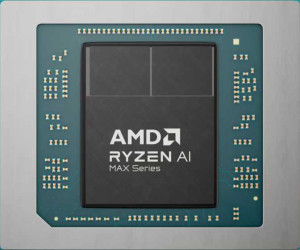
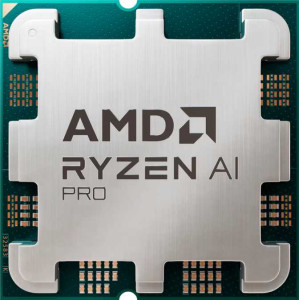
The AMD Ryzen AI Max 390 is compatible with both laptop and desktop platforms and is built on a 4 nm semiconductor process, contributing to its efficient design with a Thermal Design Power of 55W. It includes integrated graphics, supports 64-bit computing, and uses PCIe version 4 for peripheral connectivity. The processor has a maximum operating temperature of 100 °C.
The processor runs 12 cores at a base speed of 3.2 GHz each, supporting 24 threads without using big.LITTLE technology, and can reach a turbo clock speed of 5 GHz with a clock multiplier of 32. The multiplier is locked, so overclocking through that method is not available. Cache is organized across three levels — 960 KB of L1, 12 MB of L2 at 1 MB per core, and 64 MB of L3 at 5.33 MB per core — providing a substantial amount of fast-access memory to support sustained workloads.
In benchmark testing, the processor achieved a PassMark multi-core score of 42,429 alongside a single-core result of 4,025, reflecting its threaded and per-core output respectively. Geekbench 6 testing recorded a multi-core score of 17,277 and a single-core score of 2,774, rounding out a consistent picture of the chip's measured performance across both workload types.
The integrated graphics solution is the Radeon 8050S, which supports up to four displays simultaneously and is compatible with DirectX 12 Ultimate for modern graphics workloads. It also supports OpenGL version 4.6 and OpenCL version 3, covering a broad range of graphics rendering and general-purpose GPU computing tasks.
The processor supports DDR5 memory at speeds up to 8000 MHz across eight memory channels, allowing for substantial memory bandwidth in demanding workloads. It accommodates a maximum of 128 GB of RAM and includes support for ECC memory, which enables error detection and correction for applications where data integrity is a priority.
The processor supports multithreading and includes the NX bit for hardware-level memory protection against certain types of malicious code execution. Its instruction set support spans MMX, F16C, FMA3, AES, AVX, AVX2, SSE 4.1, and SSE 4.2, covering a wide range of operations from legacy multimedia instructions through to modern floating-point, encryption, and vector processing capabilities.