AMD Ryzen AI Max Pro 385 specifications and in-depth review

AMD Ryzen AI Max Pro 385

Manufacturer: AMD

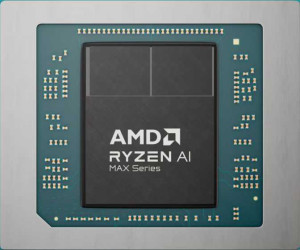
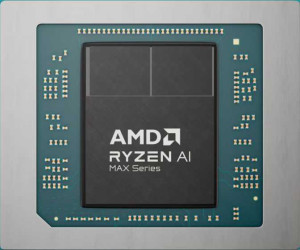
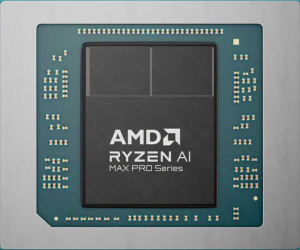
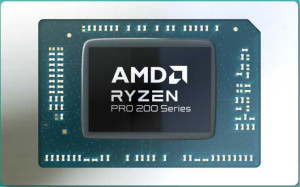
The AMD Ryzen AI Max Pro 385 is a processor designed for both desktop and laptop platforms, manufactured using a 4nm semiconductor process. It operates with 8 cores and 16 threads, with a base clock of 3.6GHz per core and a turbo frequency reaching up to 5GHz. The chip carries a thermal design power rating of 55W and supports 64-bit computing alongside a broad set of instruction sets including AVX2, FMA3, and AES.

On the memory side, the Ryzen AI Max Pro 385 supports DDR5 RAM at speeds up to 8000MHz, with four memory channels and a maximum capacity of 128GB, including ECC memory support. Cache is organized across 640KB of L1, 8MB of L2, and 32MB of L3. The integrated Radeon 8050S GPU clocks up to 2800MHz and supports up to four displays, with compatibility for DirectX 12, OpenGL 4.6, and OpenCL 3. In benchmarks, the processor achieves a PassMark score of 33441 overall and 4052 in the single-core test, with PCIe 4 connectivity rounding out its feature set.

Pros
  • Supports DDR5 memory at speeds up to 8000MHz across four channels, enabling substantial memory bandwidth
  • Maximum memory capacity of 128GB with ECC support makes it suitable for workloads requiring reliability and large data sets
  • Turbo clock speed reaches 5GHz across 8 cores with 16 threads, allowing for parallel task execution
  • Integrated Radeon 8050S GPU supports up to four displays simultaneously with DirectX 12, OpenGL 4.6, and OpenCL 3 compatibility
  • Compatible with both desktop and laptop platforms, offering deployment flexibility
  • Built on a 4nm process node, which contributes to keeping the TDP at 55W for an 8-core, 16-thread chip
Cons
  • The multiplier is locked, removing any option to manually tune clock speeds
  • Does not use big.LITTLE heterogeneous core architecture, meaning all cores operate under the same design without efficiency-core differentiation
  • At 55W TDP, thermal management requirements may be a consideration in compact or thermally constrained laptop designs
Who is this for?

This processor is well-suited to users who need a capable, versatile chip across both desktop and laptop form factors without sacrificing compute depth. The combination of 16 threads, DDR5 support across four memory channels, and up to 128GB ECC RAM makes it a solid fit for workstation-class tasks such as data processing, content creation, and professional applications that demand memory reliability. The integrated Radeon 8050S with support for four simultaneous displays also makes it a practical choice for multi-monitor productivity setups where a discrete GPU is not required.

Who is this NOT for?

Users focused on overclocking or fine-grained performance tuning will find this chip restrictive, as the multiplier is locked with no option for manual clock adjustment. Those looking for dedicated gaming or GPU-intensive rendering performance may also find the integrated graphics insufficient for demanding workloads in those areas. Additionally, the uniform core architecture without any efficiency-core differentiation means it is less optimized for scenarios that benefit from mixed workload scheduling across heterogeneous core types, which could matter in highly varied, sustained background tasks.

General info:

Type Desktop, Laptop
Has integrated graphics
Thermal Design Power (TDP) 55W
semiconductor size 4 nm
CPU temperature 100 °C
PCI Express (PCIe) version 4
Supports 64-bit

The AMD Ryzen AI Max Pro 385 is designed for both desktop and laptop platforms and is built on a 4nm semiconductor process, keeping it within a 55W thermal design power envelope. It supports 64-bit computing and comes with integrated graphics included. The chip uses PCIe version 4 for peripheral connectivity and is rated to operate at a maximum CPU temperature of 100°C.

Performance:

CPU speed 8 x 3.6 GHz
CPU threads 16 threads
turbo clock speed 5GHz
Has an unlocked multiplier
L2 cache 8 MB
L3 cache 32 MB
L1 cache 640 KB
L2 core 1 MB/core
L3 core 4 MB/core
Uses big.LITTLE technology
clock multiplier 36

The processor runs 8 cores at a base speed of 3.6GHz each, supporting 16 threads in total, with a turbo clock speed that reaches up to 5GHz. The clock multiplier sits at 36, though the multiplier is locked and cannot be adjusted. Cache is distributed across three levels: 640KB of L1, 8MB of L2 at 1MB per core, and 32MB of L3 at 4MB per core. The chip does not use big.LITTLE heterogeneous core technology, meaning all cores share the same architecture.

Benchmarks:

PassMark result 33441
PassMark result (single) 4052

In PassMark testing, the processor achieves an overall score of 33,441, reflecting its multi-threaded throughput across all cores. The single-core PassMark result stands at 4,052, indicating the per-core performance level under that particular benchmark workload.

Integrated graphics:

GPU name Radeon 8050S
GPU turbo 2800 MHz
DirectX version DirectX 12
supported displays 4
OpenGL version 4.6
OpenCL version 3

The integrated graphics solution is the Radeon 8050S, which reaches a turbo clock speed of 2800MHz. It supports up to four displays simultaneously and is compatible with DirectX 12, along with OpenGL version 4.6 and OpenCL version 3 for broader compute and graphics workload coverage.

Memory:

RAM speed (max) 8000 MHz
DDR memory version 5
memory channels 4
maximum memory amount 128GB
Supports ECC memory

The processor supports DDR5 memory at speeds of up to 8000MHz, running across four memory channels for wide bandwidth potential. It accommodates a maximum of 128GB of RAM and includes support for ECC memory, which enables error detection and correction during operation.

Features:

instruction sets MMX, F16C, FMA3, AES, AVX, AVX2, SSE 4.1, SSE 4.2
uses multithreading
Has NX bit

The processor supports multithreading and includes the NX bit for hardware-level memory protection. Its instruction set support spans MMX, F16C, FMA3, AES, SSE 4.1, SSE 4.2, AVX, and AVX2, covering a wide range of compute, cryptographic, and vector processing capabilities.
Final Verdict

The AMD Ryzen AI Max Pro 385 presents itself as a thoughtfully specified processor for users who need workstation-level memory capability and cross-platform flexibility in a controlled thermal envelope. Its DDR5 quad-channel memory support with ECC and a 128GB ceiling is a defining characteristic that positions it firmly toward professional and reliability-sensitive workloads, while the 5GHz turbo across 8 cores and 16 threads gives it enough compute headroom for demanding applications. The locked multiplier and absence of heterogeneous core design do set boundaries on its versatility, but within its intended scope — professional desktop and laptop deployments where memory bandwidth, display flexibility, and stable operation matter — the Ryzen AI Max Pro 385 represents a well-rounded and purposeful choice.

Popular Comparisons

AMD Ryzen AI Max Pro 385
VS
AMD Ryzen 7 Pro 250
AMD Ryzen 7 Pro 250
AMD Ryzen AI Max Pro 385
VS
AMD Ryzen AI Max 385
AMD Ryzen AI Max Pro 385
VS
AMD Ryzen AI Max Plus 395
AMD Ryzen AI Max Pro 385
VS
AMD Ryzen AI 9 HX 375
AMD Ryzen AI Max Pro 385
VS
Intel Core Ultra 7 155H
AMD Ryzen AI Max Pro 385
VS
Intel Core Ultra 9 285K
AMD Ryzen AI Max Pro 385
VS
Intel Core Ultra 7 165HL
AMD Ryzen AI Max Pro 385
VS
Intel Core Ultra 9 285H