Apple MacBook Pro (2026) 14" (Apple M5 Pro / 48GB RAM / 1TB) specifications and in-depth review

Apple MacBook Pro (2026) 14" (Apple M5 Pro / 48GB RAM / 1TB)

Manufacturer: Apple

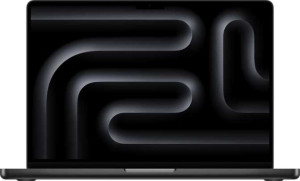
The Apple MacBook Pro (2026) 14″ configured with the M5 Pro processor, 48GB of unified memory, and 1TB of NVMe storage sits firmly in the productivity laptop category. Built around Apple's 3nm chip architecture, it uses a heterogeneous multi-processing design that pairs six performance cores clocked at 4.6GHz with twelve efficiency cores running at 3.2GHz across 18 threads. The machine weighs 1,600g and measures 15mm thick, fitting into a chassis that remains compact without adopting a fanless thermal solution. A 22-hour rated battery life is backed by a 72.4Wh cell and MagSafe charging support.

The 14.2″ Liquid Retina display outputs at 3024 x 1964 pixels, reaching a pixel density of 254 ppi, a typical brightness of 1,000 nits, and a contrast ratio of 1,000,000:1, with a 120Hz refresh rate and an anti-reflection coating. Connectivity is handled by three USB 4 40Gbps ports alongside one HDMI output, Wi-Fi 7 support, and Bluetooth 6, while an external memory slot adds further flexibility. The integrated Apple M5 Pro GPU supports up to three external displays and delivers a maximum memory bandwidth of 307 GB/s. Additional features include a 12MP front camera, Dolby Atmos audio, three microphones, stereo speakers, a fingerprint scanner, and a 3.5mm headphone jack.

Pros
  • The 22-hour rated battery life allows for extended use across full working days without needing to recharge
  • Three USB 4 40Gbps ports provide high-bandwidth wired connectivity and support for up to three external displays simultaneously
  • A 120Hz refresh rate combined with a 1,000,000:1 contrast ratio and 1,000 nits brightness delivers a detailed and smooth viewing experience on the 14.2-inch panel
  • The 3nm chip architecture supports big.LITTLE core scheduling and HMP, enabling efficient distribution of workloads across performance and efficiency cores
  • Wi-Fi 7 support with full backwards compatibility ensures reliable wireless connectivity across a wide range of network environments
  • At 15mm thick and 1,600g, the chassis remains relatively compact for a productivity laptop with active cooling
Cons
  • No USB-A ports are available, requiring adapters for legacy peripherals and standard USB accessories
  • The operating temperature range of 10 to 35 degrees Celsius excludes use in cold environments, limiting flexibility in certain outdoor or unheated settings
  • Touch input is not supported, restricting direct on-screen interaction
  • No RJ45 port means a wired Ethernet connection requires an external adapter
  • 3D facial recognition is absent, leaving the fingerprint scanner as the sole biometric authentication method
  • The chassis is neither weather-sealed nor rugged, offering no protection against moisture or physical stress beyond standard indoor use
Who is this for?

This machine is well-matched to professionals who spend long hours working away from a desk, given its 22-hour rated battery life and MagSafe charging support. The 3nm chip architecture with HMP and big.LITTLE core scheduling suits demanding productivity workloads such as software development, document processing, and data analysis that benefit from efficient multi-core execution. Users who regularly work with multiple screens will appreciate the ability to drive up to three external displays via the three USB 4 40Gbps ports, while the 14.2-inch 120Hz panel with 1,000 nits brightness and anti-reflection coating makes it equally usable as a standalone workstation in bright environments.

Who is this NOT for?

Users who rely on a broad range of wired peripherals will find the complete absence of USB-A ports limiting, as every legacy device or standard USB accessory requires a separate adapter. The lack of ray tracing and DLSS support makes this a poor fit for anyone seeking a capable gaming machine or GPU-accelerated rendering platform. Those working in field environments, outdoor settings, or industrial conditions will be constrained by the non-weather-sealed, non-rugged chassis and the narrow 10 to 35 degree Celsius operating range, which rules out use in cold or moisture-prone surroundings.

Design:

Type Productivity
weight 1600 g
Uses a fanless design
Has a backlit keyboard
volume 1034.28 cm³
width 312 mm
height 221 mm
thickness 15 mm
maximum operating temperature 35 °C
lowest potential operating temperature 10 °C
is weather-sealed (splashproof)
has a rugged build

The Apple MacBook Pro (2026) 14″ is classified as a productivity laptop with a physical footprint of 312mm wide, 221mm deep, and 15mm thick, resulting in a total volume of 1,034.28 cm³ and a weight of 1,600g. It is equipped with a backlit keyboard for low-light usability, though it does not use a fanless design, meaning active cooling is present. The machine operates within a temperature range of 10°C to 35°C and does not carry a weather-sealed or rugged build, making it suited to standard indoor productivity environments rather than harsh or outdoor conditions.

Display:

screen size 14.2"
resolution 3024 x 1964 px
pixel density 254 ppi
has a touch screen
brightness (typical) 1000 nits
refresh rate 120Hz
contrast ratio 1000000:1
has anti-reflection coating
supported displays 3

The 14.2″ display outputs a resolution of 3024 x 1964 pixels at a pixel density of 254 ppi, paired with a 1,000,000:1 contrast ratio and a typical brightness of 1,000 nits for clear visibility across varied lighting conditions. A 120Hz refresh rate ensures smooth on-screen motion, while an anti-reflection coating helps reduce glare during use. The panel does not support touch input, and the system can drive up to three external displays simultaneously alongside the built-in screen.

Performance:

RAM 48GB
Uses flash storage
internal storage 1024GB
CPU speed 6 x 4.6 & 12 x 3.2 GHz
CPU threads 18 threads
Is an NVMe SSD
uses multithreading
maximum memory amount 64GB
DDR memory version 5
semiconductor size 3 nm
has XeSS (XMX)
Supports 64-bit

The processor runs 18 threads across 18 cores configured as six performance cores at 4.6GHz and twelve efficiency cores at 3.2GHz, built on a 3nm semiconductor process with multithreading and 64-bit support. The system ships with 48GB of DDR5 unified memory and can be configured up to a maximum of 64GB. Storage is handled by a 1,024GB NVMe SSD using flash technology for fast read and write access. XeSS acceleration is not supported on this configuration.

Benchmarks:

Connectivity:

USB 3.2 Gen 2 ports (USB-C) 0
USB 3.2 Gen 2 ports (USB-A) 0
USB 4 20Gbps ports 0
USB 4 40Gbps ports 3
Thunderbolt 4 ports 0
USB 3.2 Gen 1 ports (USB-C) 0
USB 3.2 Gen 1 ports (USB-A) 0
Thunderbolt 3 ports 0
has an HDMI output
Has USB Type-C
supports Wi-Fi
Wi-Fi version Wi-Fi 7 (802.11be), Wi-Fi 6E (802.11ax), Wi-Fi 6 (802.11ax), Wi-Fi 5 (802.11ac), Wi-Fi 4 (802.11n)
has an external memory slot
Bluetooth version 6
RJ45 ports 0
HDMI ports 1
DisplayPort outputs 0
USB 2.0 ports 0
has AirPlay
mini DisplayPort outputs 0
has a VGA connector

Wired connectivity centers on three USB 4 40Gbps ports (USB-C form factor) and one HDMI output, while there are no USB-A, Thunderbolt 3 or 4, DisplayPort, mini DisplayPort, RJ45, or VGA ports present. An external memory slot adds removable storage support, and AirPlay is available for wireless display output. Wireless connectivity covers Wi-Fi 7 (802.11be) with backwards compatibility through Wi-Fi 6E, 6, 5, and 4, alongside Bluetooth 6 for peripheral and accessory pairing.

Battery:

Battery life 22 hours
battery size 72.4 Wh
Has sleep-and-charge USB ports
Has a MagSafe power adapter

The 72.4Wh battery carries a rated life of 22 hours, offering an extended usage window between charges. Power delivery is handled through a MagSafe adapter, and the machine also supports sleep-and-charge via its USB ports, allowing connected devices to be charged even when the laptop is not in active use.

Features:

release date March 2026
has stereo speakers
has a socket for a 3.5 mm audio jack
megapixels (front camera) 12MP
supports ray tracing
supports DLSS
has Dolby Atmos
Stylus included
Has a fingerprint scanner
number of microphones 3
Uses 3D facial recognition
has voice commands
has a front camera
Has S/PDIF Out port
has a gyroscope
has GPS
has an accelerometer
has a compass
Has an optical disc drive

Audio output comes from stereo speakers with Dolby Atmos support, and a 3.5mm headphone jack is available for wired listening, though there is no S/PDIF output. The built-in array consists of three microphones, and voice commands are supported for hands-free interaction. A 12MP front-facing camera handles video calls, but 3D facial recognition is not available; instead, authentication is handled through a fingerprint scanner. A stylus is not included, and the machine lacks an optical disc drive, GPS, gyroscope, accelerometer, and compass, as well as support for ray tracing and DLSS.

Miscellaneous:

GPU name Apple M5 Pro GPU
Has an unlocked multiplier
Type Laptop
Supports ECC memory
maximum memory bandwidth 307 GB/s
Uses HMP
Has TrustZone
Has NX bit
Has integrated graphics
Uses big.LITTLE technology

Graphics are handled by the integrated Apple M5 Pro GPU, which shares the chip with the CPU in a laptop-class configuration that uses big.LITTLE technology and Heterogeneous Multi-Processing for workload distribution across core types. Maximum memory bandwidth reaches 307 GB/s, and the processor does not have an unlocked multiplier, nor does it support ECC memory. On the security side, the chip includes TrustZone and NX bit support, providing hardware-level isolation and memory execution protection respectively.
Final Verdict

The Apple MacBook Pro (2026) 14″ with M5 Pro is a focused productivity machine built around sustained all-day use, combining a 22-hour battery life with a capable multi-core architecture on a 3nm process and a high-quality 120Hz display that holds up well in both office and mobile settings. Its port selection is deliberate rather than broad, and users with legacy hardware or specific connectivity needs will need to plan accordingly, but for professionals whose workflow centers on software development, content creation, or extended multi-display productivity, the hardware configuration aligns closely with those demands. Taken as a whole, it represents a coherent and well-specified option for productivity-focused users who prioritize endurance, display quality, and efficient chip performance in a compact portable form.