ASRock Arc B570 Challenger OC specifications and in-depth review

ASRock Arc B570 Challenger OC

Manufacturer: ASRock

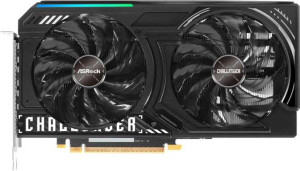
The ASRock Arc B570 Challenger OC is a mid-range graphics card built on Intel's Generation 12.7 architecture and fabricated on a 6 nm process node. It ships with 10GB of GDDR6 VRAM across a 160-bit memory bus, delivering up to 384 GB/s of memory bandwidth — a notably wide pipeline for its class. RGB lighting is included, and the card measures 249 mm in length and 132 mm in height, fitting comfortably in a range of mid-tower cases.

On the performance side, the card operates at a base GPU clock of 1700 MHz with a turbo frequency reaching 2600 MHz, translating to 11.98 TFLOPS of floating-point throughput and a texture rate of 374.4 GTexels/s. It carries 2304 shading units, 144 TMUs, and 80 ROPs, with a TDP of 150W over a PCIe 4.0 interface. Feature support includes DirectX 12 Ultimate, OpenGL 4.6, OpenCL 3, ray tracing, XeSS upscaling, and multi-display output across up to four screens via one HDMI 2.1 port and three DisplayPort connections.

Pros
  • Supports up to four simultaneous display outputs through a combination of one HDMI 2.1 and three DisplayPort connections
  • ECC memory support adds a layer of data integrity useful in error-sensitive workloads
  • XeSS upscaling via XMX engines is available, offering AI-based image reconstruction without relying on third-party solutions
  • Ray tracing is supported at the hardware level, enabling real-time lighting effects in compatible applications
  • RGB lighting is built into the card for users who want visual customization within their build
  • The 160-bit memory bus paired with GDDR6 delivers 384 GB/s of bandwidth, supporting texture-heavy rendering scenarios
Cons
  • DLSS is not supported, limiting compatibility with NVIDIA's upscaling ecosystem in titles that rely on it exclusively
  • The 160-bit memory bus is narrower than what wider-bus cards in the same category typically offer, which can constrain bandwidth scaling
  • No USB-C display output is available, which may be a limitation for users with USB-C monitors
  • Air-water cooling is not supported, restricting thermal management to air cooling only
  • With a 10GB VRAM allocation on a 160-bit bus, memory headroom for very high-resolution texture workloads may be limited
Who is this for?

This card is a reasonable fit for users engaged in 1080p and 1440p gaming, where its 11.98 TFLOPS of compute throughput and 2600 MHz turbo clock can sustain solid frame rates across a wide range of titles. The inclusion of hardware ray tracing and XeSS upscaling makes it a practical choice for those who want access to modern rendering techniques without requiring a top-tier setup. Its support for up to four simultaneous displays also makes it suitable for multi-monitor productivity workflows, while ECC memory support extends its relevance to users running lightweight compute or content creation tasks where memory reliability matters.

Who is this NOT for?

Users targeting 4K gaming at high settings may find the 10GB GDDR6 allocation and 160-bit memory bus insufficient to handle the texture and framebuffer demands that ultra-high-resolution workloads place on VRAM and bandwidth. The absence of DLSS support makes this card a poor match for those whose game library relies heavily on NVIDIA's upscaling pipeline, as XeSS compatibility is not universal across all titles. Additionally, the air-only cooling configuration means it is not suited to users building compact or thermally constrained systems that depend on liquid or hybrid cooling solutions to manage heat output.

Performance:

GPU clock speed 1700 MHz
GPU turbo 2600 MHz
pixel rate 208 GPixel/s
floating-point performance 11.98 TFLOPS
texture rate 374.4 GTexels/s
GPU memory speed 2400 MHz
shading units 2304
texture mapping units (TMUs) 144
render output units (ROPs) 80

The ASRock Arc B570 Challenger OC runs at a base GPU clock of 1700 MHz, climbing to a turbo frequency of 2600 MHz under load, which drives a floating-point throughput of 11.98 TFLOPS. Its 2304 shading units are backed by 144 texture mapping units delivering a texture rate of 374.4 GTexels/s, alongside 80 render output units contributing to a pixel rate of 208 GPixel/s. GPU memory operates at 2400 MHz, rounding out a performance profile suited to handling demanding rendering workloads across its full shader and raster pipeline.

Memory:

effective memory speed 19000 MHz
maximum memory bandwidth 384 GB/s
VRAM 10GB
GDDR version GDDR6
memory bus width 160-bit
Supports ECC memory

The card is equipped with 10GB of GDDR6 VRAM running at an effective speed of 19000 MHz across a 160-bit memory bus, yielding a maximum bandwidth of 384 GB/s. This configuration provides a solid throughput foundation for handling texture-heavy and high-resolution workloads. ECC memory support is also present, offering an added layer of data integrity for error-sensitive use cases.

Features:

DirectX version DirectX 12 Ultimate
OpenGL version 4.6
OpenCL version 3
Supports multi-display technology
supports ray tracing
Supports 3D
supports DLSS
has XeSS (XMX)
has LHR
has RGB lighting
supported displays 4

The ASRock Arc B570 Challenger OC supports DirectX 12 Ultimate, OpenGL 4.6, and OpenCL 3, covering a broad range of graphics and compute workloads. Ray tracing and stereoscopic 3D are both supported, and XeSS (XMX) upscaling is available as the card's AI-based image scaling solution — DLSS is not supported. Multi-display output is enabled across up to four screens simultaneously, and RGB lighting is built into the card's design. LHR is not present on this model.

Ports:

has an HDMI output
HDMI ports 1
HDMI version HDMI 2.1
DisplayPort outputs 3
USB-C ports 0
DVI outputs 0
mini DisplayPort outputs 0

The card's output configuration consists of one HDMI 2.1 port and three DisplayPort outputs, providing a total of four display connections. There are no USB-C, DVI, or mini DisplayPort outputs on this model, keeping the layout straightforward and focused on the two most widely used modern display interfaces.

General info:

GPU architecture Generation 12.7
Thermal Design Power (TDP) 150W
PCI Express (PCIe) version 4
semiconductor size 6 nm
number of transistors 21700 million
Has air-water cooling
width 249 mm
height 132 mm

The ASRock Arc B570 Challenger OC is built on a 6 nm semiconductor process using a Generation 12.7 GPU architecture, integrating 21,700 million transistors onto the die. It carries a TDP of 150W and connects via a PCIe 4.0 interface. The card measures 249 mm in width and 132 mm in height, and relies solely on air cooling — liquid or hybrid air-water cooling is not supported. Physical dimensions and power draw position it as a card compatible with a wide range of standard mid-tower builds.

Final Verdict

The ASRock Arc B570 Challenger OC presents a well-rounded specification set for users operating within the 1080p to 1440p resolution range, combining hardware ray tracing, XeSS upscaling, and broad API support under a 150W power envelope. Its 384 GB/s of memory bandwidth delivered through 10GB of GDDR6 gives it a solid throughput foundation for texture-intensive workloads, and the four-display output capability adds genuine versatility for multi-monitor use cases. Where it falls short — namely the absence of DLSS, the narrower 160-bit bus, and the restriction to air cooling — reflects the natural trade-offs of its hardware class. Taken as a whole, the Arc B570 Challenger OC is a competent card for mainstream gaming and light creative tasks, best suited to users who prioritize modern feature support and display flexibility within a manageable power draw.

Popular Comparisons

ASRock Arc B570 Challenger OC
VS
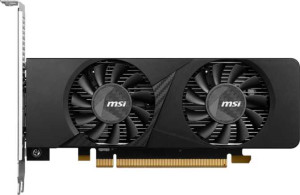
MSI GeForce RTX 3050 Low Profile OC 6GB
ASRock Arc B570 Challenger OC
VS
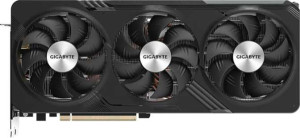
Gigabyte Radeon RX 7700 XT Gaming OC
ASRock Arc B570 Challenger OC
VS
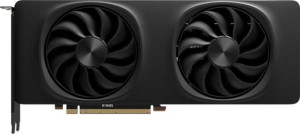
Intel Arc B570
Intel Arc B570