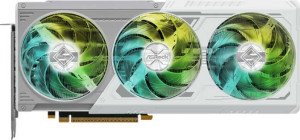
ASRock Arc B580 Steel Legend OC specifications and in-depth review

ASRock Arc B580 Steel Legend OC

Manufacturer: Asrock

The ASRock Arc B580 Steel Legend OC is a graphics card that brings Intel's Xe2-HPG architecture to a factory-overclocked design, pairing a base clock of 1700 MHz with a boost clock of 2800 MHz for sustained rendering workloads. It ships with 12GB of GDDR6 VRAM across a 192-bit memory bus, supporting up to four displays simultaneously and carrying full DirectX 12 Ultimate compatibility alongside ray tracing and XeSS upscaling via XMX hardware.

On the memory side, the card reaches an effective speed of 19000 MHz and delivers up to 460 GB/s of memory bandwidth, while its 2560 shading units contribute to a floating-point throughput of 14.34 TFLOPS. Connectivity is handled through one HDMI 2.1 port and four DisplayPort outputs, with no USB-C display output included. The card has a 190W TDP, measures 298 mm in length and 131 mm in height, and is built on a 6 nm process node housing approximately 21.7 billion transistors.

Pros
  • Supports up to four simultaneous displays, making it suitable for multi-monitor setups without additional hardware
  • 12GB of GDDR6 VRAM across a 192-bit bus with 460 GB/s of bandwidth provides substantial memory throughput for demanding workloads
  • Hardware-accelerated ray tracing and XeSS upscaling via XMX are both included, expanding rendering options
  • ECC memory support adds data integrity for workloads sensitive to memory errors
  • Five total display outputs — four DisplayPort and one HDMI 2.1 — offer flexible connectivity for varied monitor configurations
  • RGB lighting is included for users who want visual customization of their build
Cons
  • DLSS is not supported, limiting AI upscaling to XeSS only
  • No USB-C, DVI, or mini DisplayPort outputs, which may create compatibility issues with certain monitors or adapters
  • The 190W TDP requires adequate system power delivery and case airflow, with no water-cooling option available
  • At 298 mm in length, the card may not fit in smaller or compact cases
Who is this for?

This card is well-suited for desktop users who want to run ray-traced workloads and AI-upscaled rendering via XeSS on a mid-range system, particularly those who prioritize VRAM capacity for texture-heavy or high-resolution content. With support for up to four simultaneous displays and five physical outputs including HDMI 2.1, it also fits users building multi-monitor workstation or productivity setups. The inclusion of ECC memory support makes it a reasonable fit for those running compute tasks where memory reliability matters, such as certain data processing or content creation workflows under OpenCL 3.

Who is this NOT for?

Users who depend on DLSS upscaling will find this card incompatible, as it only supports XeSS, making it a poor fit for those invested in that specific upscaling ecosystem. The card's 190W TDP and air-only cooling also make it unsuitable for compact or small-form-factor builds with limited thermal headroom, particularly given its 298 mm length, which can conflict with space-constrained cases. Additionally, users requiring USB-C or DVI display outputs will face compatibility limitations, as neither connector type is present on this model.

Performance:

GPU clock speed 1700 MHz
GPU turbo 2800 MHz
pixel rate 224 GPixel/s
floating-point performance 14.34 TFLOPS
texture rate 448 GTexels/s
GPU memory speed 2400 MHz
shading units 2560
texture mapping units (TMUs) 160
render output units (ROPs) 80

The ASRock Arc B580 Steel Legend OC operates at a base GPU clock of 1700 MHz, climbing to a boost clock of 2800 MHz under load, while the GPU memory runs at 2400 MHz. Its 2560 shading units are supported by 160 texture mapping units and 80 render output units, translating into a texture rate of 448 GTexels/s and a pixel rate of 224 GPixel/s. Combined, these figures yield a floating-point throughput of 14.34 TFLOPS, reflecting the card's overall compute capacity for rendering and general GPU workloads.

Memory:

effective memory speed 19000 MHz
maximum memory bandwidth 460 GB/s
VRAM 12GB
GDDR version GDDR6
memory bus width 192-bit
Supports ECC memory

The card is equipped with 12GB of GDDR6 VRAM running across a 192-bit memory bus, reaching an effective memory speed of 19000 MHz and delivering a maximum bandwidth of 460 GB/s. ECC memory support is also included, adding a layer of data integrity for workloads where memory accuracy is a consideration.

Features:

DirectX version DirectX 12 Ultimate
OpenGL version 4.6
OpenCL version 3
Supports multi-display technology
supports ray tracing
Supports 3D
supports DLSS
has XeSS (XMX)
has LHR
has RGB lighting
supported displays 4

The card supports DirectX 12 Ultimate, OpenGL 4.6, and OpenCL 3, covering a broad range of graphics and compute APIs. Hardware-accelerated ray tracing is included, as is XeSS upscaling via XMX, while DLSS is not supported. Multi-display setups are accommodated with support for up to four simultaneous outputs, and stereoscopic 3D is also available. The card does not feature LHR, and it includes RGB lighting. There is no hardware-level limiter restricting its use case.

Ports:

has an HDMI output
HDMI ports 1
HDMI version HDMI 2.1
DisplayPort outputs 4
USB-C ports 0
DVI outputs 0
mini DisplayPort outputs 0

The card's output configuration consists of four DisplayPort outputs and one HDMI 2.1 port, giving a total of five physical display connectors. There are no USB-C, DVI, or mini DisplayPort outputs present on this model.

General info:

GPU architecture Xe2-HPG
Thermal Design Power (TDP) 190W
PCI Express (PCIe) version 4
semiconductor size 6 nm
number of transistors 21700 million
Has air-water cooling
width 298 mm
height 131 mm

Built on the Xe2-HPG architecture using a 6 nm process node, the card integrates 21,700 million transistors and connects via a PCIe 4 interface. It carries a rated TDP of 190W and relies on air cooling, with no water-cooling option included. Physically, the card measures 298 mm in width and 131 mm in height.

Final Verdict

The ASRock Arc B580 Steel Legend OC is a desktop graphics card that brings a well-rounded specification set to its category, anchored by 12GB of GDDR6 VRAM with 460 GB/s of memory bandwidth and broad API support including DirectX 12 Ultimate, ray tracing, and XeSS upscaling. Its five-output display configuration and ECC memory support extend its usefulness beyond purely gaming-oriented workloads, making it a reasonable option for multi-display and light compute use cases as well. That said, the absence of DLSS and USB-C connectivity, combined with a 190W thermal load and a 298 mm footprint, means it comes with real constraints that users should evaluate against their system and workflow requirements. Overall, the Steel Legend OC presents a defined set of capabilities that align well with specific desktop configurations, and users whose needs match its feature set will find it a functionally coherent choice.

Popular Comparisons

ASRock Arc B580 Steel Legend OC
VS
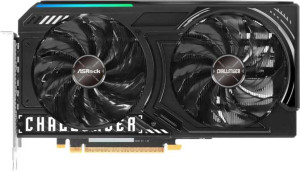
ASRock Arc B580 Challenger OC
ASRock Arc B580 Steel Legend OC
VS
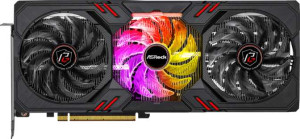
ASRock Arc A770 Phantom Gaming OC
ASRock Arc B580 Steel Legend OC
VS
Acer Nitro Arc B580 OC
ASRock Arc B580 Steel Legend OC
VS
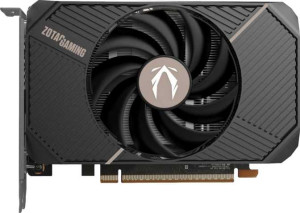
Zotac Gaming GeForce RTX 5060 Solo
ASRock Arc B580 Steel Legend OC
VS
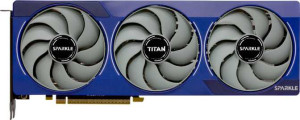
Sparkle Arc B580 Titan OC
ASRock Arc B580 Steel Legend OC
VS
Intel Arc B580
Intel Arc B580
ASRock Arc B580 Steel Legend OC
VS
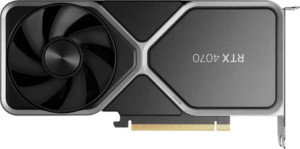
Nvidia GeForce RTX 4070 GDDR6