Asus Dual GeForce RTX 4070 EVO specifications and in-depth review

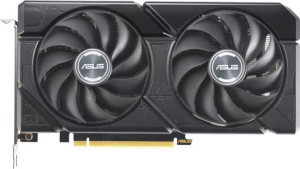
Asus Dual GeForce RTX 4070 EVO

Manufacturer: Asus

The Asus Dual GeForce RTX 4070 EVO is a mid-to-high-tier graphics card based on NVIDIA's Ada Lovelace architecture, manufactured on a 5nm process with 35.8 billion transistors. It operates at a base clock of 1920 MHz and boosts up to 2475 MHz, delivering 29.15 TFLOPS of single-precision floating-point performance. The card supports ray tracing and DLSS, along with DirectX 12 Ultimate and OpenGL 4.6, covering a broad range of modern rendering workloads.

On the memory side, the card carries 12GB of GDDR6 VRAM across a 192-bit bus, reaching an effective speed of 20000 MHz and a maximum bandwidth of 480 GB/s. Its 5888 shading units are complemented by 184 texture mapping units and 64 render output units, yielding a texture rate of 455.4 GTexels/s and a pixel rate of 158.4 GPixel/s. Display output options include one HDMI 2.1a port and three DisplayPort connections, supporting up to four monitors simultaneously. The card draws 200W TDP, connects via PCIe 4.0, and measures 227.2 mm in length by 123.2 mm in height, with Intel Resizable BAR support included.

Pros
  • Supports ray tracing and DLSS, enabling more advanced rendering and upscaling capabilities in compatible applications
  • ECC memory support adds a layer of data integrity protection, making the card suitable for compute workloads beyond typical gaming
  • Four display outputs — one HDMI 2.1a and three DisplayPort — allow for flexible multi-monitor configurations supporting up to four screens simultaneously
  • Double Precision Floating Point (DPFP) support extends its usability to workloads that require high-precision numerical computation
  • Intel Resizable BAR support allows the CPU broader access to GPU memory, which can improve data transfer efficiency
  • The 5nm manufacturing process and 35,800 million transistors reflect a relatively compact and dense chip design
Cons
  • The 192-bit memory bus width is narrower than what some higher-tier cards in the same category offer, which limits maximum memory bandwidth headroom
  • No USB-C display output is available, which may be a limitation for users with USB-C or Thunderbolt-connected monitors
  • RGB lighting is absent, which may be a drawback for users building systems with coordinated lighting setups
  • Air-water cooling is not supported, so users cannot opt for a liquid cooling configuration on this model
  • Only 12GB of VRAM is available, which may be a constraint for memory-intensive workloads at very high resolutions or with large datasets
Who is this for?

This card is well-suited to users who work across both graphics rendering and compute-intensive tasks, given its support for Double Precision Floating Point and ECC memory. Those running applications that leverage ray tracing and DLSS will benefit from native hardware support for both features, alongside DirectX 12 Ultimate and OpenCL 3 compatibility. Users who need to drive multi-monitor setups of up to four displays will also find the output configuration practical, particularly with HDMI 2.1a and three DisplayPort connections available.

Who is this NOT for?

Users who require large VRAM capacity for high-resolution texture work, large AI model inference, or other memory-heavy workloads may find 12GB limiting over time. The 192-bit memory bus also means that peak memory bandwidth is constrained relative to cards with wider bus configurations, making this a less fitting choice for workloads that are highly sensitive to memory throughput. Additionally, users seeking a liquid-cooled solution or those who want to integrate the card into a system with coordinated RGB lighting will need to look elsewhere, as neither air-water cooling nor RGB lighting is supported on this model.

Performance:

GPU clock speed 1920 MHz
GPU turbo 2475 MHz
pixel rate 158.4 GPixel/s
floating-point performance 29.15 TFLOPS
texture rate 455.4 GTexels/s
GPU memory speed 2500 MHz
shading units 5888
texture mapping units (TMUs) 184
render output units (ROPs) 64
Has Double Precision Floating Point (DPFP)

The Asus Dual GeForce RTX 4070 EVO runs at a base GPU clock of 1920 MHz, boosting up to 2475 MHz under load, while its memory operates at 2500 MHz. With 5888 shading units, 184 texture mapping units, and 64 render output units, the card achieves a texture rate of 455.4 GTexels/s and a pixel rate of 158.4 GPixel/s. Floating-point performance reaches 29.15 TFLOPS, and the GPU also supports Double Precision Floating Point (DPFP), broadening its suitability for compute-intensive tasks beyond standard rendering workloads.

Memory:

effective memory speed 20000 MHz
maximum memory bandwidth 480 GB/s
VRAM 12GB
GDDR version GDDR6
memory bus width 192-bit
Supports ECC memory

The card is equipped with 12GB of GDDR6 VRAM running at an effective speed of 20000 MHz across a 192-bit memory bus, delivering a maximum memory bandwidth of 480 GB/s. ECC memory support is also included, which helps detect and correct memory errors — a useful capability for workloads where data integrity is a priority.

Features:

DirectX version DirectX 12 Ultimate
OpenGL version 4.6
OpenCL version 3
Supports multi-display technology
supports ray tracing
Supports 3D
supports DLSS
has XeSS (XMX)
AMD SAM / Intel Resizable BAR Intel Resizable BAR
has LHR
has RGB lighting
supported displays 4

The Asus Dual GeForce RTX 4070 EVO supports DirectX 12 Ultimate, OpenGL 4.6, and OpenCL 3, covering a wide range of graphics and compute APIs. Ray tracing and DLSS are both supported, alongside stereoscopic 3D and multi-display technology for up to four screens simultaneously. Intel Resizable BAR is included to help improve data throughput between the CPU and GPU. XeSS (XMX) and LHR are not present on this card, and it does not feature RGB lighting.

Ports:

has an HDMI output
HDMI ports 1
HDMI version HDMI 2.1a
DisplayPort outputs 3
USB-C ports 0
DVI outputs 0
mini DisplayPort outputs 0

The card's output configuration consists of one HDMI 2.1a port and three DisplayPort outputs, offering a total of four display connections. There are no USB-C, DVI, or mini DisplayPort outputs on this model.

General info:

GPU architecture Ada Lovelace
Thermal Design Power (TDP) 200W
PCI Express (PCIe) version 4
semiconductor size 5 nm
number of transistors 35800 million
Has air-water cooling
width 227.2 mm
height 123.2 mm

Built on the Ada Lovelace architecture and manufactured using a 5nm process, this card packs 35,800 million transistors and connects to the host system via PCIe 4.0. It carries a Thermal Design Power of 200W and does not include air-water cooling. Physically, the card measures 227.2 mm in width and 123.2 mm in height.
Final Verdict

The Asus Dual GeForce RTX 4070 EVO is a capable graphics card that strikes a reasonable balance between rendering features and compute utility, thanks to its Ada Lovelace architecture, native ray tracing and DLSS support, and the added practicality of ECC memory and Double Precision Floating Point capability. Its 29.15 TFLOPS of floating-point performance and broad API coverage make it a genuinely versatile card for users whose workloads span both visual and compute domains. That said, the 12GB GDDR6 VRAM over a 192-bit bus sets a ceiling that more demanding or memory-intensive workflows may eventually encounter. For users whose needs align with its feature set — particularly those running modern rendering pipelines or mixed graphics-compute tasks across up to four displays — this card represents a well-rounded and technically coherent option within its category.

Popular Comparisons

Asus Dual GeForce RTX 4070 EVO
VS
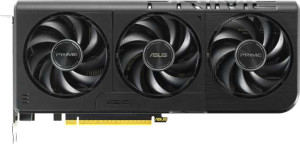
Asus Prime GeForce RTX 5060 OC Edition