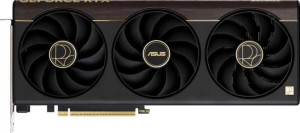
Asus GeForce RTX 5060 LP BRK specifications and in-depth review

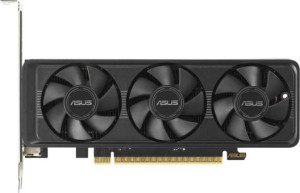
Asus GeForce RTX 5060 LP BRK

Manufacturer: Asus

The Asus GeForce RTX 5060 LP BRK is a low-profile graphics card based on NVIDIA's Blackwell architecture, designed to fit compact system builds without sacrificing modern feature support. It carries a base GPU clock of 2280 MHz with a boost up to 2497 MHz, and its 19.18 TFLOPS of floating-point performance reflects the processing capability packed into its compact 175.8 × 69 mm form factor. The card supports ray tracing, DLSS, and DirectX 12 Ultimate out of the box, rounding out a solid feature set for its class.

On the memory side, the RTX 5060 LP BRK is equipped with 8GB of GDDR7 VRAM on a 128-bit bus, delivering an effective memory speed of 28000 MHz and a maximum bandwidth of 448 GB/s. The GPU integrates 3840 shading units, 120 texture mapping units, and 48 render output units, alongside a texture rate of 299.6 GTexels/s and a pixel rate of 119.9 GPixel/s. Display output options include two HDMI 2.1 ports and one DisplayPort, supporting up to four displays simultaneously, while connectivity is handled through a PCIe 5.0 interface. The card is fabricated on a 5 nm process and contains approximately 21.9 billion transistors, with a rated TDP of 145W.

Pros
  • The low-profile dimensions of 175.8 mm × 69 mm make it suitable for compact or small form factor builds where full-size cards cannot fit
  • GDDR7 memory with an effective speed of 28000 MHz and 448 GB/s bandwidth provides substantial memory throughput for a 128-bit bus card
  • Supports ray tracing and DLSS, bringing modern rendering features to a compact card
  • Can drive up to four displays simultaneously via two HDMI 2.1 ports and one DisplayPort, offering flexible multi-monitor setups
  • ECC memory support adds a layer of reliability for workloads sensitive to memory errors
  • PCIe 5.0 connectivity ensures the interface is not a bottleneck on compatible platforms
Cons
  • The 128-bit memory bus width limits scalability for memory-intensive workloads compared to wider bus configurations
  • With only 8GB of VRAM, demanding workloads or high-resolution tasks may face memory capacity constraints
  • No USB-C, DVI, or mini DisplayPort outputs, restricting connectivity options for users with older or specialized display equipment
  • Air-water cooling is not supported, limiting thermal management options to the card's built-in solution
  • Absence of RGB lighting may be a drawback for users building systems with coordinated lighting setups
Who is this for?

This card is well-matched for users building compact or small form factor systems who still want access to modern GPU features like ray tracing and DLSS. Its low-profile dimensions make it one of the few options capable of fitting into slim chassis designs, while the GDDR7 memory and 448 GB/s bandwidth ensure it handles contemporary workloads at moderate resolutions without significant memory bottlenecks. Users who need multi-display setups of up to four screens will also find the port configuration practical, and those running compute tasks that benefit from ECC memory or Double Precision Floating Point support will appreciate those capabilities being present in such a compact form.

Who is this NOT for?

Users targeting high-resolution or memory-intensive workloads are likely to find the 8GB VRAM ceiling and 128-bit bus width restrictive, as these configurations can become limiting when working with large datasets, high-resolution textures, or complex scene rendering. Enthusiasts who want extensive thermal customization will be constrained by the absence of air-water cooling support, leaving them reliant solely on the card's built-in cooling solution with no alternative options. Similarly, users looking to build a visually coordinated system with synchronized RGB lighting will find no such feature here, and those with older displays requiring DVI connectivity or specialized setups relying on USB-C or mini DisplayPort outputs will need to look elsewhere.

Performance:

GPU clock speed 2280 MHz
GPU turbo 2497 MHz
pixel rate 119.9 GPixel/s
floating-point performance 19.18 TFLOPS
texture rate 299.6 GTexels/s
GPU memory speed 1750 MHz
shading units 3840
texture mapping units (TMUs) 120
render output units (ROPs) 48
Has Double Precision Floating Point (DPFP)

The Asus GeForce RTX 5060 LP BRK operates at a base GPU clock of 2280 MHz, boosting up to 2497 MHz under load, while delivering 19.18 TFLOPS of floating-point performance alongside a texture rate of 299.6 GTexels/s and a pixel rate of 119.9 GPixel/s. Underpinning these figures are 3840 shading units, 120 texture mapping units, and 48 render output units, with a GPU memory speed of 1750 MHz. The card also supports Double Precision Floating Point (DPFP), broadening its suitability for workloads that require 64-bit floating-point calculations.

Memory:

effective memory speed 28000 MHz
maximum memory bandwidth 448 GB/s
VRAM 8GB
GDDR version GDDR7
memory bus width 128-bit
Supports ECC memory

The card is equipped with 8GB of GDDR7 VRAM running at an effective memory speed of 28000 MHz across a 128-bit bus, yielding a maximum memory bandwidth of 448 GB/s. ECC memory support is also present, which helps detect and correct memory errors during operation.

Features:

DirectX version DirectX 12 Ultimate
OpenGL version 4.6
OpenCL version 3
Supports multi-display technology
supports ray tracing
Supports 3D
supports DLSS
has XeSS (XMX)
AMD SAM / Intel Resizable BAR Intel Resizable BAR
has LHR
has RGB lighting
supported displays 4

The Asus GeForce RTX 5060 LP BRK supports DirectX 12 Ultimate, OpenGL 4.6, and OpenCL 3, covering a broad range of graphics and compute workloads. Ray tracing and DLSS are both supported, while stereoscopic 3D and multi-display technology are also on board, with the card capable of driving up to four displays simultaneously. Intel Resizable BAR is supported, whereas XeSS (XMX) and LHR are not present. The card does not include RGB lighting.

Ports:

has an HDMI output
HDMI ports 2
HDMI version HDMI 2.1
DisplayPort outputs 1
USB-C ports 0
DVI outputs 0
mini DisplayPort outputs 0

The card's output configuration consists of two HDMI 2.1 ports and one DisplayPort, providing a total of three physical outputs. There are no USB-C, DVI, or mini DisplayPort connectors on this model.

General info:

GPU architecture Blackwell
Thermal Design Power (TDP) 145W
PCI Express (PCIe) version 5
semiconductor size 5 nm
number of transistors 21900 million
Has air-water cooling
width 175.8 mm
height 69 mm

Built on the Blackwell architecture and fabricated using a 5 nm process, the card houses approximately 21,900 million transistors and connects via a PCIe 5.0 interface. It has a rated TDP of 145W and does not include air-water cooling. The card measures 175.8 mm in width and 69 mm in height, reflecting its low-profile form factor.

Final Verdict

The Asus GeForce RTX 5060 LP BRK occupies a well-defined niche as a low-profile Blackwell-based graphics card that brings genuinely modern capabilities — including ray tracing, DLSS, and GDDR7 memory with 448 GB/s of bandwidth — into a compact 175.8 × 69 mm form factor. It is a practical solution for users who need a capable GPU in space-constrained builds without sacrificing contemporary feature support or multi-display flexibility. That said, the 8GB VRAM ceiling and 128-bit bus width mean it is best suited to moderate workloads rather than the most demanding use cases. For its intended audience — compact system builders and users with modest to mid-range compute needs — it delivers a coherent and well-rounded specification set that few low-profile cards can match.

Popular Comparisons

Asus GeForce RTX 5060 LP BRK
VS
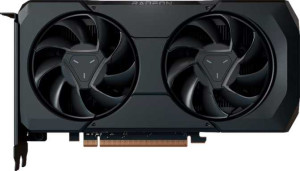
AMD Radeon RX 7600 XT
Asus GeForce RTX 5060 LP BRK
VS
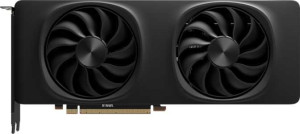
Intel Arc B580
Intel Arc B580
Asus GeForce RTX 5060 LP BRK
VS
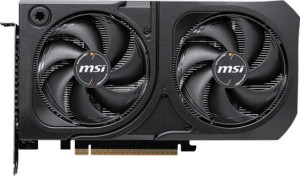
MSI GeForce RTX 5060 Ti Shadow 2X Plus 8GB
Asus GeForce RTX 5060 LP BRK
VS
Asus ProArt GeForce RTX 5070 Ti