Asus Prime GeForce RTX 4070 Super OC Edition specifications and in-depth review

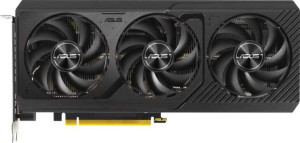
Asus Prime GeForce RTX 4070 Super OC Edition

Manufacturer: Asus

The Asus Prime GeForce RTX 4070 Super OC Edition is a graphics card from Asus based on Nvidia's Ada Lovelace architecture, fabricated at 5 nm and packing 35,800 million transistors. It runs at a base clock of 1980 MHz and boosts up to 2520 MHz, translating to 36.13 TFLOPS of floating-point performance and a texture rate of 564.5 GTexels/s. With a TDP of 220W and physical dimensions of 269 mm by 120 mm, it connects to the system via PCIe 4.0.

The card carries 12GB of GDDR6X VRAM across a 192-bit bus at an effective speed of 21000 MHz, yielding a maximum memory bandwidth of 504.2 GB/s, with ECC memory support included. On the feature side, it supports DirectX 12 Ultimate, OpenGL 4.6, OpenCL 3.0, ray tracing, DLSS, stereoscopic 3D, and Intel Resizable BAR, while XeSS is not present. Output options consist of one HDMI 2.1a port and three DisplayPort outputs, supporting up to four displays, though USB-C, DVI, and mini DisplayPort connections are absent. RGB lighting is not included on this model.

Pros
  • DLSS support enables AI-based resolution scaling, broadening compatibility with titles and applications that benefit from upscaling technology
  • 36.13 TFLOPS of floating-point performance and 7168 shading units indicate a substantial compute pipeline for demanding rendering workloads
  • 504.2 GB/s of memory bandwidth delivered via GDDR6X over a 192-bit bus supports high-throughput scenarios in both gaming and creative tasks
  • Ray tracing is supported at the hardware level, enabling accurate lighting and shadow rendering in compatible applications
  • ECC memory support adds data integrity protection, making the card more suitable for reliability-sensitive compute tasks
  • Intel Resizable BAR support allows compatible systems to access the full VRAM pool, which can improve rendering consistency
Cons
  • 12GB of VRAM may feel limiting for workloads that increasingly demand larger memory allocations at higher resolutions
  • XeSS upscaling is not supported, reducing flexibility for users who prefer or require that specific scaling technology
  • A 220W TDP places a notable power demand on the system, requiring adequate PSU capacity and case thermal management
  • No USB-C output is available, which may restrict compatibility with certain display adapters or modern monitors
  • RGB lighting is absent, which may matter to users building systems where visual customization is a consideration
Who is this for?

This card is well-suited for users who prioritize a broad feature set for both gaming and creative workloads, particularly those who benefit from DLSS support for resolution scaling in compatible titles and applications. The combination of 36.13 TFLOPS, a high-bandwidth GDDR6X memory subsystem, and hardware ray tracing makes it a solid fit for users engaged in visually demanding rendering tasks where compute throughput and memory speed both matter. ECC memory support and Double Precision Floating Point capability also extend its appeal to users running reliability-sensitive or compute-oriented workloads alongside conventional graphics tasks. Those on compatible Intel Resizable BAR platforms will additionally benefit from optimized VRAM access patterns.

Who is this NOT for?

Users with workflows that require large VRAM allocations — such as high-resolution texture work or memory-intensive AI tasks — may find the 12GB capacity a limiting factor as demands in these areas continue to grow. The 220W TDP makes this card a poor match for compact or thermally constrained builds where power delivery and heat dissipation are tightly managed, as adequate airflow and PSU headroom are necessary. Users who rely on XeSS upscaling or those seeking AMD SAM compatibility will also find this card unsuitable, given that neither feature is present in this configuration.

Performance:

GPU clock speed 1980 MHz
GPU turbo 2520 MHz
pixel rate 201.6 GPixel/s
floating-point performance 36.13 TFLOPS
texture rate 564.5 GTexels/s
GPU memory speed 1313 MHz
shading units 7168
texture mapping units (TMUs) 224
render output units (ROPs) 80
Has Double Precision Floating Point (DPFP)

The card operates at a base GPU clock of 1980 MHz, climbing to a turbo clock of 2520 MHz, and delivers 36.13 TFLOPS of floating-point performance alongside a texture rate of 564.5 GTexels/s and a pixel rate of 201.6 GPixel/s. Its 7168 shading units are backed by 224 texture mapping units and 80 render output units, providing a substantial rasterization pipeline. GPU memory runs at 1313 MHz, and Double Precision Floating Point (DPFP) support is present, extending the card's utility to compute-oriented workloads.

Memory:

effective memory speed 21000 MHz
maximum memory bandwidth 504.2 GB/s
VRAM 12GB
GDDR version GDDR6X
memory bus width 192-bit
Supports ECC memory

The card features 12GB of GDDR6X VRAM running at an effective speed of 21000 MHz across a 192-bit memory bus, delivering a maximum memory bandwidth of 504.2 GB/s. ECC memory support is also included, providing error correction capability for workloads where data integrity is a priority.

Features:

DirectX version DirectX 12 Ultimate
OpenGL version 4.6
OpenCL version 3
Supports multi-display technology
supports ray tracing
Supports 3D
supports DLSS
has XeSS (XMX)
AMD SAM / Intel Resizable BAR Intel Resizable BAR
has LHR
has RGB lighting
supported displays 4

The card supports DirectX 12 Ultimate, OpenGL 4.6, and OpenCL 3.0, alongside ray tracing, stereoscopic 3D, and multi-display technology spanning up to four outputs. DLSS support is present, enabling AI-assisted resolution scaling in compatible applications, while XeSS is not available on this model. Intel Resizable BAR is supported for compatible platforms, and LHR is not present. Neither RGB lighting nor AMD SAM is included in this configuration.

Ports:

has an HDMI output
HDMI ports 1
HDMI version HDMI 2.1a
DisplayPort outputs 3
USB-C ports 0
DVI outputs 0
mini DisplayPort outputs 0

Display connectivity is handled through one HDMI 2.1a port and three DisplayPort outputs, accounting for all four supported display connections. USB-C, DVI, and mini DisplayPort outputs are not present on this card.

General info:

GPU architecture Ada Lovelace
Thermal Design Power (TDP) 220W
PCI Express (PCIe) version 4
semiconductor size 5 nm
number of transistors 35800 million
Has air-water cooling
width 269 mm
height 120 mm

This card is built on the Ada Lovelace architecture using a 5 nm manufacturing process, integrating 35,800 million transistors and interfacing with the system over PCIe 4.0. It carries a Thermal Design Power of 220W and measures 269 mm in width and 120 mm in height. Cooling is air-based, as a hybrid air-water cooling solution is not part of this model's configuration.
Final Verdict

The Asus Prime GeForce RTX 4070 Super OC Edition is a well-specified graphics card that brings together a capable compute pipeline, GDDR6X memory with 504.2 GB/s of bandwidth, and a feature set that includes DLSS, ray tracing, and ECC memory support — covering a meaningful range of gaming and compute use cases within a single card. Built on Ada Lovelace at 5 nm and connecting via PCIe 4.0, it is clearly aimed at users who want a technically thorough option with broad API and upscaling support. The 12GB VRAM ceiling and 220W TDP are worth factoring in for users with specific workload or thermal requirements, but for those whose needs align with what this card offers, it represents a focused and coherent package that Asus has equipped with the essentials without unnecessary additions.

Popular Comparisons

Asus Prime GeForce RTX 4070 Super OC Edition
VS
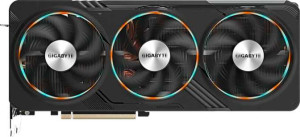
Gigabyte GeForce RTX 4070 Super Gaming