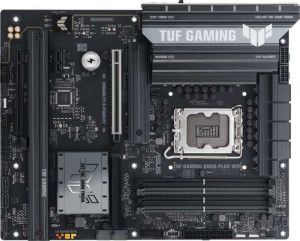
Asus TUF Gaming X870-Plus WiFi specifications and in-depth review

Asus TUF Gaming X870-Plus WiFi

Manufacturer: Asus

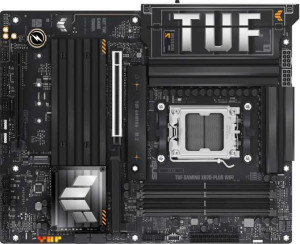
The Asus TUF Gaming X870-Plus WiFi is an ATX-form-factor motherboard built around the AM5 socket and AMD X870 chipset, targeting users who want a well-rounded platform for modern Ryzen processors. It ships with Wi-Fi 7 (802.11be) and Bluetooth 5.4 integrated directly on the board, alongside a single HDMI 2.1 output and RGB lighting. Overclocking is listed as supported, and the board carries a three-year warranty.

On the memory side, four DDR5 slots allow up to 192 GB across two channels, with overclocked speeds reaching 8000 MHz. Storage options include four M.2 sockets, two SATA 3 connectors, and full RAID 0, 1, 5, and 10 support. The rear I/O provides three USB 3.2 Gen 2 Type-A ports, four USB 3.2 Gen 1 Type-A ports, two USB 4 40 Gbps ports, and two Thunderbolt 4 ports, complemented by a single RJ45 jack. Expansion is handled by one PCIe 5.0 x16 slot and one PCIe 4.0 x16 slot, while the onboard audio section delivers a 120 dB signal-to-noise ratio with 7.1-channel output across five audio connectors.

Pros
  • Supports Wi-Fi 7 along with all previous Wi-Fi generations down to Wi-Fi 4, ensuring broad wireless compatibility
  • Four M.2 sockets provide ample high-speed storage expansion without relying solely on SATA
  • Two USB 4 40Gbps ports and two Thunderbolt 4 ports offer fast, versatile high-bandwidth connectivity on the rear I/O
  • DDR5 memory support across four slots with a 192 GB ceiling and overclocked speeds up to 8000 MHz gives substantial headroom for memory-intensive workloads
  • Onboard audio delivers 7.1-channel output with a 120 dB signal-to-noise ratio, a solid spec for integrated audio
  • Full RAID support for modes 0, 1, 5, and 10 allows flexible storage redundancy and performance configurations
Cons
  • No USB-C ports on the rear I/O despite the presence of USB 4 and Thunderbolt 4 connections
  • Dual BIOS is absent, meaning there is no automatic fallback if a BIOS update goes wrong
  • No easy CMOS reset mechanism, which can make BIOS recovery more cumbersome
  • ECC memory is not supported, limiting suitability for workloads that require error-correcting RAM
  • Only two SATA 3 connectors are available, which may be restrictive for builds with multiple traditional drives
  • No S/PDIF Out port, which rules out digital optical or coaxial audio output to external receivers
Who is this for?

This board is a strong fit for users building a high-end AMD Ryzen system who want a platform that won't limit connectivity or future expansion. The combination of Wi-Fi 7 and Bluetooth 5.4 makes it well suited for desktop setups where cutting-edge wireless performance matters, while the two Thunderbolt 4 and two USB 4 40Gbps ports appeal to creative professionals who regularly connect high-bandwidth peripherals or external storage. The four M.2 sockets and full RAID 0, 1, 5, and 10 support also make it a practical choice for content creators or small workstation builds that need fast, redundant storage arrangements, and the DDR5 platform with 192 GB capacity headroom accommodates memory-heavy workflows with room to grow.

Who is this NOT for?

Users who rely on ECC memory for error-correcting workloads — such as scientific computing, financial data processing, or professional server environments — will find this board unsuitable, as ECC support is absent. The lack of a dual BIOS and easy CMOS reset also makes it a less forgiving choice for users who frequently experiment with BIOS updates or aggressive overclocking, where a failed flash could leave the system unbootable without straightforward recovery options. Additionally, with only two SATA 3 connectors and no S/PDIF output, builders who depend on a large array of traditional hard drives or require digital optical audio for a home theater setup will find the board's capabilities in those areas too limited.

General info:

CPU socket AM5
chipset X870
form factor ATX
supports Wi-Fi
Wi-Fi version Wi-Fi 4 (802.11n), Wi-Fi 5 (802.11ac), Wi-Fi 6 (802.11ax), Wi-Fi 6E (802.11ax), Wi-Fi 7 (802.11be)
Has Bluetooth
Bluetooth version 5.4
HDMI version HDMI 2.1
Easy to overclock
has RGB lighting
Easy to reset BIOS
Has dual BIOS
has aptX
CPU sockets 1
Has integrated graphics
warranty period 3 years
height 244 mm
width 305 mm
Has integrated CPU

The Asus TUF Gaming X870-Plus WiFi is an ATX-form-factor board measuring 305 mm × 244 mm, built around a single AM5 socket and compatible with the X870 chipset. It does not include an integrated CPU or integrated graphics. Wireless connectivity covers the full range from Wi-Fi 4 through Wi-Fi 7 (802.11be), and Bluetooth 5.4 is also built in, though aptX is not supported. A single HDMI 2.1 output is available for display output. The board supports overclocking and features RGB lighting, while dual BIOS and easy CMOS reset are not present. There is no integrated CPU on this board. A three-year warranty is included.

Memory:

maximum memory amount 192GB
overclocked RAM speed 8000 MHz
memory slots 4
DDR memory version 5
memory channels 2
Supports ECC memory

This board supports DDR5 memory across four slots arranged in a dual-channel configuration, with a maximum supported capacity of 192 GB. Overclocked RAM speeds can reach up to 8000 MHz, giving users meaningful headroom for memory tuning. ECC memory is not supported.

Ports:

USB 3.2 Gen 2 ports (USB-A) 3
USB 3.2 Gen 1 ports (USB-A) 4
USB 3.2 Gen 2 ports (USB-C) 0
USB 3.2 Gen 1 ports (USB-C) 0
USB 2.0 ports 1
USB 3.2 Gen 2x2 ports 0
USB 4 40Gbps ports 2
USB 4 20Gbps ports 0
Thunderbolt 4 ports 2
Thunderbolt 3 ports 0
has an HDMI output
DisplayPort outputs 0
RJ45 ports 1
Has USB Type-C
eSATA ports 0
DVI outputs 0
has a VGA connector
PS/2 ports 0

The rear I/O panel offers a broad selection of USB connectivity, including three USB 3.2 Gen 2 Type-A ports, four USB 3.2 Gen 1 Type-A ports, one USB 2.0 port, and two USB 4 40Gbps ports alongside two Thunderbolt 4 ports — all with USB Type-C present on the board. There are no USB 3.2 Gen 2 Type-C, Gen 1 Type-C, Gen 2x2, or USB 4 20Gbps ports. For display output, a single HDMI output is available, while DisplayPort, DVI, and VGA connectors are absent. Networking is handled by one RJ45 port, and there are no eSATA or PS/2 ports.

Connectors:

USB 3.2 Gen 1 ports (through expansion) 2
USB 3.2 Gen 2x2 ports (through expansion) 1
USB 2.0 ports (through expansion) 4
SATA 3 connectors 2
fan headers 6
USB 3.0 ports (through expansion) 2
M.2 sockets 4
Has TPM connector
U.2 sockets 0
Has mSATA connector
SATA 2 connectors 0

Internal expansion is well catered for, with four M.2 sockets and two SATA 3 connectors available for storage — there are no SATA 2, U.2, or mSATA connectors. USB headers allow further ports to be added via the case or expansion brackets: two USB 3.2 Gen 1 headers, two USB 3.0 headers, one USB 3.2 Gen 2x2 header, and four USB 2.0 headers are present. Cooling is managed through six fan headers. A TPM connector is not included on this board.

Expansion slots:

PCIe 4.0 x16 slots 1
PCIe 5.0 x16 slots 1
PCIe 3.0 x16 slots 0
PCIe x1 slots 0
PCI slots 0
PCIe 2.0 x16 slots 0
PCIe x4 slots 0
PCIe x8 slots 0

The board provides two full-length PCIe slots: one PCIe 5.0 x16 slot and one PCIe 4.0 x16 slot. There are no PCIe 3.0, PCIe 2.0, PCIe x8, PCIe x4, PCIe x1, or legacy PCI slots present, keeping the expansion layout focused and uncluttered.

Audio:

Signal-to-Noise ratio (DAC) 120 dB
audio channels 7.1
Has S/PDIF Out port
audio connectors 5

The onboard audio supports 7.1-channel output and delivers a signal-to-noise ratio of 120 dB from the DAC, with five audio connectors available on the rear panel. An S/PDIF Out port is not included.

Storage:

Supports RAID 1
Supports RAID 10 (1+0)
Supports RAID 5
Supports RAID 0
Supports RAID 0+1

The board supports four RAID modes: RAID 0, RAID 1, RAID 5, and RAID 10 (1+0), covering the most commonly used configurations for both performance and redundancy. RAID 0+1 is not supported.
Final Verdict

The Asus TUF Gaming X870-Plus WiFi is a well-specified ATX motherboard for the AM5 platform that covers most bases a modern desktop builder would expect. Its standout connectivity package — particularly the two Thunderbolt 4 and two USB 4 40Gbps ports paired with Wi-Fi 7 — positions it firmly at the higher end of consumer motherboard offerings, and the four M.2 sockets with broad RAID support add genuine versatility for storage-intensive builds. The absence of ECC support and dual BIOS does narrow its appeal, making it less appropriate for reliability-critical workstation environments, but for users building a capable AMD Ryzen system who prioritize fast wireless, high-bandwidth peripheral support, and DDR5 memory headroom, this board delivers a cohesive and feature-rich foundation.

Popular Comparisons

Asus TUF Gaming X870-Plus WiFi
VS
ASRock X870 LiveMixer Wi-Fi
Asus TUF Gaming X870-Plus WiFi
VS
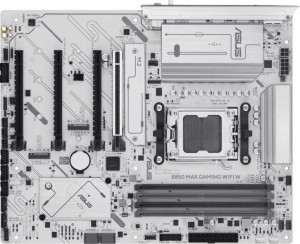
Asus B850 Max Gaming Wi-Fi W
Asus TUF Gaming X870-Plus WiFi
VS
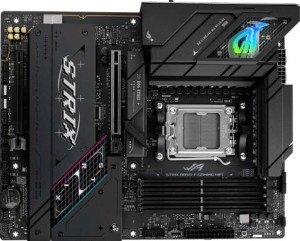
Asus ROG Strix B850-F Gaming WiFi
Asus TUF Gaming X870-Plus WiFi
VS
Asus TUF Gaming B860-Plus WiFi
Asus TUF Gaming X870-Plus WiFi
VS
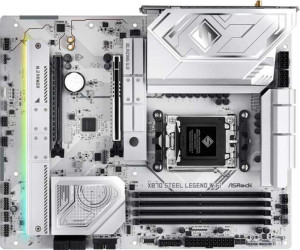
ASRock X870 Steel Legend WiFi
Asus TUF Gaming X870-Plus WiFi
VS
Asus ROG Strix X870E-E Gaming WiFi
Asus TUF Gaming X870-Plus WiFi
VS
Asus ROG Strix X870-F Gaming WiFi
Asus TUF Gaming X870-Plus WiFi
VS
Asus ROG Strix X870E-H Gaming Wi-Fi7
Asus TUF Gaming X870-Plus WiFi
VS
Gigabyte X870E Aorus Elite X3D Ice
Asus TUF Gaming X870-Plus WiFi
VS
MSI MAG B850 Tomahawk Max WiFi
Asus TUF Gaming X870-Plus WiFi
VS
Gigabyte B850I Aorus Pro
Asus TUF Gaming X870-Plus WiFi
VS
MSI MAG X870E Tomahawk WiFi
Asus TUF Gaming X870-Plus WiFi
VS
MSI X870 Gaming Plus WiFi
Asus TUF Gaming X870-Plus WiFi
VS
MSI Pro X870E-P Wi-Fi
Asus TUF Gaming X870-Plus WiFi
VS
MSI MAG X870 Tomahawk WiFi
Asus TUF Gaming X870-Plus WiFi
VS
Gigabyte X870E Aorus Pro
Asus TUF Gaming X870-Plus WiFi
VS
Gigabyte X870 Aorus Elite WiFi7 Ice
Asus TUF Gaming X870-Plus WiFi
VS
Gigabyte X870E Aorus Elite WiFi7