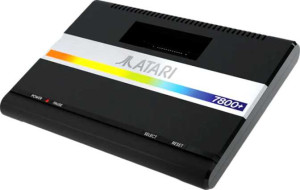
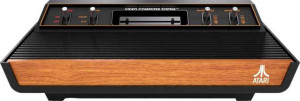
The Atari 7800 Plus has a modest performance profile that reflects its retro console nature. It does not support ray tracing or multithreading, and there is no NVMe SSD on board. The unit also lacks the ability to connect to an external hard drive, meaning storage expansion through that route is not an option.
The Atari 7800 Plus is a retro-type console with an internal power supply, removing the need for an external power brick. It is region free, so it can be used across different markets without restrictions. The unit measures 397 mm wide, 192 mm tall, and 81 mm thick, with a total volume of 6,174.144 cm³ and a weight of 1,310 g. There is no optical disc drive included, and the hard drive is not user-replaceable.
The Atari 7800 Plus keeps its connectivity straightforward, offering HDMI output for display along with a USB Type-C port and one additional USB port. There is no Wi-Fi support, no cellular module, and no NFC, so the console does not connect to networks wirelessly. It also lacks a 3.5 mm headset jack, an external memory slot, and DLNA certification, and it has no RJ45 port for wired networking. Connectivity between home and portable devices is not supported.
The Atari 7800 Plus supports backwards compatibility and gives players access to high scores and achievements, making it a reasonable choice for those invested in preserving their gaming history. Beyond those two features, the console's list of supported capabilities is limited: there is no VR support, no 3D audio, no Dolby Vision, and no stereoscopic 3D or autostereoscopic display. It cannot play Blu-ray Discs or 4K Blu-ray media, has no touch screen, no front camera, no secondary screen, and no optical tracking. Modern conveniences such as quick resume, playing games while they download, Discord voice chat, and voice commands are also absent, and the unit does not use flash storage, include stereo speakers, or feature a child lock.
The Atari 7800 Plus ships with two controllers, one of which is wireless, giving players some setup flexibility from the start. Each controller features one analog stick and six buttons, keeping the layout straightforward. There are no adaptive triggers, no dual force feedback, no integrated touchpad, and no compatibility with motion-sensing controllers.