Beelink SER9 Max specifications and in-depth review

Beelink SER9 Max

Manufacturer: Beelink

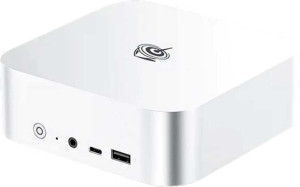
The Beelink SER9 Max is a compact Mini PC built around a multi-core processor and integrated Radeon 780M graphics, making it a capable desktop solution in a notably small footprint. With a volume of just 814.66 cm³ and dimensions of 135 × 135 × 44.7 mm, it fits comfortably in tight spaces while still offering a 32GB DDR5 memory configuration running at 5600 MHz. The unit ships with 1TB of SSD storage and carries a one-year warranty.

On the processing side, the CPU runs eight cores at a base clock of 3.8 GHz with a turbo ceiling of 4.9 GHz, supported by 16 threads, a 16 MB L3 cache, and a 45W TDP. The integrated Radeon 780M GPU, built on a 4 nm RDNA 3.0 architecture, delivers 8.294 TFLOPS of floating-point performance with a turbo clock of 2600 MHz and support for up to four simultaneous displays. Connectivity is well-rounded, including Wi-Fi 6, Bluetooth 5.2, a Thunderbolt 4 port, USB 4 at 40 Gbps, HDMI 2.1, DisplayPort, and a 2.5G RJ45 port, rounding out a dense feature set within its compact chassis.

Pros
  • The DDR5 RAM running at 5600 MHz across two channels provides fast memory throughput for a compact desktop unit
  • Thunderbolt 4 and USB 4 40Gbps ports enable high-bandwidth peripheral and display connections in a small chassis
  • The integrated Radeon 780M GPU supports up to four simultaneous displays with multi-display technology built in
  • Wi-Fi 6 support ensures fast and efficient wireless connectivity alongside Bluetooth 5.2
  • The system can accommodate up to 256GB of RAM, leaving substantial room for future memory upgrades
  • Ray tracing support and DirectX 12 compatibility extend the GPU's capability for modern graphical workloads
Cons
  • The SSD is not NVMe, which limits storage read and write speeds compared to what the form factor could support
  • The CPU multiplier is locked, removing any option for manual clock speed adjustments
  • No ECC memory support limits reliability for error-sensitive workloads
  • Air-water cooling is absent, which may constrain sustained thermal performance given the 45W TDP in such a compact enclosure
  • There is no external memory slot, restricting storage expansion options
  • The warranty period covers only one year
Who is this for?

This Mini PC suits users who need a capable, space-efficient desktop for everyday computing, light content creation, and productivity workloads. The combination of DDR5 RAM, a multi-core CPU with multithreading, and the Radeon 780M GPU makes it a reasonable fit for office and home office setups where desk space is limited. The support for up to four simultaneous displays also makes it appealing for multi-monitor productivity environments, while Thunderbolt 4 and USB 4 40Gbps connectivity caters well to users who rely on fast external peripherals or docking stations. Those wanting a compact home media or light gaming machine that handles DirectX 12 and ray tracing workloads at moderate settings will also find the platform adequate.

Who is this NOT for?

Users who require consistently high storage throughput will find the non-NVMe SSD a limiting factor, making this unit less suited for data-intensive workflows such as video editing or large file transfers. The locked CPU multiplier and absence of air-water cooling mean the platform offers no headroom for performance tuning, which rules it out for users looking to push the hardware under sustained heavy loads. Similarly, the lack of ECC memory support makes it a poor fit for error-sensitive or mission-critical computing tasks such as scientific workloads or financial data processing. Dedicated gaming users who expect consistent high-frame-rate output at demanding settings will also find the integrated GPU insufficient for that purpose.

General info:

SSD storage capacity 1000GB
Is an NVMe SSD
thickness 135 mm
height 44.7 mm
width 135 mm
volume 814.6575 cm³

The Beelink SER9 Max includes a 1000GB SSD for local storage, though it is not an NVMe drive. Its physical footprint is compact, measuring 135 mm in both thickness and width with a height of 44.7 mm, resulting in a total volume of 814.66 cm³ — a notably small chassis for a desktop-class machine.

CPU:

Thermal Design Power (TDP) 45W
CPU speed 8 x 3.8 GHz
turbo clock speed 4.9GHz
CPU threads 16 threads
Has integrated graphics
uses multithreading
L3 cache 16 MB
L2 cache 8 MB
L2 core 1 MB/core
L3 core 2 MB/core
clock multiplier 38
Has an unlocked multiplier
Supports 64-bit
CPU temperature 100 °C

The CPU runs eight cores at a base speed of 3.8 GHz with a turbo clock of 4.9 GHz, supported by 16 threads through multithreading. It carries a 45W TDP and a maximum operating temperature of 100 °C, with a clock multiplier of 38 that is not unlocked. Cache configuration consists of 8 MB of L2 (1 MB per core) and 16 MB of L3 cache (2 MB per core), and the processor supports 64-bit computing and includes integrated graphics. The multiplier is locked, leaving no headroom for manual frequency adjustments.

Graphics card:

floating-point performance 8.294 TFLOPS
GPU clock speed 800 MHz
GPU turbo 2600 MHz
texture rate 129.6 GTexels/s
pixel rate 86.4 GPixel/s
supports ray tracing
supports DLSS
PCI Express (PCIe) version 4
texture mapping units (TMUs) 48
shading units 768
render output units (ROPs) 32
DirectX version DirectX 12
OpenGL version 4.6
OpenCL version 2.1
semiconductor size 4 nm
supported displays 4
Supports multi-display technology
Has Double Precision Floating Point (DPFP)
number of transistors 25390 million

The integrated GPU operates at a base clock of 800 MHz, boosting up to a turbo of 2600 MHz, and delivers 8.294 TFLOPS of floating-point performance alongside a texture rate of 129.6 GTexels/s and a pixel rate of 86.4 GPixel/s. It is built on a 4 nm process with 25,390 million transistors, and its shader configuration includes 768 shading units, 48 texture mapping units, and 32 ROPs. The GPU supports ray tracing, Double Precision Floating Point, and multi-display output across up to four screens, while API coverage spans DirectX 12, OpenGL 4.6, and OpenCL 2.1 over a PCIe 4 interface. DLSS is not supported.

Memory:

RAM 32GB
RAM speed 5600 MHz
DDR memory version 5

The system is equipped with 32GB of DDR5 RAM running at a speed of 5600 MHz, offering a modern memory configuration suited to demanding multitasking workloads.

Connectivity:

Wi-Fi version Wi-Fi 6 (802.11ax), Wi-Fi 5 (802.11ac), Wi-Fi 4 (802.11n)
supports Wi-Fi
Has Bluetooth
Bluetooth version 5.2
USB 2.0 ports 2
USB 3.2 Gen 2 ports (USB-A) 2
USB 3.2 Gen 1 ports (USB-A) 0
USB 3.2 Gen 2 ports (USB-C) 1
USB 4 40Gbps ports 1
USB 4 20Gbps ports 0
USB 3.2 Gen 2x2 ports 0
USB 3.2 Gen 1 ports (USB-C) 0
Thunderbolt 4 ports 1
Thunderbolt 3 ports 0
DisplayPort outputs 1
HDMI version HDMI 2.1
HDMI ports 1
RJ45 ports 1
has a socket for a 3.5 mm audio jack
has a VGA connector
Has S/PDIF Out port

Wireless connectivity covers Wi-Fi 6, 5, and 4 standards alongside Bluetooth 5.2. On the wired side, the port selection includes two USB 2.0 ports, two USB 3.2 Gen 2 Type-A ports, one USB 3.2 Gen 2 Type-C port, and a USB 4 40Gbps port, while there is no USB 3.2 Gen 1 or Gen 2x2 Type-C. A Thunderbolt 4 port is present, though no Thunderbolt 3 is available. Display output is handled through one HDMI 2.1 port and one DisplayPort, and a single RJ45 port provides wired networking. Audio connectivity includes a 3.5 mm headset jack, but there is no VGA connector and no S/PDIF output.

Benchmarks:

PassMark result 28797
PassMark result (single) 3556

In PassMark testing, the CPU achieves a multi-threaded score of 28,797, reflecting its overall processing throughput across all cores, while the single-threaded result comes in at 3,556, indicating per-core execution speed.

Miscellaneous:

maximum memory amount 256GB
has an external memory slot
Type Laptop, Desktop
Uses big.LITTLE technology
instruction sets MMX, F16C, FMA3, AES, AVX, AVX2, SSE 4.1, SSE 4.2
Has NX bit
GPU name Radeon 780M
Supports ECC memory
memory channels 2
RAM speed (max) 7500 MHz
GPU architecture RDNA 3.0
Has air-water cooling
Supports 3D
warranty period 1 years
Uses flash storage

The system supports a maximum of 256GB of RAM across two memory channels, with a peak RAM speed ceiling of 7500 MHz, though ECC memory is not supported and there is no external memory slot. The integrated GPU is the Radeon 780M, based on the RDNA 3.0 architecture, and the platform supports stereoscopic 3D. The CPU is rated for both laptop and desktop form factors, does not use big.LITTLE technology, and includes the NX bit for hardware-level security. Supported instruction sets cover MMX, F16C, FMA3, AES, AVX, AVX2, SSE 4.1, and SSE 4.2. The unit does not use flash storage, lacks air-water cooling, and comes with a one-year warranty.
Final Verdict

The Beelink SER9 Max is a well-rounded Mini PC that manages to pack a meaningful set of capabilities into a notably compact chassis. Its DDR5 memory configuration, Radeon 780M GPU with multi-display support, and a robust connectivity suite headlined by Thunderbolt 4 and USB 4 40Gbps make it a practical choice for users who prioritize a clutter-free workspace without sacrificing day-to-day versatility. That said, the non-NVMe storage, locked CPU multiplier, and thermal constraints keep it firmly in the light-to-moderate workload category. For home office users, multi-monitor productivity setups, or general desktop use where physical footprint matters, the SER9 Max delivers a coherent and capable package — provided expectations are aligned with what integrated graphics and a compact thermal envelope can realistically sustain.