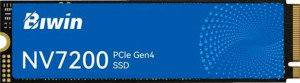
Biwin NV7200 500GB specifications and in-depth review

Biwin NV7200 500GB

Manufacturer: Biwin

The Biwin NV7200 500GB is a high-performance M.2 NVMe SSD designed to offer fast data transfer speeds and solid endurance. With a sequential read speed of 6300 MB/s and sequential write speed of 3100 MB/s, it caters to users seeking reliable storage for intensive workloads.

This SSD is equipped with a Maxio MAP1602 controller and supports PCIe 4.0 for enhanced performance. It utilizes TLC storage technology and comes with a 200 TBW rating, ensuring durability. It has an MTBF of 1.5 million hours and is backed by a 5-year warranty, making it a robust option for various storage needs.

Pros
  • High sequential read speed of 6300 MB/s, ideal for data-heavy tasks.
  • Solid random read speed of 550,000 IOPS, improving performance in varied workloads.
  • 500GB storage capacity, suitable for a wide range of general storage needs.
  • 5-year warranty period, ensuring long-term reliability.
  • Equipped with Host Memory Buffer (HMB) for enhanced caching performance.
Cons
  • Lacks integrated heatsink, potentially limiting thermal management in intensive usage scenarios.
  • No AES encryption support for those seeking hardware-level data security.
  • Does not feature RGB lighting, which may be a downside for users who prefer aesthetic customization.
Who is this for?

The Biwin NV7200 500GB is ideal for users seeking reliable storage with fast read and write speeds for data-intensive tasks. Its sequential read speed of 6300 MB/s and sequential write speed of 3100 MB/s make it a strong choice for gamers, content creators, or professionals working with large files. The 500GB storage capacity provides a balanced solution for moderate data storage needs, while the 5-year warranty ensures peace of mind for long-term use.

Who is this NOT for?

This SSD may not be suitable for users who require high levels of data security, as it lacks AES encryption support. Additionally, those involved in extreme, long-duration workloads may find the absence of an integrated heatsink a potential limitation for heat management. The absence of RGB lighting also means it may not appeal to users who prioritize aesthetic customization for their PC builds.

Read speed:

sequential read speed 6300 MB/s
random read speed 550000 IOPS

The Biwin NV7200 500GB delivers impressive read performance, with a sequential read speed of 6300 MB/s and a random read speed of 550,000 IOPS, making it well-suited for demanding applications that require quick access to data.

Write speed:

sequential write speed 3100 MB/s
random write speed 550000 IOPS

The Biwin NV7200 500GB offers solid write speeds with a sequential write speed of 3100 MB/s and a random write speed of 550,000 IOPS, making it efficient for both continuous data transfers and high-demand workloads.

Benchmarks:

General info:

type M2
SSD cache HMB (Host Memory Buffer)
Is an NVMe SSD
NVMe version 2
internal storage 500GB
release date November 2024
controller Maxio MAP1602
SSD storage type TLC
PCI Express (PCIe) version 4
Controller channels 4
Terabytes Written (TBW) 200
MTBF 1.5million hours
warranty period 5 years
Has an integrated heatsink
maximum operating temperature 70 °C
bits of encryption supported 0
has RGB lighting

The Biwin NV7200 500GB is an M.2 NVMe SSD featuring a 500GB internal storage capacity and utilizing TLC storage technology. It supports PCIe 4.0 and is powered by the Maxio MAP1602 controller, ensuring solid performance across tasks. The drive has a 5-year warranty and a durability rating of 200 TBW, backed by an MTBF of 1.5 million hours, offering reliability for long-term use.

Final Verdict

The Biwin NV7200 500GB is a strong performer in the SSD category, offering impressive sequential read speeds of 6300 MB/s and sequential write speeds of 3100 MB/s, making it an excellent choice for users requiring fast data transfers. With its reliable 5-year warranty and 500GB capacity, it suits moderate storage needs for gamers and content creators. However, it lacks AES encryption and an integrated heatsink, which may limit its appeal for those prioritizing security or long-duration, intensive workloads. Overall, it provides solid performance for most users, especially those focused on speed and reliability.