Blackview Oscal Pad 50 WiFi specifications and in-depth review

Blackview Oscal Pad 50 WiFi

Manufacturer: Blackview

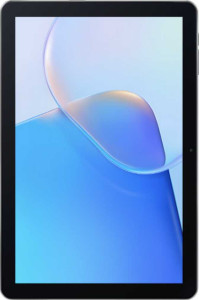
The Blackview Oscal Pad 50 WiFi is a 10.1-inch Android tablet designed for everyday use, running Android 13 on the Allwinner A133 chipset. It features an IPS LCD touchscreen with a resolution of 1280 x 800 pixels and a pixel density of 149 ppi, housed in a body measuring 246 x 162.7 x 9.85 mm and weighing 520.5 g. With 64GB of internal storage and support for microSD cards up to 1TB, it offers a reasonable amount of space for apps, media, and documents.

Under the hood, the Oscal Pad 50 WiFi is powered by a quad-core processor clocked at 4 x 1.6 GHz paired with 2GB of RAM, while the integrated GPU runs at 660 MHz with OpenGL ES 3.2 support. Connectivity options include Wi-Fi 4 (802.11n), Bluetooth 4.2, USB Type-C (USB 2.0), and a 3.5 mm headphone jack, though NFC, GPS, and 5G are absent. The 5100 mAh battery supports fast charging, and the rear camera delivers 8 MP stills alongside a 5 MP front-facing shooter with manual controls including ISO, focus, white balance, and exposure adjustment.

Pros
  • Supports expandable storage up to 1TB via a microSD slot, adding meaningful flexibility for media and file storage
  • Includes a 3.5 mm headphone jack, allowing wired headphones to be used without an adapter
  • The 5100 mAh battery supports fast charging, reducing downtime when the tablet needs to be topped up
  • Offers a range of manual camera controls including ISO, focus, white balance, and exposure, giving more control over photos than typical entry-level tablets
  • Runs Android 13 with multi-user support, making it usable across different household members with separate profiles
  • USB Type-C connector provides a more convenient and reversible charging and data transfer experience
Cons
  • Only 2GB of RAM may limit smooth multitasking and the ability to run multiple demanding apps simultaneously
  • The 1280 x 800 pixel resolution on a 10.1-inch panel results in a relatively low pixel density of 149 ppi, which can make text and images appear less sharp
  • No GPS support means the tablet cannot be used for navigation or location-based services without a network connection
  • Lacks NFC, ruling out contactless payments and quick device pairing
  • No stereo speakers, meaning audio output is limited to a single channel
  • Bluetooth 4.2 is an older version that lacks the energy efficiency and feature improvements found in more recent Bluetooth standards
Who is this for?

This tablet suits casual everyday users who primarily browse the web, stream video, read, or handle light productivity tasks on a 10.1-inch touchscreen. The support for expandable storage up to 1TB makes it practical for users who store a large amount of media locally, while the multi-user support and child lock feature make it a reasonable shared household device or a managed tablet for younger users. The 3.5 mm headphone jack and manual camera controls add everyday convenience for users who prefer wired audio and want basic hands-on control over their photos.

Who is this NOT for?

Users who need reliable navigation will find this tablet unsuitable due to the absence of GPS, while the combination of only 2GB of RAM and a quad-core processor clocked at 1.6 GHz makes it a poor fit for anyone expecting smooth heavy multitasking or demanding app performance. Creative professionals and mobile photographers will also be frustrated by the lack of optical image stabilization, slow-motion video, and HDR10 recording, and the single-channel audio output with no stereo speakers makes it a weak choice for anyone prioritizing an immersive media consumption experience.

Design:

weight 520.5 g
thickness 9.85 mm
width 246 mm
height 162.7 mm
volume 394.23837 cm³
Stylus included
Has a detachable keyboard
Has a backlit keyboard
water resistance None
Has tilt sensitivity

The Blackview Oscal Pad 50 WiFi has a footprint of 246 x 162.7 mm with a thickness of 9.85 mm and a weight of 520.5 g, giving it a volume of 394.24 cm³. The tablet does not include a stylus, detachable keyboard, or backlit keyboard, and it offers no water resistance rating. Tilt sensitivity is likewise absent, making this a straightforward slate design without any bundled input accessories or environmental protection features.

Display:

screen size 10.1"
resolution 1280 x 800 px
pixel density 149 ppi
Display type LCD, IPS
has branded damage-resistant glass
has anti-reflection coating
supports HDR10
has a touch screen
Has sapphire glass display
supports HDR10+
supports Dolby Vision
Has an e-paper display

The Blackview Oscal Pad 50 WiFi features a 10.1-inch IPS LCD touchscreen with a resolution of 1280 x 800 pixels and a pixel density of 149 ppi. The panel does not incorporate branded damage-resistant glass, an anti-reflection coating, or sapphire glass, and it does not support HDR10, HDR10+, or Dolby Vision for enhanced contrast or wide color playback. It is also not an e-paper display.

Performance:

internal storage 64GB
RAM 2GB
Chipset (SoC) name Allwinner A133
CPU speed 4 x 1.6 GHz
has an external memory slot
semiconductor size 28 nm
Supports 64-bit
maximum amount of external memory supported 1024GB
Has integrated LTE
Uses big.LITTLE technology
DirectX version DirectX 10
Has integrated graphics
GPU clock speed 660 MHz
Has NX bit
RAM speed 1600 MHz
Has TrustZone
maximum memory amount 4GB
Android version Android 13
bits executed at a time 128
OpenGL ES version 3.2
PassMark result 668
PassMark result (single) 409
VFP version 4
eMMC version 5.1
OpenCL version 1.2

The Blackview Oscal Pad 50 WiFi is powered by the Allwinner A133 SoC, a quad-core processor running at 4 x 1.6 GHz and built on a 28 nm process node, paired with 2GB of RAM running at 1600 MHz and 64GB of eMMC 5.1 internal storage. The chipset does not support 64-bit processing or big.LITTLE technology, but it does include integrated LTE, an NX bit, and ARM TrustZone security, with a maximum supported memory ceiling of 4GB. Graphics are handled by an integrated GPU clocked at 660 MHz, supporting OpenGL ES 3.2, OpenCL 1.2, and DirectX 10, while the CPU executes 128 bits at a time via NEON and uses VFP version 4. The tablet scores 668 in the PassMark multi-core benchmark and 409 in the single-core test, runs Android 13, and supports expandable storage via an external memory slot up to 1024GB.

Cameras:

megapixels (main camera) 8 MP
megapixels (front camera) 5MP
has a flash
has a front camera
has a built-in HDR mode
can create panoramas in-camera
supports slow-motion video recording
has touch autofocus
optical zoom 0x
has manual white balance
has a CMOS sensor
supports HDR10 recording
has continuous autofocus when recording movies
supports Dolby Vision recording
Has a front-facing LED flash
number of flash LEDs 1
has manual ISO
has a video light
Has timelapse function
Shoots 360° panorama
has a serial shot mode
has built-in optical image stabilization
has 3D photo/video recording capabilities
Has a dual-tone LED flash
has manual focus
Has a RGB LED flash
has manual exposure
has manual shutter speed

The Blackview Oscal Pad 50 WiFi includes an 8 MP rear camera with a CMOS sensor, a single LED flash, touch autofocus, continuous autofocus during video recording, and a video light, though it lacks optical zoom, optical image stabilization, and a dual-tone or RGB flash. Manual controls cover ISO, focus, white balance, and exposure, but manual shutter speed is not available, and shooting modes such as panorama, 360-degree panorama, timelapse, burst mode, and slow-motion video recording are all absent. The front-facing 5 MP camera supports HDR stills but does not have its own LED flash. Neither HDR10 recording nor Dolby Vision recording is supported, and the rear camera has no 3D photo or video capabilities.

Audio:

has aptX
has aptX HD
has LDAC
has aptX Low Latency
has aptX Adaptive
has aptX Lossless
has stereo speakers
has a socket for a 3.5 mm audio jack
Has a radio

The Blackview Oscal Pad 50 WiFi includes a 3.5 mm headphone jack for wired audio output, but it does not feature stereo speakers or a built-in radio. On the wireless audio side, none of the advanced Bluetooth codec options are supported, meaning aptX, aptX HD, aptX Low Latency, aptX Adaptive, aptX Lossless, and LDAC are all absent.

Battery:

battery power 5100 mAh
Supports fast charging
has wireless charging
has a battery level indicator
has a rechargeable battery
has a removable battery

The Blackview Oscal Pad 50 WiFi is equipped with a 5100 mAh rechargeable battery that supports fast charging and includes a battery level indicator. The battery is non-removable and does not support wireless charging.

Connectivity & Features:

Wi-Fi version Wi-Fi 4 (802.11n)
SIM cards 1 SIM
has Mail Privacy Protection
has on-device machine learning
has clipboard warnings
has location privacy options
has camera/microphone privacy options
can block app tracking
blocks cross-site tracking
supports split screen
has Live Text
has notification permissions
has full-page screenshots
has Quick Start
has theme customization
has Wi-Fi password sharing
has PiP
Can play games while they download
has an extra dim mode
can offload apps
has focus modes
has media picker
has dynamic theming
has dark mode
has battery health check
Has USB Type-C
has a cellular module
has 5G support
is a multi-user system
gets direct OS updates
has GPS
has a child lock
has an HDMI output
has NFC
Has a fingerprint scanner
USB version 2
Supports widgets
Bluetooth version 4.2
download speed 150 MBits/s
has a gyroscope
Is free and open source
Has offline voice recognition
has a compass
upload speed 50 MBits/s
supports Wi-Fi
Has sharing intents
Has customizable notifications
Uses 3D facial recognition
supports Galileo
Has a barometer
has an accelerometer
has voice commands
Has an iris scanner
Has a built-in projector
supports Ethernet
Has an infrared sensor
Tracks the current position of a mobile device

The Blackview Oscal Pad 50 WiFi connects via Wi-Fi 4 (802.11n) and Bluetooth 4.2, supports a single SIM card with a cellular module, and uses a USB Type-C port running USB 2.0, with download and upload speeds of 150 Mbits/s and 50 Mbits/s respectively. It does not support 5G, NFC, GPS, HDMI output, Ethernet, or Galileo positioning, and hardware sensors such as a gyroscope, accelerometer, compass, and barometer are all absent, as are biometric options including a fingerprint scanner, iris scanner, and 3D facial recognition. On the software side, the tablet runs a free and open-source OS, supports multi-user access, split-screen multitasking, Picture-in-Picture, widgets, dark mode, dynamic theming, theme customization, a media picker, full-page screenshots, customizable notifications, an extra dim mode, offline voice recognition, on-device machine learning, sharing intents, and device position tracking. Privacy features include clipboard warnings, location privacy options, camera and microphone access controls, and app tracking blocking, though cross-site tracking blocking, Mail Privacy Protection, and Wi-Fi password sharing are not available. The tablet also supports playing games while downloading, a child lock, and Live Text, but lacks focus modes, Quick Start, app offloading, battery health check, direct OS vendor updates, and voice commands.

Miscellaneous:

DDR memory version 4

The Blackview Oscal Pad 50 WiFi uses DDR4 memory.
Final Verdict

The Blackview Oscal Pad 50 WiFi is a straightforward Android 13 tablet aimed at light, everyday use rather than demanding tasks. Its most practical strengths are the expandable storage support up to 1TB and the multi-user capability, which together make it a reasonable shared device for casual browsing, media consumption, and basic productivity. That said, the limited RAM, modest processor, absence of GPS, and single-channel audio mean it falls short for users with more specific or intensive requirements. For those whose needs align with what it actually offers — a no-frills Android tablet with solid storage flexibility and family-friendly software features — the Oscal Pad 50 WiFi serves its purpose, but users expecting broader functionality should weigh its hardware constraints carefully before committing.