Blackview Oscal Pad 9 specifications and in-depth review

Blackview Oscal Pad 9

Manufacturer: Blackview

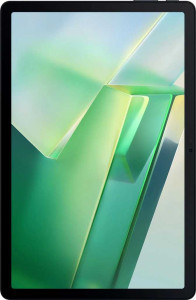
The Blackview Oscal Pad 9 is a 10.1″ Android tablet built around a practical feature set suited to everyday use. Running Android 15, it pairs 8GB of RAM with 128GB of internal storage and supports expandable memory via a microSD slot, giving users reasonable flexibility for apps, media, and files. The device measures 8.9 mm thick and weighs 536 g, making it a fairly standard-sized slate in its category.

Under the hood, the Oscal Pad 9 is driven by the Unisoc T310 chipset, a quad-core processor clocked at up to 2 GHz on its primary core, built on a 12 nm process and paired with a PowerVR GE8300 GPU running at 800 MHz. The IPS LCD panel delivers a 1920x1200 resolution at 224 ppi with a 60 Hz refresh rate, while connectivity options include Wi-Fi 4, Bluetooth 5, USB Type-C, and a cellular module with a single SIM slot. The 7700 mAh battery supports 10W wired fast charging, and the tablet includes stereo speakers along with a 7 MP rear camera capable of 1080p video recording at 30 fps.

Pros
  • The 7700 mAh battery is a sizeable capacity for a 10.1-inch tablet, supporting extended use between charges
  • Comes with 8GB of RAM and 128GB of internal storage, with an external memory slot for further expansion
  • Ships with Android 15, which is a recent version of the operating system for a tablet in this segment
  • Stereo speakers provide a wider audio experience for media consumption compared to a single speaker setup
  • A solid set of manual camera controls — including ISO, white balance, focus, and exposure — gives users more flexibility when shooting photos
  • Fast charging over USB Type-C at 10W reduces downtime when recharging the device
Cons
  • The Unisoc T310 is built on a 12 nm process with only four CPU threads, which limits processing headroom for demanding tasks
  • Wi-Fi is limited to Wi-Fi 4 (802.11n), which is an older standard that may bottleneck wireless speeds
  • There is no 3.5 mm headphone jack, and no aptX codec support of any kind, restricting wired and high-quality wireless audio options
  • GPS is absent, making the tablet unsuitable for navigation use cases even though it has a cellular module
  • No biometric security is available — there is no fingerprint scanner, iris scanner, or 3D facial recognition
  • The main camera is limited to 7 MP with no optical image stabilization, no HDR mode, and no slow-motion video recording
Who is this for?

The Oscal Pad 9 is a reasonable fit for casual everyday users who primarily use a tablet for media consumption, light browsing, and general productivity. Its 10.1-inch IPS display with a 1920x1200 resolution and stereo speakers makes it a workable option for watching videos or following along with content at home. The 7700 mAh battery with fast charging support suits users who need extended screen time without frequent interruptions, and the 8GB of RAM combined with expandable storage adds enough flexibility for day-to-day app usage. The inclusion of a cellular module also makes it practical for users who need occasional mobile connectivity, and the range of software privacy controls and multi-user support makes it a reasonable choice for shared household or family use, including for children given the built-in child lock.

Who is this NOT for?

This tablet is not well suited to users who require strong on-the-go connectivity, as it lacks both GPS and 5G support, making it a poor choice for navigation or mobile-intensive remote work scenarios. The Unisoc T310 chipset with just four CPU threads and a single-core peak of 2 GHz will struggle with graphically demanding games or heavy multitasking, so users with more intensive computing needs will find the hardware limiting. Content creators and photography enthusiasts will also be underserved, given the 7 MP rear camera's lack of optical image stabilization, slow-motion video, and HDR mode. Additionally, the absence of a 3.5 mm headphone jack and any aptX codec support makes it a poor match for users who prioritize high-quality wired or wireless audio.

Design:

weight 536 g
thickness 8.9 mm
width 241.3 mm
height 160 mm
volume 343.6112 cm³
Stylus included
Has a detachable keyboard
Has a backlit keyboard
water resistance None

The Blackview Oscal Pad 9 has a footprint of 241.3 mm wide and 160 mm tall, with a thickness of 8.9 mm and a total volume of 343.6112 cm³. It weighs 536 g, which is fairly typical for a tablet of this size. The device does not include a stylus, a detachable keyboard, or a backlit keyboard, and it carries no water resistance rating.

Display:

screen size 10.1"
resolution 1920 x 1200 px
pixel density 224 ppi
Display type LCD, IPS
refresh rate 60Hz
has branded damage-resistant glass
supports HDR10
has a touch screen
Has sapphire glass display
supports HDR10+

The Oscal Pad 9 features a 10.1″ IPS LCD touchscreen with a resolution of 1920 x 1200 px, resulting in a pixel density of 224 ppi. The panel operates at a 60 Hz refresh rate and does not support HDR10 or HDR10+. The display also lacks branded damage-resistant glass and sapphire glass protection.

Performance:

internal storage 128GB
RAM 8GB
Chipset (SoC) name Unisoc T310
GPU name PowerVR GE8300
CPU speed 1 x 2 & 3 x 1.8 GHz
has an external memory slot
semiconductor size 12 nm
Supports 64-bit
Has integrated LTE
Uses big.LITTLE technology
DirectX version DirectX 10
Has integrated graphics
GPU clock speed 800 MHz
CPU threads 4 threads
RAM speed 1333 MHz
GPU turbo 800 MHz
Android version Android 15
OpenGL ES version 3.2
eMMC version 5.1
OpenCL version 1.2

The Oscal Pad 9 is powered by the Unisoc T310 chipset, built on a 12 nm process and configured with four threads running at 1 x 2 GHz and 3 x 1.8 GHz using big.LITTLE technology, with integrated LTE baked into the SoC. It comes with 8GB of DDR4 RAM clocked at 1333 MHz and 128GB of eMMC 5.1 internal storage, with an external memory slot available for additional capacity. Graphics are handled by the PowerVR GE8300 GPU running at 800 MHz, supporting DirectX 10, OpenGL ES 3.2, and OpenCL 1.2. The chipset supports 64-bit processing, and the tablet ships with Android 15.

Cameras:

megapixels (main camera) 7 MP
megapixels (front camera) 5MP
video recording (main camera) 1080 x 30 fps
has a flash
has a front camera
has a built-in HDR mode
can create panoramas in-camera
supports slow-motion video recording
has touch autofocus
has manual white balance
Has a dual-lens (or multi-lens) main camera
has continuous autofocus when recording movies
Has a front-facing LED flash
number of flash LEDs 1
has manual ISO
has a video light
Shoots 360° panorama
has a serial shot mode
has built-in optical image stabilization
Has a dual-tone LED flash
has manual focus
Has a RGB LED flash
has manual exposure
has manual shutter speed

The Oscal Pad 9 features a 7 MP single-lens rear camera capable of recording 1080p video at 30 fps, backed by a single LED flash and a video light. It supports a useful range of manual controls including ISO, white balance, focus, and exposure, while touch autofocus and continuous autofocus during video recording are also available. In-camera panorama shooting and burst mode are included, though HDR mode, slow-motion video, optical image stabilization, and manual shutter speed are not. The front camera comes in at 5 MP and does not have a front-facing flash.

Audio:

has aptX
has aptX HD
has aptX Adaptive
has stereo speakers
has a socket for a 3.5 mm audio jack
Has a radio

The Oscal Pad 9 includes stereo speakers for audio output, but does not have a 3.5 mm headphone jack or a built-in radio. On the wireless audio side, none of the aptX codec variants — aptX, aptX HD, or aptX Adaptive — are supported.

Battery:

battery power 7700 mAh
Supports fast charging
has wireless charging
has a battery level indicator
has a rechargeable battery
has a removable battery

The Oscal Pad 9 is equipped with a 7700 mAh rechargeable battery that supports fast charging, and a battery level indicator is present to keep track of remaining charge. The battery is non-removable, and wireless charging is not supported.

Connectivity & Features:

Wi-Fi version Wi-Fi 4 (802.11n)
charging speed 10W
SIM cards 1 SIM
has Mail Privacy Protection
has on-device machine learning
has clipboard warnings
has location privacy options
has camera/microphone privacy options
can block app tracking
blocks cross-site tracking
supports split screen
has Live Text
has notification permissions
has full-page screenshots
has Quick Start
has theme customization
has Wi-Fi password sharing
has PiP
Can play games while they download
has an extra dim mode
can offload apps
has focus modes
has media picker
has dynamic theming
has dark mode
has battery health check
Has USB Type-C
has a cellular module
has 5G support
is a multi-user system
gets direct OS updates
has GPS
has a child lock
has an HDMI output
has NFC
Has a fingerprint scanner
Supports widgets
Bluetooth version 5
has a gyroscope
Is free and open source
Has offline voice recognition
has a compass
supports Wi-Fi
Has sharing intents
Has customizable notifications
Uses 3D facial recognition
supports Galileo
Has a barometer
has an accelerometer
has voice commands
Has an iris scanner
Has a built-in projector
supports Ethernet
Has an infrared sensor
Tracks the current position of a mobile device

The Oscal Pad 9 connects via Wi-Fi 4 (802.11n) and Bluetooth 5, and includes a cellular module supporting a single SIM card, though 5G is not available. Charging runs at 10W over USB Type-C, and the tablet has no HDMI output, NFC, or Ethernet support. On the software side, the device runs a multi-user system with a broad set of features including dark mode, dynamic theming, theme customization, split-screen multitasking, Picture-in-Picture, full-page screenshots, a media picker, widgets, and the ability to play games while they download. Privacy options are well represented, covering location privacy, camera and microphone access controls, app tracking blocking, and clipboard warnings, though cross-site tracking blocking, Mail Privacy Protection, and direct OS vendor updates are absent. Additional capabilities include on-device machine learning, offline voice recognition, voice commands, app offloading, an extra dim mode, battery health check, customizable notifications, sharing intents, child lock, and mobile device position tracking. Sensors are limited — there is no gyroscope, accelerometer, compass, barometer, or infrared sensor — and biometric options such as a fingerprint scanner, iris scanner, and 3D facial recognition are all absent. GPS is also not supported.

Miscellaneous:

DDR memory version 4
Has a curved display
can be folded
has reverse wireless charging
Can be used as a PC
Has a heart rate monitor
has a dual-lens (or multi-lens) front camera
shoots raw
Has laser autofocus
Always-On Display
Has phase-detection autofocus for photos

The Oscal Pad 9 uses DDR4 memory and has a standard flat display — there is no curved or folding form factor. The device does not support reverse wireless charging, cannot be used as a PC, and lacks a heart rate monitor. On the camera side, the front camera is single-lens, and neither RAW shooting, laser autofocus, nor phase-detection autofocus are available. The display also does not feature an Always-On mode.
Final Verdict

The Blackview Oscal Pad 9 is a straightforward 10.1-inch Android tablet that covers the essentials for casual, everyday use without overreaching its hardware limitations. Its 7700 mAh battery with fast charging support and a 1920x1200 IPS display make it a reasonable option for users focused on media consumption and light daily tasks, and the combination of 8GB RAM, 128GB storage, and expandable memory adds a degree of practical flexibility. That said, the Unisoc T310 chipset, older Wi-Fi 4 standard, and absent GPS or 5G connectivity are clear indicators that this device is not built for demanding workloads or active mobile use. For users with modest expectations — home entertainment, shared family use, or basic productivity — the Oscal Pad 9 delivers a functional package, but those seeking a more capable or versatile tablet will need to look beyond what this hardware can offer.