General info:
| SSD storage capacity |
2000GB |
| form factor |
Micro-ATX |
| Is an NVMe SSD |
✓ |
| volume |
22047.3 cm³ |
| thickness |
300 mm |
| height |
393 mm |
| width |
187 mm |
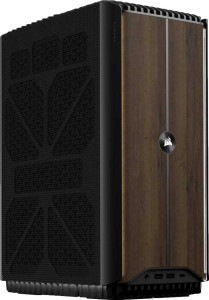
The Corsair One i500 uses a Micro-ATX form factor with dimensions of 393 mm in height, 187 mm in width, and 300 mm in depth, resulting in a total chassis volume of 22,047.3 cm³. Storage is handled by a 2,000GB NVMe SSD, offering fast read and write access through the NVMe interface rather than a conventional SATA drive.
Graphics card:
| VRAM |
24GB |
| floating-point performance |
82.58 TFLOPS |
| effective memory speed |
21200 MHz |
| GPU clock speed |
2230 MHz |
| GPU memory speed |
1325 MHz |
| GPU turbo |
2520 MHz |
| GDDR version |
GDDR6X |
| DirectX version |
DirectX 12 Ultimate |
| PCI Express (PCIe) version |
4 |
| supports ray tracing |
✓ |
| texture rate |
1290 GTexels/s |
| pixel rate |
443.5 GPixel/s |
| maximum memory bandwidth |
1018 GB/s |
| memory bus width |
384-bit |
| supports DLSS |
✓ |
| supported displays |
4 |
| semiconductor size |
4 nm |
| texture mapping units (TMUs) |
512 |
| shading units |
16384 |
| render output units (ROPs) |
176 |
| OpenGL version |
4.6 |
| OpenCL version |
3 |
| has LHR |
✕ |
| Supports multi-display technology |
✓ |
| Has Double Precision Floating Point (DPFP) |
✓ |
| Supports 3D |
✓ |
| has RGB lighting |
✕ |
| number of transistors |
76300 million |
The graphics card features 24GB of GDDR6X VRAM across a 384-bit memory bus, delivering a maximum memory bandwidth of 1,018 GB/s and an effective memory speed of 21,200 MHz. Floating-point performance is rated at 82.58 TFLOPS, supported by 16,384 shading units, 512 texture mapping units, and 176 render output units, with a texture rate of 1,290 GTexels/s and a pixel rate of 443.5 GPixel/s. The GPU runs at a base clock of 2,230 MHz and boosts up to 2,520 MHz, and is fabricated on a 4 nm process containing 76,300 million transistors. It connects via PCIe 4.0 and supports ray tracing, DLSS, DirectX 12 Ultimate, OpenGL 4.6, OpenCL 3, double precision floating point, stereoscopic 3D, and multi-display output across up to four screens. The card does not include LHR restrictions or RGB lighting.
CPU:
| CPU speed |
8 x 3.2 & 16 x 2.4 GHz |
| Has integrated graphics |
✓ |
| Has an unlocked multiplier |
✓ |
| L2 cache |
32 MB |
| L3 cache |
36 MB |
| turbo clock speed |
6GHz |
| CPU threads |
32 threads |
| uses multithreading |
✓ |
| Turbo Boost version |
2 |
| clock multiplier |
32 |
| Supports 64-bit |
✓ |
| CPU temperature |
100 °C |
The CPU operates across 32 threads with a core configuration running at 8 cores at 3.2 GHz and 16 cores at 2.4 GHz, reaching a turbo clock speed of 6 GHz via Turbo Boost version 2. It carries 32 MB of L2 cache and 36 MB of L3 cache, and features an unlocked multiplier set at 32, allowing for clock speed adjustments. The processor supports multithreading, 64-bit operation, and includes integrated graphics, with a maximum rated CPU temperature of 100 °C.
Benchmarks:
| Geekbench 6 result (multi) |
20358 |
| Geekbench 6 result (single) |
3063 |
| PassMark (G3D) result |
39312 |
| PassMark result |
58653 |
| PassMark result (single) |
4696 |
| PassMark result (overclocked) |
62076 |
| PassMark (DirectCompute) result |
31988 |
In Geekbench 6, the system scores 3,063 in the single-core test and 20,358 in the multi-core test. PassMark results show an overall score of 58,653, with a single-core result of 4,696 and an overclocked result of 62,076. The GPU-focused PassMark G3D test returns 39,312, while the PassMark DirectCompute result stands at 31,988.
Memory:
| RAM |
64GB |
| RAM speed |
6000 MHz |
| DDR memory version |
5 |
| memory slots |
2 |
The system is equipped with 64GB of DDR5 RAM running at 6,000 MHz, spread across two memory slots. The use of DDR5 brings higher bandwidth and improved efficiency over previous generations, and the dual-slot configuration leaves room for potential memory adjustments within the available slots.
Connectivity:
| Wi-Fi version |
Wi-Fi 6E (802.11ax), Wi-Fi 6 (802.11ax), Wi-Fi 5 (802.11ac), Wi-Fi 4 (802.11n) |
| supports Wi-Fi |
✓ |
| USB 2.0 ports |
4 |
| USB 3.2 Gen 2 ports (USB-A) |
3 |
| USB 3.2 Gen 1 ports (USB-A) |
2 |
| USB 3.2 Gen 2 ports (USB-C) |
1 |
| USB 4 40Gbps ports |
0 |
| USB 4 20Gbps ports |
0 |
| USB 3.2 Gen 2x2 ports |
1 |
| USB 3.2 Gen 1 ports (USB-C) |
0 |
| RJ45 ports |
1 |
| Thunderbolt 4 ports |
0 |
| Thunderbolt 3 ports |
0 |
| DisplayPort outputs |
3 |
| HDMI version |
HDMI 2.1 |
| HDMI ports |
1 |
| Has Bluetooth |
✓ |
| Bluetooth version |
5.3 |
| has an external memory slot |
✕ |
| DVI outputs |
0 |
| Has S/PDIF Out port |
✓ |
| has a socket for a 3.5 mm audio jack |
✕ |
| has a VGA connector |
✕ |
Wireless connectivity covers Wi-Fi 6E (802.11ax) along with backwards-compatible Wi-Fi 6, Wi-Fi 5, and Wi-Fi 4, paired with Bluetooth 5.3. Wired networking is handled through a single RJ45 port. The USB port selection includes four USB 2.0 ports, three USB 3.2 Gen 2 ports (USB-A), two USB 3.2 Gen 1 ports (USB-A), one USB 3.2 Gen 2 port (USB-C), and one USB 3.2 Gen 2x2 port; there are no USB 4, USB 3.2 Gen 1 USB-C, Thunderbolt 3, or Thunderbolt 4 ports. Display output is provided via three DisplayPort outputs and one HDMI 2.1 port, with no DVI or VGA connectors present. Audio connectivity includes an S/PDIF output, though there is no 3.5 mm headset jack, and the system does not feature an external memory card slot.
Miscellaneous:
| has an HDMI output |
✓ |
| Supports ECC memory |
✓ |
| USB-C ports |
0 |
| Has air-water cooling |
✕ |
| Thermal Design Power (TDP) |
450W |
| mini DisplayPort outputs |
0 |
| has XeSS (XMX) |
✕ |
| GPU architecture |
Ada Lovelace |
| GPU name |
UHD Graphics 770 |
| Type |
Desktop |
| chipset |
B760, H770, Z790, H610, H670, B660, Z690 |
| CPU socket |
LGA 1700 |
| instruction sets |
MMX, SSE 4.1, SSE 4.2, AVX, AVX2, AES, F16C, FMA3 |
| Has NX bit |
✓ |
| GPU execution units |
32 |
| memory channels |
2 |
| maximum memory amount |
192GB |
| Uses big.LITTLE technology |
✓ |
| RAM speed (max) |
5600 MHz |
The desktop CPU uses an LGA 1700 socket and is compatible with a range of chipsets including B760, H770, Z790, H610, H670, B660, and Z690. It employs big.LITTLE technology and supports instruction sets covering MMX, SSE 4.1, SSE 4.2, AVX, AVX2, AES, F16C, and FMA3, along with an NX bit for hardware-level security. The processor operates across two memory channels, supports up to 192GB of RAM at a maximum speed of 5,600 MHz, and is compatible with ECC memory. Its integrated graphics are based on the UHD Graphics 770 with 32 execution units, while the dedicated GPU follows the Ada Lovelace architecture. The system has a CPU TDP of 450W, includes an HDMI output, and does not feature mini DisplayPort outputs, USB-C ports, air-water cooling, or XeSS support.