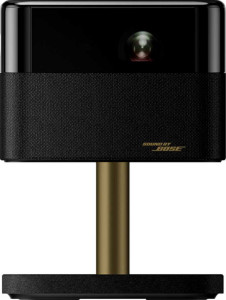
Epson Lifestudio Flex EF-73 specifications and in-depth review

Epson Lifestudio Flex EF-73

Manufacturer: Epson

The Epson Lifestudio Flex EF-73 is a compact home projector that brings together a capable feature set in a relatively modest footprint, weighing 4000 g and measuring 190 × 251 × 190 mm. It ships with a dedicated smartphone app and built-in smart TV functionality, making day-to-day operation straightforward without relying solely on external devices. A remote control is included, and the unit carries a Dolby Atmos-capable stereo speaker system rated at 2 × 5W, along with a 3.5 mm headset jack for private listening.

On the technical side, the EF-73 delivers a 4K output resolution at a 240Hz refresh rate and supports projection sizes up to 150″ from a minimum throw distance of 0.8 m. HLG is supported for HDR content, though HDR10 and HDR10+ are not. Connectivity includes one HDMI port, one USB port, Wi-Fi, Bluetooth, AirPlay, Chromecast built-in, and Miracast, while VGA, DVI, S/PDIF, and RJ45 ports are absent. The unit does not feature lens shift in either axis, has no external memory slot, and lacks voice command support. The warranty period covers one year.

Pros
  • 4K resolution paired with a 240Hz refresh rate makes for a smooth and detailed projected image
  • Supports AirPlay, Chromecast built-in, and Miracast simultaneously, offering broad wireless casting flexibility
  • Dolby Atmos-capable stereo speakers with 2 × 5W output mean external audio equipment is not strictly required
  • Built-in smart TV removes the need for a separate streaming device
  • Includes a 3.5 mm headset jack for direct audio output to headphones or external speakers
  • Minimum throw distance of 0.8 m allows placement relatively close to the projection surface
Cons
  • No lens shift in either vertical or horizontal direction limits flexibility in physical placement and image alignment
  • Neither HDR10 nor HDR10+ is supported, restricting compatibility with the most common HDR formats
  • Only one HDMI port available, which may be limiting when connecting multiple source devices
  • No RJ45 port means a wired network connection is not an option
  • Lack of an external memory slot prevents direct playback from SD cards or similar storage media
  • Voice command functionality is absent, requiring hands-on or remote-based control at all times
Who is this for?

This projector suits users who want a dedicated home cinema setup with 4K resolution and a 240Hz refresh rate, making it a reasonable fit for fast-moving content such as sports or gaming where smoothness matters. The broad wireless ecosystem — covering AirPlay, Chromecast, and Miracast — makes it well suited to households with mixed device ecosystems, and the built-in smart TV functionality means it can operate as a self-contained entertainment unit without relying on external streaming hardware. The inclusion of Dolby Atmos stereo speakers also appeals to users who want a reasonably complete audio-visual experience without immediately investing in a separate sound system.

Who is this NOT for?

Users who require precise image alignment without physically repositioning the unit will find this projector limiting, as it offers no lens shift in either vertical or horizontal direction. Those who work in HDR-heavy workflows or rely on HDR10 or HDR10+ content will encounter compatibility gaps, since neither format is supported. Additionally, users who depend on wired infrastructure — such as a stable Ethernet connection or multiple simultaneous HDMI sources — will be constrained by the absence of an RJ45 port and the availability of only a single HDMI input.

General info:

has laser light source
release date February 2026
width 190 mm
height 251 mm
thickness 190 mm
weight 4000 g
Has a dedicated smartphone app
volume 9061.1 cm³
warranty period 1 years

The Epson Lifestudio Flex EF-73 has a compact physical footprint, measuring 190 mm wide, 251 mm tall, and 190 mm thick, with a total volume of 9061.1 cm³ and a weight of 4000 g. It does not use a laser light source, relying instead on a conventional lamp. A dedicated smartphone app is available, adding a layer of convenience for day-to-day control, and the unit is backed by a one-year warranty.

Projection quality:

output resolution 4K
maximum projection size 150"
supports HDR10+
minimum throw distance 0.8 m
refresh rate 240Hz
supports HDR10
supports HLG

The projector outputs at 4K resolution with a 240Hz refresh rate, and can cast images up to 150″ in size from a minimum throw distance of 0.8 m. For HDR handling, it supports HLG, while HDR10 and HDR10+ are not supported.

Connectivity:

HDMI ports 1
has AirPlay
Has Bluetooth
supports Wi-Fi
USB ports 1
has Chromecast built-in
has a VGA connector
has a DVI connector
supports Miracast
RJ45 ports 0
Has S/PDIF Out port

Wireless connectivity is well covered, with Wi-Fi, Bluetooth, AirPlay, Chromecast built-in, and Miracast all supported, giving users a range of options for streaming content without cables. On the wired side, there is one HDMI port and one USB port, while RJ45, VGA, DVI, and S/PDIF connections are not present.

Features:

has stereo speakers
has lens shift (vertical)
has lens shift (horizontal)
has a remote control
has built-in smart TV
has a built-in speaker
audio output power 2 x 5W
has a socket for a 3.5 mm audio jack
has Dolby Atmos
has an external memory slot
has voice commands

The unit includes built-in stereo speakers rated at 2 × 5W with Dolby Atmos support, and a 3.5 mm headset jack is available for those who prefer private listening. Built-in smart TV functionality is onboard, and a remote control is included for standard operation, though voice commands are not supported. Lens shift is absent in both vertical and horizontal directions, and there is no external memory slot.

Final Verdict

The Epson Lifestudio Flex EF-73 is a capable 4K projector that brings together a solid wireless feature set, built-in smart TV, and Dolby Atmos stereo audio in a package clearly aimed at users who want a self-contained home cinema experience. Its 240Hz refresh rate and broad casting support via AirPlay, Chromecast, and Miracast give it genuine versatility for everyday streaming use. That said, the absence of lens shift, limited HDR format support, and a single HDMI input mean it is best suited to environments where placement flexibility and multi-source connectivity are not priorities. For users whose needs align with its strengths, the EF-73 presents a well-rounded projection solution — but those with more demanding setup requirements or HDR workflows may find its hardware constraints a meaningful limitation.