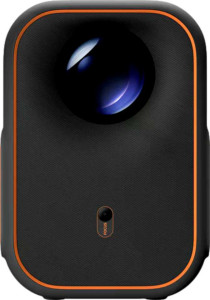
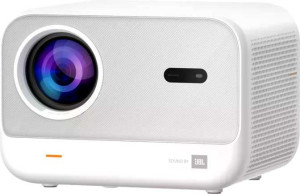
The Formovie Xming Episode One uses a conventional lamp light source rather than laser, and draws 65W during operation while dropping to just 0.5W on standby. Its physical footprint is modest, measuring 175 mm in height, 122 mm in width, and 141 mm in thickness, with a total volume of 3,010.35 cm³ and a weight of 1,250 g. Audible noise reaches 34 dB under normal use and 30 dB in eco mode, keeping fan noise relatively contained. The projector also supports a dedicated smartphone app, adding a layer of convenient remote management for everyday use.
The Formovie Xming Episode One delivers a 1080p output resolution with a contrast ratio of 1,500:1, and can project an image up to 120″ in size. It does not support 3D content via glasses, and HDR formats — including HDR10, HDR10+, and Dolby Vision — are not available on this model.
The Formovie Xming Episode One offers a well-rounded wireless connectivity setup, supporting AirPlay, Chromecast built-in, and Miracast, alongside Wi-Fi and Bluetooth. It is also DLNA-certified for local network media streaming. On the wired side, the projector includes one HDMI port, one USB port, and a DVI connector, but lacks an RJ45 ethernet port, a VGA connector, and an S/PDIF audio output.
The Formovie Xming Episode One includes a built-in smart TV platform, stereo speakers rated at 2 x 3W with Dolby Atmos support, and comes with a remote control for standard navigation. Voice commands are not available, and there is no 3.5 mm headset jack or external memory slot. Lens shift — both vertical and horizontal — is absent, so positioning flexibility relies on physical placement alone.