Fujifilm X100VI specifications and in-depth review

Fujifilm X100VI

Manufacturer: Fujifilm

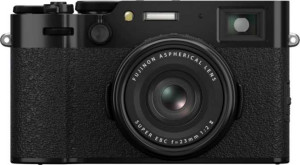
The Fujifilm X100VI is a compact camera built around a 40.2-megapixel APS-C CMOS sensor and powered by the X-Processor 5. It combines an electronic and optical viewfinder in a weather-sealed body, with a 3-inch tilting touchscreen and a built-in flash, making it a self-contained shooting system without interchangeable lens support. At 521 g and roughly 128 × 74.8 × 55.3 mm, the camera balances portability with a solid, sealed construction rated for operation between 0 °C and 40 °C.

Optically, the X100VI is fitted with a fixed 23 mm f/2 lens featuring 9 rounded aperture blades and a minimum focus distance of 0.1 m. In-body sensor-shift stabilization delivers up to 6 stops of compensation per CIPA standards, and the autofocus system draws on 425 phase-detection points with subject tracking and touch AF. Continuous shooting reaches 11 fps mechanically, while the electronic shutter extends to 1/180,000 s. On the video side, the camera records at up to 3150-wide resolution at 30 fps with a 200 Mbps bitrate, continuous autofocus, a stereo microphone, and a dedicated microphone input. Connectivity includes USB 3.2 Type-C, HDMI, Wi-Fi 5, and Bluetooth 4.2, with RAW capture and lossless compressed RAW both supported.

Pros
  • The hybrid viewfinder system offers both an electronic viewfinder at 3690k dots and an optical viewfinder, each with 100% coverage, giving shooters meaningful flexibility in how they frame shots
  • Sensor-shift stabilization rated at 6 stops per CIPA provides a substantial degree of motion compensation for a compact fixed-lens camera
  • The 40.2 MP APS-C CMOS sensor paired with a 425-point autofocus system with subject tracking delivers a high level of detail and focusing precision in a pocketable form factor
  • The rear touchscreen is both flip-out and touch-enabled, allowing for more adaptable shooting positions
  • Weather sealing makes the body usable in light rain or dusty conditions that would rule out most compact cameras
  • RAW and lossless compressed RAW capture are both supported, giving significant flexibility in post-processing
Cons
  • The fixed 23 mm lens offers no zoom range, which limits compositional flexibility in the field
  • A single memory card slot means there is no redundancy or overflow option during shooting sessions
  • No 3.5 mm headset jack means audio monitoring during video recording is not possible directly from the camera
  • The camera lacks GPS, so location data cannot be embedded in image metadata natively
  • Battery life is rated at 450 shots per charge, which may require carrying a spare for extended shooting days
  • NFC is absent, making quick wireless pairing with mobile devices dependent solely on Bluetooth or manual Wi-Fi setup
Who is this for?

This camera is well-suited to photographers who want a capable, self-contained shooting system without the bulk of an interchangeable-lens setup. The 40.2 MP APS-C sensor combined with 6-stop sensor-shift stabilization makes it a strong choice for street, travel, and documentary work where both image quality and discretion matter. The weather-sealed body and flip-out touchscreen add practical resilience for shooting in variable conditions, while the hybrid viewfinder system appeals to photographers who value the option to switch between electronic and optical framing. Those who also shoot video occasionally will find the 200 Mbps bitrate, continuous autofocus, and built-in stereo microphone sufficient for serious short-form or personal documentary work.

Who is this NOT for?

Photographers who rely on compositional flexibility will find the fixed 23 mm single focal length limiting, as there is no zoom range and no option to mount alternative lenses. Sports and wildlife shooters requiring sustained burst performance will likely find the mechanical continuous shooting rate and single card slot inadequate for high-volume capture without redundancy. Users who need to monitor audio while recording video will be put off by the absence of a 3.5 mm headset jack, and those who depend on location tagging will find the lack of built-in GPS a persistent inconvenience. In short, anyone whose work demands optical versatility, dual-slot reliability, or deep video monitoring capability would be better served by a different system.

Design:

Type Compact
viewfinder Electronic viewfinder (EVF), Optical viewfinder (OVF)
is weather-sealed (splashproof)
screen resolution 1620k dots
EVF resolution 3690k dots
Has a flip-out screen
viewfinder coverage 100%
screen size 3"
weight 521 g
has a touch screen
Has a hot shoe
volume 529.46432 cm³
is a system camera
has a flash
lowest potential operating temperature 0 °C
maximum operating temperature 40 °C
Has a tilting viewfinder
Includes lens hood
width 128 mm
height 74.8 mm
thickness 55.3 mm

The Fujifilm X100VI is a compact, non-system camera measuring 128 × 74.8 × 55.3 mm and weighing 521 g, built with a weather-sealed body rated for use between 0 °C and 40 °C. It features a hybrid viewfinder system combining an electronic viewfinder at 3690k dots resolution and an optical viewfinder, both offering 100% coverage, though the viewfinder does not tilt. The rear 3-inch touchscreen delivers 1620k dots of resolution and supports a flip-out mechanism for flexible shooting angles. A built-in flash and hot shoe are both present, while a lens hood is not included. The camera is not a system camera, meaning it does not support interchangeable lenses.

Optics:

sensor size APS-C
focus points 425
megapixels (main camera) 40.2 MP
maximum ISO 12800 ISO
maximum expanded ISO 51200 ISO
has sensor shift stabilization
continuous shooting (mechanical) 11 fps
has AF tracking
fastest shutter speed 0.00025 s
has built-in optical image stabilization
has manual focus
has touch autofocus
has manual shutter speed
has a built-in HDR mode
has manual exposure
has a two-stage shutter
has a serial shot mode
has a CMOS sensor
has manual ISO
wide aperture (main camera) 2f
has manual white balance
can create panoramas in-camera
exposure time 30 s
Maximum electronic shutter speed 5.555555556E-6 s
maximum focal length 23 mm
has a stacked CMOS sensor
minimum focal length 23 mm
widest aperture at maximum focal length 2f
minimum focus distance 0.1 m
aperture blades 9
Can focus to infinity
Has rounded aperture blades
image stabilization rating (CIPA) 6 stops
Has full-time manual focus
smallest aperture at maximum focal length 16f
smallest aperture at minimum focal length 16f

The camera uses a 40.2 MP APS-C CMOS sensor — not a stacked variant — with a fixed 23 mm lens that opens to f/2 at its widest and stops down to f/16, fitted with 9 rounded aperture blades and capable of focusing as close as 0.1 m as well as to infinity. Sensor-shift stabilization provides up to 6 stops of compensation per CIPA standards, though there is no separate optical image stabilization system. The autofocus system offers 425 focus points with AF tracking, touch autofocus, and full-time manual focus override, while manual focus, manual shutter speed, manual ISO, and manual white balance are all supported. Native ISO reaches 12800, expandable to 51200, and exposure times extend to 30 s on the long end, with a mechanical shutter topping out at 1/4000 s and the electronic shutter reaching approximately 1/180,000 s. Continuous mechanical shooting is available at 11 fps in burst mode, and the camera also supports in-camera panorama creation, a built-in HDR mode, and a two-stage shutter release.

Videography:

video recording (main camera) 3150 x 30 fps
has continuous autofocus when recording movies
has a microphone input
has a socket for a 3.5 mm audio jack
has a stereo microphone
Has timelapse function
movie bitrate 200 Mbps
number of microphones 2
has a 24p cinema mode

The Fujifilm X100VI records video at 3150-wide resolution up to 30 fps with a movie bitrate of 200 Mbps, and also supports a 24p cinema mode for a more filmic frame rate. Continuous autofocus remains active during recording, and a timelapse function is built in. Audio is handled by a dual-microphone stereo setup, and a dedicated microphone input allows for an external mic connection; however, there is no 3.5 mm headset jack for monitoring audio output.

Battery:

Battery life (CIPA) 450 shots
has a removable battery
has a rechargeable battery
has a battery level indicator
battery power 1260 mAh

The camera runs on a removable, rechargeable battery rated at 1260 mAh, with a CIPA-rated life of 450 shots per charge. A battery level indicator is on hand to keep the remaining charge visible during use.

Features:

processor X-Processor 5
supports Wi-Fi
Has Bluetooth
Has dual card slots
has pixel shift shot
shoots raw
supports lossless compressed raw
Wi-Fi version Wi-Fi 5 (802.11ac), Wi-Fi 4 (802.11n)
supports a remote smartphone
has an HDMI output
has GPS
has an advanced hot shoe
has NFC
has an external memory slot
Has USB Type-C
Bluetooth version 4.2

Processing is handled by the X-Processor 5, and the camera supports both RAW capture and lossless compressed RAW. Wireless connectivity covers Wi-Fi 5 (802.11ac) and Wi-Fi 4 (802.11n) alongside Bluetooth 4.2, with smartphone remote control also supported; NFC and GPS are not included. For wired connections, the camera offers a USB Type-C port and an HDMI output. A single external memory slot is available, as the camera does not have dual card slots. The hot shoe is a standard type without advanced functionality, and pixel shift shooting is not supported.

Miscellaneous:

USB version 3.2

The camera's USB interface operates at USB 3.2 speeds.
Final Verdict

The Fujifilm X100VI is a compact camera that makes a coherent and well-rounded case for itself within its specific niche. Its 40.2 MP APS-C sensor backed by 6-stop sensor-shift stabilization, a hybrid EVF/OVF system, weather sealing, and lossless RAW capture combine to form a technically serious package in a form factor that most cameras with similar imaging credentials cannot match. The fixed 23 mm focal length and single card slot are real constraints that define its boundaries, and users should go in clear-eyed about those trade-offs. But for photographers who find those constraints acceptable — particularly those drawn to street, travel, or personal documentary work — the X100VI delivers a well-specified, self-contained tool that handles both stills and occasional video with genuine competence.

Popular Comparisons

Fujifilm X100VI
Fujifilm X100VI
VS
Fujifilm X-T30 III
Fujifilm X-T30 III
Fujifilm X100VI
Fujifilm X100VI
VS
Fujifilm X Half
Fujifilm X Half
Fujifilm X100VI
Fujifilm X100VI
VS
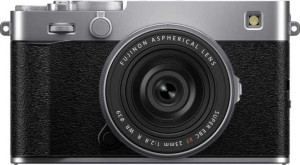
Fujifilm X-E5
Fujifilm X-E5
Fujifilm X100VI
Fujifilm X100VI
VS
Fujifilm GFX100RF
Fujifilm GFX100RF
Fujifilm X100VI
Fujifilm X100VI
VS
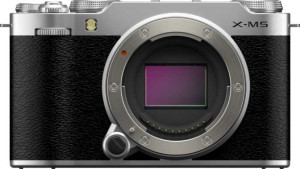
Fujifilm X-M5
Fujifilm X-M5
Fujifilm X100VI
Fujifilm X100VI
VS
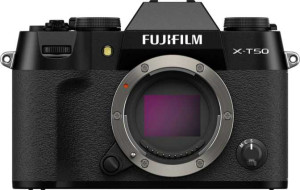
Fujifilm X-T50
Fujifilm X-T50
Fujifilm X100VI
Fujifilm X100VI
VS
Fujifilm X-E5 + Fujifilm XF 23mm f/2.8 R WR
Fujifilm X100VI
Fujifilm X100VI
VS
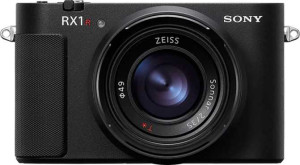
Sony RX1R III
Sony RX1R III
Fujifilm X100VI
Fujifilm X100VI
VS
Leica Q3 43
Leica Q3 43
Fujifilm X100VI
Fujifilm X100VI
VS
Leica D-Lux 8
Leica D-Lux 8
Fujifilm X100VI
Fujifilm X100VI
VS
Panasonic Lumix S9
Panasonic Lumix S9
Fujifilm X100VI
Fujifilm X100VI
VS
Nikon Z50 II
Nikon Z50 II
Fujifilm X100VI
Fujifilm X100VI
VS
Nikon Zf + Nikon Nikkor Z 40mm f/2 (SE)