Gainward GeForce RTX 4070 Ti Super Phantom specifications and in-depth review

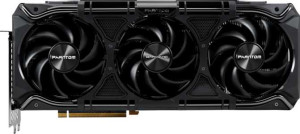
Gainward GeForce RTX 4070 Ti Super Phantom

Manufacturer: Palit

The Gainward GeForce RTX 4070 Ti Super Phantom is a graphics card built on NVIDIA's Ada Lovelace architecture, manufactured on a 5 nm process node housing 45,900 million transistors. Running at a base clock of 2340 MHz with a turbo frequency of 2610 MHz, the card operates within a 285W thermal design power envelope and measures 328.9 mm in length and 141.1 mm in height, connecting to the system via PCIe 4.

The card carries 16GB of GDDR6X memory on a 256-bit bus, reaching an effective memory speed of 21,000 MHz and a maximum bandwidth of 672.3 GB/s, with ECC support included. Its 8448 shading units, 264 texture mapping units, and 96 render output units yield a texture rate of 689 GTexels/s and floating-point throughput of 44.1 TFLOPS. Feature support covers DirectX 12 Ultimate, OpenGL 4.6, OpenCL 3, ray tracing, DLSS, stereoscopic 3D, Intel Resizable BAR, and RGB lighting, with output handled through one HDMI 2.1a port and three DisplayPort connectors for up to four displays simultaneously.

Pros
  • 16GB of GDDR6X memory across a 256-bit bus with 672.3 GB/s bandwidth gives the card substantial capacity for memory-intensive rendering and compute tasks
  • ECC memory support adds data integrity protection, making the card viable for workloads where memory errors would have meaningful consequences
  • Hardware ray tracing and DLSS support enable more detailed lighting and rendering pipelines without relying entirely on raw rasterization throughput
  • Support for up to four simultaneous displays makes the card practical for multi-monitor productivity and visualization setups
  • Intel Resizable BAR support allows the CPU broader access to GPU memory, reducing potential data transfer bottlenecks during operation
  • RGB lighting is integrated into the card, allowing visual customization within a system build
Cons
  • A 285W TDP places significant power demands on the system, requiring a well-provisioned power supply to operate reliably under load
  • At 328.9 mm in length and 141.1 mm in height, the card occupies considerable space and may not fit in smaller enclosures
  • No USB-C or DVI outputs are available, limiting compatibility with displays or devices that rely on those connection types
  • Water cooling is not supported, so the card depends entirely on air cooling for thermal management under sustained workloads
Who is this for?

The Gainward GeForce RTX 4070 Ti Super Phantom is well-matched to users who regularly work with memory-intensive rendering, video production, or 3D content creation, given its 16GB of GDDR6X memory and 672.3 GB/s of bandwidth. Its ray tracing and DLSS support also make it a practical fit for users engaged in real-time graphically demanding workloads at higher resolutions. Those running multi-monitor setups of up to four displays will find the output configuration accommodating, and ECC memory support extends its relevance to users who need sustained numerical reliability in compute-oriented tasks.

Who is this NOT for?

Users building into compact or small-form-factor cases will likely encounter clearance issues given the card's 328.9 mm length and 141.1 mm height, making it a poor fit for space-constrained builds. The 285W thermal design power also rules it out for systems with modest or underpowered PSU configurations, as insufficient headroom under load can introduce instability. Additionally, anyone relying on DVI or USB-C display connections will find no compatible outputs on this card, making it unsuitable for setups centered around legacy monitors or USB-C-based display hardware.

Performance:

GPU clock speed 2340 MHz
GPU turbo 2610 MHz
pixel rate 250.6 GPixel/s
floating-point performance 44.1 TFLOPS
texture rate 689 GTexels/s
GPU memory speed 1313 MHz
shading units 8448
texture mapping units (TMUs) 264
render output units (ROPs) 96
Has Double Precision Floating Point (DPFP)

The card operates at a base GPU clock of 2340 MHz, with a turbo frequency of 2610 MHz and a GPU memory speed of 1313 MHz. Its 8448 shading units are supported by 264 texture mapping units and 96 render output units, producing a texture rate of 689 GTexels/s and a pixel rate of 250.6 GPixel/s. Total floating-point throughput reaches 44.1 TFLOPS, and Double Precision Floating Point is supported, extending the card's utility to workloads that require higher numerical accuracy.

Memory:

effective memory speed 21000 MHz
maximum memory bandwidth 672.3 GB/s
VRAM 16GB
GDDR version GDDR6X
memory bus width 256-bit
Supports ECC memory

Memory is handled by 16GB of GDDR6X running across a 256-bit bus at an effective speed of 21,000 MHz, delivering a maximum bandwidth of 672.3 GB/s. ECC memory support is also present, providing error detection and correction capabilities for workloads where data integrity over sustained operation is a priority.

Features:

DirectX version DirectX 12 Ultimate
OpenGL version 4.6
OpenCL version 3
Supports multi-display technology
supports ray tracing
Supports 3D
supports DLSS
has XeSS (XMX)
AMD SAM / Intel Resizable BAR Intel Resizable BAR
has LHR
has RGB lighting
supported displays 4

The card supports DirectX 12 Ultimate, OpenGL 4.6, and OpenCL 3, covering a wide range of graphics and general-purpose compute scenarios. Hardware ray tracing, DLSS, and stereoscopic 3D are all supported, while XeSS (XMX) and LHR are not present on this card. Multi-display output is available for up to four screens simultaneously, and Intel Resizable BAR is supported to facilitate more efficient CPU-to-GPU data access. RGB lighting is built into the card's design, rounding out its feature set.

Ports:

has an HDMI output
HDMI ports 1
HDMI version HDMI 2.1a
DisplayPort outputs 3
USB-C ports 0
DVI outputs 0
mini DisplayPort outputs 0

The card provides four physical display outputs consisting of one HDMI 2.1a port and three DisplayPort connections. There are no USB-C, DVI, or mini DisplayPort outputs available on this card.

General info:

GPU architecture Ada Lovelace
Thermal Design Power (TDP) 285W
PCI Express (PCIe) version 4
semiconductor size 5 nm
number of transistors 45900 million
Has air-water cooling
width 328.9 mm
height 141.1 mm

Built on the Ada Lovelace architecture using a 5 nm fabrication process, the card integrates 45,900 million transistors and connects to the host system via PCIe 4. It carries a thermal design power rating of 285W and relies exclusively on air cooling, as water cooling is not supported. The card measures 328.9 mm in width and 141.1 mm in height.
Final Verdict

The Gainward GeForce RTX 4070 Ti Super Phantom is a capable graphics card that pairs the Ada Lovelace architecture with 16GB of GDDR6X memory and 672.3 GB/s of bandwidth, making it a solid choice for users who need both strong graphical throughput and ample memory capacity for demanding creative or compute workloads. Ray tracing, DLSS, ECC memory support, and four-display output give it a well-rounded feature set, though its physical footprint and 285W power requirement mean it performs best in systems that are sized and provisioned accordingly. For users whose builds can accommodate it, the Gainward GeForce RTX 4070 Ti Super Phantom delivers a consistent and capable package across a range of serious use cases.

Popular Comparisons

Gainward GeForce RTX 4070 Ti Super Phantom
VS
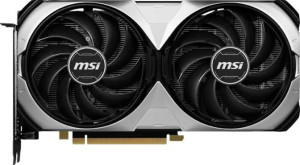
MSI GeForce RTX 4070 Ti Super Ventus 2X OC