Gainward GeForce RTX 4070 Ti Super Panther OC specifications and in-depth review

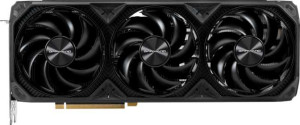
Gainward GeForce RTX 4070 Ti Super Panther OC

Manufacturer: Palit

The Gainward GeForce RTX 4070 Ti Super Panther OC is a graphics card based on NVIDIA's Ada Lovelace architecture, produced on a 5 nm node with 45,900 million transistors. It runs at a base GPU clock of 2340 MHz with a boost up to 2640 MHz, and supports ray tracing, DLSS, stereoscopic 3D, and RGB lighting, covering the key feature expectations for this card tier.

Memory configuration consists of 16GB of GDDR6X on a 256-bit bus running at an effective 21,000 MHz, yielding a maximum bandwidth of 672.3 GB/s. The 8,448 shading units are backed by 264 TMUs and 96 ROPs, producing a texture rate of 697 GTexels/s and a pixel rate of 253.4 GPixel/s, with Double Precision Floating Point and ECC memory support also present. The card connects via PCIe 4, draws up to 285W, and measures 328.9 mm in width and 128 mm in height, with display output handled by one HDMI 2.1a port and three DisplayPort connections for up to four monitors simultaneously.

Pros
  • The 16GB of GDDR6X memory running across a 256-bit bus at 672.3 GB/s of bandwidth provides substantial headroom for texture-heavy and memory-intensive rendering workloads
  • Ray tracing and DLSS support are both present, enabling hardware-accelerated lighting calculations and AI-driven upscaling in compatible software
  • ECC memory support adds error-correction capability, which benefits users running compute or data-sensitive workloads where memory accuracy matters
  • Intel Resizable BAR support allows the CPU to access the full GPU frame buffer at once on compatible PCIe 4 systems, reducing potential data transfer bottlenecks
  • The combination of one HDMI 2.1a port and three DisplayPort outputs provides flexible connectivity for multi-monitor setups of up to four displays
  • Double Precision Floating Point support extends the card's usefulness beyond graphics into compute-oriented applications
Cons
  • At 328.9 mm in length and 128 mm in height, the card requires adequate case clearance that may not be available in smaller or more compact builds
  • The 285W TDP places a meaningful demand on the power supply and requires sufficient airflow within the system
  • Air-water cooling integration is not supported, limiting thermal management options for users who rely on custom liquid cooling loops
  • There are no USB-C or DVI outputs, which restricts connectivity for users whose displays or workflows depend on those port types
  • XeSS (XMX) is not supported, meaning users who rely on that upscaling technology in their applications will not have access to it on this card
Who is this for?

This card is a natural fit for users who regularly work with ray tracing and DLSS-enabled applications, where the dedicated hardware acceleration and AI upscaling capabilities can be fully utilized. The 16GB of GDDR6X memory delivering 672.3 GB/s of bandwidth, combined with ECC support, also makes it well suited to compute workloads that require both high throughput and memory reliability. Users running multi-monitor configurations of up to four displays will find the port layout practical, and those on PCIe 4 platforms with Intel Resizable BAR support will get the most out of the card's data transfer efficiency.

Who is this NOT for?

At 328.9 mm in length, this card may not fit comfortably in compact or small-form-factor cases with limited internal clearance, making it a poor match for users building in constrained enclosures. Those who have set up custom liquid cooling loops will find no air-water cooling compatibility here, which could be a meaningful limitation for thermally optimized builds. Additionally, users who depend on USB-C display output or XeSS (XMX) upscaling in their workflow will need to look elsewhere, as neither feature is available on this card.

Performance:

GPU clock speed 2340 MHz
GPU turbo 2640 MHz
pixel rate 253.4 GPixel/s
floating-point performance 44.61 TFLOPS
texture rate 697 GTexels/s
GPU memory speed 1313 MHz
shading units 8448
texture mapping units (TMUs) 264
render output units (ROPs) 96
Has Double Precision Floating Point (DPFP)

The GPU runs at a base clock of 2340 MHz, reaching a boost of 2640 MHz, with memory clocked at 1313 MHz. Its 8,448 shading units are accompanied by 264 texture mapping units and 96 render output units, delivering a texture rate of 697 GTexels/s and a pixel rate of 253.4 GPixel/s. Floating-point performance is rated at 44.61 TFLOPS, and Double Precision Floating Point support is included, making the card capable of handling compute workloads in addition to standard graphics tasks.

Memory:

effective memory speed 21000 MHz
maximum memory bandwidth 672.3 GB/s
VRAM 16GB
GDDR version GDDR6X
memory bus width 256-bit
Supports ECC memory

The card comes with 16GB of GDDR6X VRAM operating across a 256-bit memory bus at an effective speed of 21,000 MHz, which translates to a peak bandwidth of 672.3 GB/s. ECC memory support is also included, offering an added layer of reliability for users whose workloads require consistent data accuracy.

Features:

DirectX version DirectX 12 Ultimate
OpenGL version 4.6
OpenCL version 3
Supports multi-display technology
supports ray tracing
Supports 3D
supports DLSS
has XeSS (XMX)
AMD SAM / Intel Resizable BAR Intel Resizable BAR
has LHR
has RGB lighting
supported displays 4

API support covers DirectX 12 Ultimate, OpenGL 4.6, and OpenCL 3, while hardware-accelerated ray tracing and DLSS are both enabled on this card. Stereoscopic 3D, multi-display technology for up to four screens, and RGB lighting are included, and Intel Resizable BAR support is present to facilitate more efficient CPU-to-GPU data access on compatible platforms. XeSS (XMX) is not supported, and LHR is not present on this model.

Ports:

has an HDMI output
HDMI ports 1
HDMI version HDMI 2.1a
DisplayPort outputs 3
USB-C ports 0
DVI outputs 0
mini DisplayPort outputs 0

The card provides three DisplayPort outputs and one HDMI 2.1a port, covering all four available display connections. USB-C, DVI, and mini DisplayPort outputs are absent from this model.

General info:

GPU architecture Ada Lovelace
Thermal Design Power (TDP) 285W
PCI Express (PCIe) version 4
semiconductor size 5 nm
number of transistors 45900 million
Has air-water cooling
width 328.9 mm
height 128 mm

Underpinning the card is the Ada Lovelace architecture, built on a 5 nm process with 45,900 million transistors and interfacing with the system via PCIe 4. Its Thermal Design Power is rated at 285W, and air-water cooling is not supported. The card measures 328.9 mm in width and 128 mm in height, giving it a mid-sized footprint that should fit most standard ATX cases with adequate clearance.
Final Verdict

The Gainward GeForce RTX 4070 Ti Super Panther OC delivers a coherent and well-specified package within the RTX 4070 Ti Super lineup, anchored by 16GB of GDDR6X memory with 672.3 GB/s of bandwidth and a full feature set that includes ray tracing, DLSS, ECC memory support, and Intel Resizable BAR. Its 285W TDP and 328.9 mm length are practical considerations that require a suitably sized case and a capable power supply, and users dependent on liquid cooling integration or USB-C output will need to factor in those absences. For those building on a standard ATX platform with PCIe 4 support and multi-display ambitions, this card offers a well-rounded and capable option that covers the key bases without unnecessary compromise.

Popular Comparisons

Gainward GeForce RTX 4070 Ti Super Panther OC
VS
Gainward GeForce RTX 5070 Phoenix-S GS