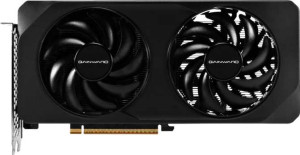
Gainward GeForce RTX 5050 Ghost OC specifications and in-depth review

Gainward GeForce RTX 5050 Ghost OC

Manufacturer: Gainward

The Gainward GeForce RTX 5050 Ghost OC is a mid-range graphics card based on NVIDIA's Blackwell architecture, manufactured on a 5nm process with 16,900 million transistors. It runs at a base clock of 2317 MHz and reaches a boost of 2647 MHz, delivering 13.55 TFLOPS of floating-point performance alongside a pixel rate of 84.7 GPixel/s and a texture rate of 211.8 GTexels/s. The card supports ray tracing, DLSS, DirectX 12 Ultimate, and RGB lighting, and can drive up to four displays simultaneously.

On the memory side, the card is equipped with 8GB of GDDR6 across a 128-bit bus, reaching an effective speed of 20,000 MHz and a maximum bandwidth of 320 GB/s. ECC memory support is included. Connectivity options consist of one HDMI 2.1b port and three DisplayPort outputs, with no USB-C or DVI outputs present. The card also supports Intel Resizable BAR and connects via PCIe 5, while its physical dimensions measure 262.1 mm in length and 126.3 mm in height, operating within a 130W thermal design power envelope using air cooling.

Pros
  • Supports ray tracing and DLSS, enabling advanced rendering techniques without additional configuration
  • Can drive up to four displays simultaneously through a combination of one HDMI 2.1b port and three DisplayPort outputs
  • ECC memory support adds a layer of data integrity for error-sensitive workloads
  • Intel Resizable BAR support allows the CPU to access the full GPU frame buffer, improving data transfer efficiency
  • RGB lighting is built into the card for users who prefer a visually customized system interior
  • A 130W TDP keeps power draw relatively contained for a dedicated graphics card
Cons
  • The 128-bit memory bus width is narrow and may limit memory throughput in bandwidth-intensive workloads
  • 8GB of VRAM could become a bottleneck in scenarios involving large textures or high-resolution assets
  • Only 32 render output units (ROPs) may restrict fill rate in demanding rendering situations
  • No USB-C output is available, limiting connectivity options for displays or devices that rely on that interface
  • Liquid cooling is not supported, leaving thermal management entirely dependent on the air cooling solution
Who is this for?

This card is a reasonable fit for users building a mid-range desktop system who want to engage in ray tracing and DLSS-enhanced gaming without pushing into high-end GPU territory. Its four-display output support makes it practical for multi-monitor setups, whether for productivity workflows or an expanded gaming environment. The inclusion of ECC memory and OpenCL 3 support also makes it usable for lightweight compute tasks where data integrity matters, and its 130W TDP suits systems with modest power supplies or compact cases that rely on air cooling solutions.

Who is this NOT for?

Users targeting high-resolution or graphically intensive workloads — such as 4K gaming with maximum settings, professional 3D rendering, or large-scale machine learning tasks — are likely to find the 8GB VRAM and 128-bit memory bus insufficient for sustained performance. The narrow bus width limits memory throughput in scenarios that demand fast, large data transfers, making it a poor match for bandwidth-heavy professional applications. Similarly, those requiring USB-C display connectivity or liquid cooling integration will find this card lacking, as neither feature is supported.

Performance:

GPU clock speed 2317 MHz
GPU turbo 2647 MHz
pixel rate 84.7 GPixel/s
floating-point performance 13.55 TFLOPS
texture rate 211.8 GTexels/s
GPU memory speed 1750 MHz
shading units 2560
texture mapping units (TMUs) 80
render output units (ROPs) 32
Has Double Precision Floating Point (DPFP)

The Gainward GeForce RTX 5050 Ghost OC operates at a base GPU clock of 2317 MHz, boosting up to 2647 MHz under load. It delivers 13.55 TFLOPS of floating-point performance, supported by a pixel rate of 84.7 GPixel/s and a texture rate of 211.8 GTexels/s. The card is equipped with 2560 shading units, 80 texture mapping units, and 32 render output units, with GPU memory running at 1750 MHz. Double Precision Floating Point (DPFP) is supported, adding flexibility for compute-oriented workloads.

Memory:

effective memory speed 20000 MHz
maximum memory bandwidth 320 GB/s
VRAM 8GB
GDDR version GDDR6
memory bus width 128-bit
Supports ECC memory

The card features 8GB of GDDR6 VRAM running across a 128-bit memory bus, with an effective memory speed of 20,000 MHz and a maximum memory bandwidth of 320 GB/s. ECC memory support is included, which helps ensure data integrity in error-sensitive workloads.

Features:

DirectX version DirectX 12 Ultimate
OpenGL version 4.6
OpenCL version 3
Supports multi-display technology
supports ray tracing
Supports 3D
supports DLSS
has XeSS (XMX)
AMD SAM / Intel Resizable BAR Intel Resizable BAR
has LHR
has RGB lighting
supported displays 4

The card supports DirectX 12 Ultimate, OpenGL 4.6, and OpenCL 3, covering a broad range of graphics and compute workloads. Ray tracing and DLSS are both supported, while XeSS (XMX) is not present. Multi-display technology allows connection of up to four screens simultaneously, and stereoscopic 3D is also supported. Intel Resizable BAR is available, whereas LHR is not implemented. RGB lighting is included on the card itself.

Ports:

has an HDMI output
HDMI ports 1
HDMI version HDMI 2.1b
DisplayPort outputs 3
USB-C ports 0
DVI outputs 0
mini DisplayPort outputs 0

The card's output configuration consists of one HDMI 2.1b port and three DisplayPort outputs, providing a total of four display connections. There are no USB-C, DVI, or mini DisplayPort outputs present on this model.

General info:

GPU architecture Blackwell
Thermal Design Power (TDP) 130W
PCI Express (PCIe) version 5
semiconductor size 5 nm
number of transistors 16900 million
Has air-water cooling
width 262.1 mm
height 126.3 mm

The card is built on the Blackwell architecture, fabricated using a 5nm process and housing 16,900 million transistors. It connects via PCIe 5 and operates within a 130W TDP. Cooling is handled exclusively through air, as liquid cooling is not supported. Physically, the card measures 262.1 mm in width and 126.3 mm in height.

Final Verdict

The Gainward GeForce RTX 5050 Ghost OC is a mid-range graphics card that brings together Blackwell architecture, ray tracing, DLSS support, and four-display output into a 130W package with a compact physical footprint. Its strongest appeal lies in ray tracing and DLSS-capable gaming within a power-efficient envelope, complemented by ECC memory support for light compute use. However, the 8GB VRAM ceiling and 128-bit bus width mean the card has clear boundaries — users pushing beyond moderate resolutions or into professional GPU workloads will encounter those limits. For a desktop build targeting mainstream gaming and multi-monitor productivity without demanding power or space requirements, this card presents a coherent and well-defined option.

Popular Comparisons

Gainward GeForce RTX 5050 Ghost OC
VS
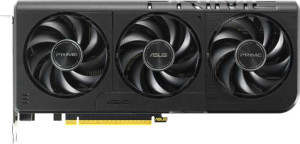
Asus Prime GeForce RTX 5060