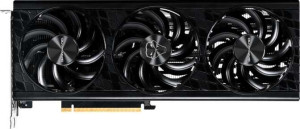
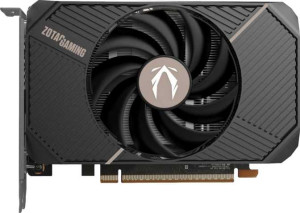
Gainward GeForce RTX 5060 Python III specifications and in-depth review

Gainward GeForce RTX 5060 Python III

Manufacturer: Gainward

The Gainward GeForce RTX 5060 Python III is a high-performance graphics card designed for demanding gaming and graphics applications. Featuring a base GPU clock speed of 2280 MHz and 8GB of GDDR7 memory, it provides efficient performance for modern titles and content creation.

This card supports DirectX 12 Ultimate and comes equipped with 3840 shading units, a 128-bit memory bus width, and a maximum memory bandwidth of 448 GB/s. It also supports multi-display technology and ray tracing, enhancing your overall gaming experience.

Pros
  • Supports up to four displays for multi-monitor setups.
  • Equipped with 8GB of GDDR7 VRAM for high-bandwidth memory performance.
  • Features support for DirectX 12 Ultimate and ray tracing, enhancing visual fidelity.
  • Includes PCIe 5.0 for faster data throughput and better compatibility with modern systems.
  • Supports Intel Resizable BAR, optimizing performance with compatible CPUs.
Cons
  • Does not feature USB-C, DVI, or mini DisplayPort outputs, limiting display connection options.
  • Lacks air-water cooling, potentially limiting thermal efficiency in high-performance scenarios.
  • No RGB lighting, which might be a downside for users seeking aesthetic customization.
Who is this for?

The Gainward GeForce RTX 5060 Python III is ideal for gamers and content creators who need reliable performance for demanding workloads. With DirectX 12 Ultimate support, ray tracing, and 8GB of GDDR7 VRAM, it excels in rendering high-quality graphics and handling modern game engines. Its ability to support up to four displays makes it well-suited for multi-monitor setups, and its PCIe 5.0 interface ensures it integrates well with current-generation systems, providing an enhanced experience in both gaming and professional environments.

Who is this NOT for?

This graphics card may not be the best choice for users who need more diverse connectivity options or advanced cooling solutions. Its lack of USB-C and DVI outputs limits display connection flexibility, and the absence of air-water cooling could affect thermal management during extended high-performance tasks. Additionally, users seeking highly customizable aesthetics may be disappointed by the lack of RGB lighting features.

Performance:

GPU clock speed 2280 MHz
GPU turbo 2497 MHz
pixel rate 119.9 GPixel/s
floating-point performance 19.18 TFLOPS
texture rate 299.6 GTexels/s
GPU memory speed 1750 MHz
shading units 3840
texture mapping units (TMUs) 120
render output units (ROPs) 48
Has Double Precision Floating Point (DPFP)

The Gainward GeForce RTX 5060 Python III delivers solid performance with a GPU clock speed of 2280 MHz and a turbo boost of 2497 MHz. It features a pixel rate of 119.9 GPixel/s and a texture rate of 299.6 GTexels/s, ensuring smooth graphics rendering. With 3840 shading units and 120 texture mapping units (TMUs), it handles complex graphics workloads effectively. Additionally, the card offers 19.18 TFLOPS of floating-point performance and has 48 render output units (ROPs), which contribute to its strong computational power. The GPU memory operates at a speed of 1750 MHz, and it supports Double Precision Floating Point (DPFP) for enhanced precision in calculations.

Memory:

effective memory speed 28000 MHz
maximum memory bandwidth 448 GB/s
VRAM 8GB
GDDR version GDDR7
memory bus width 128-bit
Supports ECC memory

The Gainward GeForce RTX 5060 Python III is equipped with 8GB of GDDR7 VRAM, providing high-speed memory performance. Its effective memory speed reaches 28000 MHz, while the card offers a maximum memory bandwidth of 448 GB/s, ensuring efficient data transfer for demanding tasks. With a 128-bit memory bus width, it delivers solid memory throughput and also supports ECC memory for improved stability and error correction during use.

Features:

DirectX version DirectX 12 Ultimate
OpenGL version 4.6
OpenCL version 3
Supports multi-display technology
supports ray tracing
Supports 3D
supports DLSS
has XeSS (XMX)
AMD SAM / Intel Resizable BAR Intel Resizable BAR
has LHR
has RGB lighting
supported displays 4

The Gainward GeForce RTX 5060 Python III offers a comprehensive set of features designed for advanced graphics performance. It supports DirectX 12 Ultimate and ray tracing, ensuring compatibility with the latest gaming technologies for realistic visuals. The card also enables multi-display setups with support for up to four displays and features DLSS for improved performance in supported games. Additionally, it supports Intel Resizable BAR and offers stereoscopic 3D functionality for an immersive experience.

Ports:

has an HDMI output
HDMI ports 1
HDMI version HDMI 2.1b
DisplayPort outputs 3
USB-C ports 0
DVI outputs 0
mini DisplayPort outputs 0

The Gainward GeForce RTX 5060 Python III offers a versatile range of output options. It includes one HDMI 2.1b port for high-quality video and audio output, along with three DisplayPort outputs for additional display connectivity. This graphics card does not feature USB-C, DVI, or mini DisplayPort outputs, but it supports up to four displays simultaneously, providing ample flexibility for multi-monitor setups.

General info:

GPU architecture Blackwell
release date May 2025
Thermal Design Power (TDP) 145W
PCI Express (PCIe) version 5
semiconductor size 5 nm
number of transistors 21900 million
Has air-water cooling
width 291.9 mm
height 116.5 mm

The Gainward GeForce RTX 5060 Python III is built on the Blackwell GPU architecture and features a 145W TDP, ensuring efficient power consumption. With a semiconductor size of just 5 nm, the card offers high performance in a compact form. It also supports PCIe 5.0 for fast data throughput and is equipped with 21.9 billion transistors for enhanced processing capabilities. The card measures 291.9 mm in width and 116.5 mm in height, and it does not feature air-water cooling.

Final Verdict

The Gainward GeForce RTX 5060 Python III is a powerful graphics card designed for gamers and professionals seeking high-quality visuals and performance. With support for DirectX 12 Ultimate, ray tracing, and 8GB of GDDR7 VRAM, it offers excellent performance for modern games and multi-display setups. While it lacks some connectivity options and advanced cooling features, it remains a solid choice for users who prioritize strong graphical performance and efficient system integration, making it a reliable option for most high-demand tasks.

Popular Comparisons

Gainward GeForce RTX 5060 Python III
VS
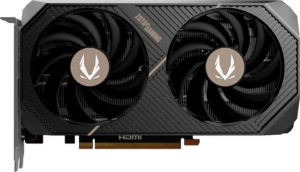
Zotac Gaming GeForce RTX 5060 AMP
Gainward GeForce RTX 5060 Python III
VS
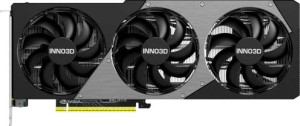
Inno3D GeForce RTX 5060 Ti X3 OC 16GB
Gainward GeForce RTX 5060 Python III
VS
Nvidia GeForce RTX 5060 Ti 16GB
Gainward GeForce RTX 5060 Python III
VS
Zotac Gaming GeForce RTX 5060 Solo