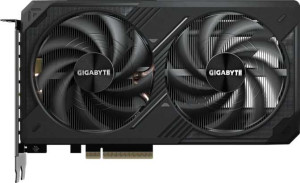
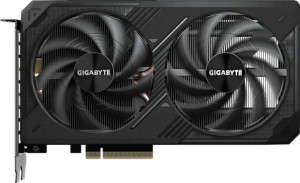
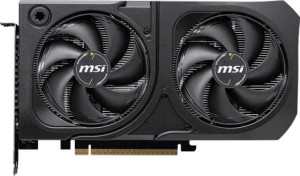
Gigabyte GeForce RTX 5060 Ti WindForce OC 16GB specifications and in-depth review

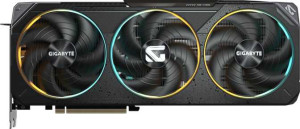
Gigabyte GeForce RTX 5060 Ti WindForce OC 16GB

Manufacturer: Gigabyte

The Gigabyte GeForce RTX 5060 Ti WindForce OC is a desktop graphics card based on NVIDIA's Blackwell architecture, manufactured on a 5 nm process with 21,900 million transistors. It operates at a base clock of 2407 MHz and a boosted frequency of 2587 MHz, with the card drawing 180W TDP and fitting into systems via a PCIe 5.0 interface. The WindForce OC measures 208 mm in width and 120 mm in height, uses air cooling, and supports up to four displays simultaneously.

On the memory side, the card is equipped with 16GB of GDDR7 VRAM across a 128-bit bus, delivering an effective memory speed of 28,000 MHz and a peak bandwidth of 448 GB/s. Its 4,608 shading units, 144 texture mapping units, and 48 render output units contribute to a texture rate of 372.5 GTexels/s and a pixel rate of 124.2 GPixel/s. Feature support includes DirectX 12 Ultimate, OpenGL 4.6, OpenCL 3, ray tracing, DLSS, Intel Resizable BAR, and ECC memory, while connectivity is handled through one HDMI 2.1b port and three DisplayPort outputs.

Pros
  • 16GB of GDDR7 VRAM on a mid-range card provides substantial memory capacity for demanding workloads and high-resolution textures
  • 448 GB/s memory bandwidth enabled by the 28,000 MHz effective memory speed supports fast data throughput during intensive rendering tasks
  • Ray tracing and DLSS are both supported, enabling hardware-accelerated lighting effects alongside AI-based upscaling
  • Up to four displays can be driven simultaneously through a combination of one HDMI 2.1b and three DisplayPort outputs
  • ECC memory support adds a layer of reliability for compute-oriented tasks where memory accuracy matters
  • Intel Resizable BAR support allows the processor to access the full GPU frame buffer, which can improve frame delivery in compatible systems
Cons
  • The 128-bit memory bus is relatively narrow for a card with this memory capacity, which can limit scalability under sustained high-bandwidth workloads
  • A 180W TDP requires adequate case airflow and a capable power supply, which may be a consideration in compact or lower-spec builds
  • No USB-C output is available, limiting direct connectivity options for monitors or devices that rely on that interface
  • XeSS (XMX) is not supported, reducing upscaling flexibility for users who may prefer or require that technology
  • The card does not include RGB lighting, which may be a drawback for users building systems with coordinated aesthetics
Who is this for?

This card is well-suited to users who work with high-resolution rendering and texture-heavy workloads, where the 16GB of GDDR7 VRAM and 448 GB/s of memory bandwidth provide meaningful headroom. The combination of ray tracing support, DLSS, and DirectX 12 Ultimate also makes it a solid fit for modern gaming at demanding visual settings, particularly on systems built around PCIe 5.0 platforms. Users running multi-monitor setups of up to four displays will find the output configuration practical, and those doing compute work that benefits from ECC memory or Double Precision Floating Point support will find those capabilities present here as well.

Who is this NOT for?

Users working in environments where maximum memory bandwidth is critical may find the 128-bit bus a limiting factor, as it constrains throughput relative to what wider bus configurations can offer at sustained loads. The card is also not ideal for those building in compact or thermally constrained cases, given the 180W TDP and reliance solely on air cooling, which demands adequate case ventilation. Additionally, users who depend on USB-C display output or XeSS-based upscaling will need to look elsewhere, as neither is supported on this model.

Performance:

GPU clock speed 2407 MHz
GPU turbo 2587 MHz
pixel rate 124.2 GPixel/s
floating-point performance 23.84 TFLOPS
texture rate 372.5 GTexels/s
GPU memory speed 1750 MHz
shading units 4608
texture mapping units (TMUs) 144
render output units (ROPs) 48
Has Double Precision Floating Point (DPFP)

The card runs at a base GPU clock of 2407 MHz, climbing to 2587 MHz in turbo mode, while the GPU memory operates at 1750 MHz. Its 4,608 shading units are backed by 144 texture mapping units and 48 render output units, producing a texture rate of 372.5 GTexels/s and a pixel rate of 124.2 GPixel/s. Floating-point performance reaches 23.84 TFLOPS, and the GPU also supports Double Precision Floating Point (DPFP), making it capable of handling workloads that require higher numerical precision.

Memory:

effective memory speed 28000 MHz
maximum memory bandwidth 448 GB/s
VRAM 16GB
GDDR version GDDR7
memory bus width 128-bit
Supports ECC memory

The card comes equipped with 16GB of GDDR7 VRAM running at an effective speed of 28,000 MHz across a 128-bit memory bus, delivering a maximum memory bandwidth of 448 GB/s. ECC memory support is also present, allowing the GPU to detect and correct memory errors where reliability is a priority.

Features:

DirectX version DirectX 12 Ultimate
OpenGL version 4.6
OpenCL version 3
Supports multi-display technology
supports ray tracing
Supports 3D
supports DLSS
has XeSS (XMX)
AMD SAM / Intel Resizable BAR Intel Resizable BAR
has LHR
has RGB lighting
supported displays 4

The card supports DirectX 12 Ultimate, OpenGL 4.6, and OpenCL 3, covering a broad range of graphics and compute workloads. Ray tracing and DLSS are both supported, alongside stereoscopic 3D and multi-display technology allowing up to four screens to be connected at once. Intel Resizable BAR is included to help the CPU access GPU memory more efficiently, while XeSS (XMX) and LHR are not present on this model. The card does not feature RGB lighting.

Ports:

has an HDMI output
HDMI ports 1
HDMI version HDMI 2.1b
DisplayPort outputs 3
USB-C ports 0
DVI outputs 0
mini DisplayPort outputs 0

The card's output configuration consists of one HDMI 2.1b port and three DisplayPort outputs, giving users a total of four display connections to work with. There are no USB-C, DVI, or mini DisplayPort outputs on this model.

General info:

GPU architecture Blackwell
Thermal Design Power (TDP) 180W
PCI Express (PCIe) version 5
semiconductor size 5 nm
number of transistors 21900 million
Has air-water cooling
width 208 mm
height 120 mm

Built on the Blackwell architecture, this GPU is fabricated using a 5 nm process and integrates 21,900 million transistors, connecting to the system via a PCIe 5.0 interface. It carries a Thermal Design Power of 180W and relies on air cooling, with no water cooling option included. The card measures 208 mm in width and 120 mm in height.

Final Verdict

The Gigabyte GeForce RTX 5060 Ti WindForce OC brings together a capable set of specifications for users seeking a modern GPU built on the Blackwell architecture. Its 16GB of GDDR7 VRAM paired with 448 GB/s of memory bandwidth gives it meaningful capacity for texture-heavy rendering and compute tasks, while ray tracing, DLSS, and DirectX 12 Ultimate support keep it well-aligned with current software demands. The 128-bit memory bus and 180W thermal requirement are aspects that users should factor into their system planning, particularly in compact builds. Overall, the WindForce OC is a well-specified card for multi-display setups, modern gaming workloads, and compute tasks that benefit from ECC or double-precision support — provided the system can accommodate its cooling and power needs.

Popular Comparisons

Gigabyte GeForce RTX 5060 Ti WindForce OC 16GB
VS
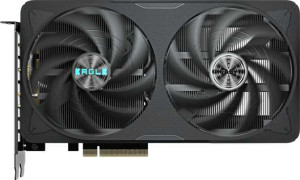
Gigabyte GeForce RTX 5060 Ti Eagle OC 16GB
Gigabyte GeForce RTX 5060 Ti WindForce OC 16GB
VS
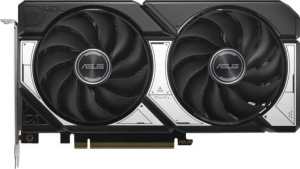
Asus Dual GeForce RTX 5060 Ti OC Edition 16GB
Gigabyte GeForce RTX 5060 Ti WindForce OC 16GB
VS
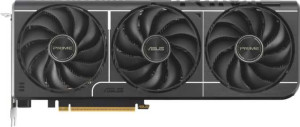
Asus Prime GeForce RTX 5060 Ti OC Edition 16GB
Gigabyte GeForce RTX 5060 Ti WindForce OC 16GB
VS
Gigabyte GeForce RTX 5060 Ti WindForce 16GB
Gigabyte GeForce RTX 5060 Ti WindForce OC 16GB
VS
AMD Radeon RX 7900 GRE
Gigabyte GeForce RTX 5060 Ti WindForce OC 16GB
VS
Asus Dual GeForce RTX 5060 Ti 16GB
Gigabyte GeForce RTX 5060 Ti WindForce OC 16GB
VS
Gainward GeForce RTX 5060 Ti PythoN III OC 16GB
Gigabyte GeForce RTX 5060 Ti WindForce OC 16GB
VS
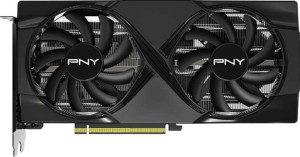
PNY GeForce RTX 5060 Ti OC Dual Fan 16GB
Gigabyte GeForce RTX 5060 Ti WindForce OC 16GB
VS
Gigabyte GeForce RTX 5070 Gaming OC
Gigabyte GeForce RTX 5060 Ti WindForce OC 16GB
VS
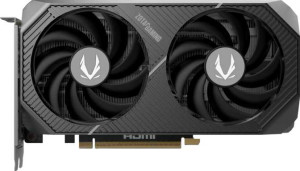
Zotac Gaming GeForce RTX 5060 Ti Twin Edge OC 16GB
Gigabyte GeForce RTX 5060 Ti WindForce OC 16GB
VS
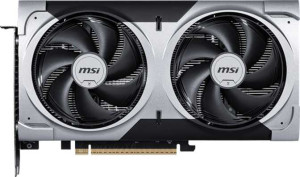
MSI GeForce RTX 5060 Ti Ventus 2X Plus 16GB
Gigabyte GeForce RTX 5060 Ti WindForce OC 16GB
VS
MSI GeForce RTX 5060 Ti Shadow 2X OC Plus 16GB