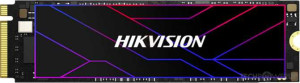
Hikvision C5000 4TB specifications and in-depth review

Hikvision C5000 4TB

Manufacturer: Hikvision

The Hikvision C5000 4TB is a high-capacity M.2 NVMe solid-state drive built around the PCIe 5.0 interface, offering a substantial 4000GB of internal storage for demanding workloads. Powered by the MaxioTech MAP1806A-F1C controller, it uses TLC NAND flash and operates without an integrated heatsink or RGB lighting, keeping the design focused purely on function. The drive carries a 5-year warranty and a TBW rating of 3900, reflecting a reasonable confidence in its long-term reliability.

On the performance side, the C5000 4TB is rated for sequential read speeds of 14800 MB/s and sequential write speeds of 1320 MB/s, with random read and write throughput reaching 2,000,000 IOPS and 1,500,000 IOPS respectively. The drive uses NVMe version 2 and features an 8-channel controller configuration, which contributes to its ability to handle parallel data operations across the full 4TB capacity. No SSD cache is included in the design.

Pros
  • Sequential read speed of 14800 MB/s enables very fast large-file transfers for demanding workloads
  • Random read throughput of 2,000,000 IOPS supports intensive parallel data access scenarios
  • PCIe 5.0 interface and NVMe version 2 represent the current generation of SSD connectivity standards
  • 4000GB of internal storage provides substantial capacity for large datasets or extensive file libraries
  • A TBW rating of 3900 combined with a 5-year warranty reflects solid rated endurance and long-term coverage
  • The 8-channel controller configuration supports efficient parallel data handling across the full storage capacity
Cons
  • Sequential write speed of 1320 MB/s is notably lower than the sequential read speed, creating an imbalance for write-heavy tasks
  • No integrated heatsink, which may require users to source thermal management separately given the PCIe 5.0 interface's heat output
  • No SSD cache included, which can affect sustained write consistency under certain workload patterns
  • TLC NAND flash, while common, offers lower write endurance per cell compared to MLC-based alternatives at the same capacity
Who is this for?

This drive is well-matched for users who work with large sequential data transfers, such as those handling high-resolution video editing, data archiving, or intensive content creation pipelines where 14800 MB/s read speeds translate into real time savings. The 4000GB capacity also makes it a practical fit for professionals or enthusiasts who need to store substantial volumes of data on a single M.2 drive without managing multiple devices. Additionally, its 2,000,000 random read IOPS make it relevant for environments with heavy parallel read workloads, such as database hosting or virtualization setups that rely on rapid access to scattered data blocks.

Who is this NOT for?

Users whose workflows are dominated by continuous, high-volume write operations may find the 1320 MB/s sequential write speed a limiting factor, particularly when paired with the higher read throughput, creating a noticeable performance gap in write-intensive scenarios. Systems without adequate thermal management solutions could also struggle, since the drive lacks an integrated heatsink and PCIe 5.0 drives are known to generate significant heat — users in thermally constrained builds would need to account for this independently. Similarly, those seeking a plug-and-play solution without any additional setup considerations may find the absence of both a heatsink and SSD cache less convenient for sustained workloads that demand consistent write performance over time.

Read speed:

sequential read speed 14800 MB/s
random read speed 2000000 IOPS

The read performance of this drive is defined by a sequential read speed of 14800 MB/s, making it well-suited for tasks that involve transferring large files in a continuous stream. On the random side, it reaches 2,000,000 IOPS, reflecting strong throughput when handling numerous small, non-sequential read operations simultaneously — a characteristic that matters in workloads with high data access variability.

Write speed:

sequential write speed 1320 MB/s
random write speed 1500000 IOPS

Write performance is split across two distinct access patterns: sequential write speed is rated at 1320 MB/s, covering scenarios where data is written in large, continuous blocks. For random write operations, the drive is rated at 1,500,000 IOPS, indicating its ability to process a high volume of small, scattered write requests concurrently — a relevant consideration for environments where fragmented data writes are frequent.

Benchmarks:

General info:

type M2
SSD cache None
Is an NVMe SSD
NVMe version 2
internal storage 4000GB
controller MaxioTech MAP1806A-F1C
SSD storage type TLC
PCI Express (PCIe) version 5
Controller channels 8
Terabytes Written (TBW) 3900
warranty period 5 years
Has an integrated heatsink
has RGB lighting

This is an M.2 NVMe SSD operating over a PCIe 5.0 interface and conforming to NVMe version 2, offering 4000GB of internal storage built on TLC NAND flash. The drive is controlled by the MaxioTech MAP1806A-F1C with 8 controller channels and includes no SSD cache. It carries a TBW rating of 3900 alongside a 5-year warranty, giving a clear picture of its rated endurance over time. No integrated heatsink or RGB lighting is included in the design.

Final Verdict

The Hikvision C5000 4TB positions itself as a high-capacity M.2 NVMe drive built around the PCIe 5.0 standard, and its 14800 MB/s sequential read speed alongside 2,000,000 random read IOPS make a compelling case for read-intensive professional workloads that demand fast, large-scale data access. The 4000GB capacity, NVMe version 2 support, and a 3900 TBW endurance rating backed by a 5-year warranty reinforce its credentials as a drive intended for sustained, demanding use. That said, users should be mindful of the sequential write speed relative to read performance, and the absence of an integrated heatsink means thermal planning is a practical necessity rather than an afterthought. For workloads that lean heavily on read throughput and large storage capacity, the C5000 4TB delivers a well-rounded specification set — provided the surrounding system is equipped to support it properly.