HP ProBook 440 G11 14" specifications and in-depth review

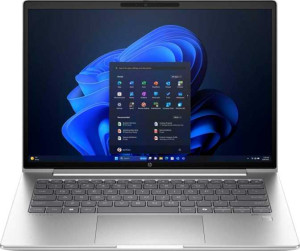
HP ProBook 440 G11 14"

Manufacturer: HP

The HP ProBook 440 G11 is a 14-inch productivity-class laptop aimed at business and professional use. Weighing 1,387 g and measuring just 17 mm thick, it balances portability with a reasonably compact footprint. The display runs at 1920 x 1200 pixels with a pixel density of 161 ppi and includes an anti-reflection coating, making it a practical choice for office environments with varied lighting conditions. It ships with 16GB of DDR5 RAM and 512GB of flash storage, covering the demands of everyday business workloads without requiring an immediate upgrade.

Under the hood, the processor features a hybrid core configuration — 2 cores at 1.7 GHz and 8 cores at 1.2 GHz — with 14 threads, big.LITTLE architecture, and a turbo clock speed reaching 4.8 GHz. The chip is built on a 7 nm process with a 15W TDP, a 12 MB L3 cache, and support for PCIe 4 and OpenCL 3. Memory is expandable up to 96GB at speeds of up to 5600 MHz across two channels. PassMark scores of 16,382 (multi-thread) and 3,373 (single-thread) give a concrete sense of the machine's processing headroom. Connectivity covers Wi-Fi 5 and Wi-Fi 4, stereo speakers, a 3.5mm audio jack, a front camera, and AirPlay support, while features such as GPS, a gyroscope, and an optical disc drive are absent.

Pros
  • At 1,387 g and 17 mm thick, the chassis is light and slim enough for daily commuting or travel between offices
  • 16GB of DDR5 RAM with support for up to 96GB provides meaningful headroom for memory-intensive workloads without requiring an immediate hardware change
  • The hybrid CPU architecture with big.LITTLE technology and a 4.8 GHz turbo clock allows the processor to balance efficiency and responsiveness across different task types
  • A PassMark multi-thread score of 16,382 reflects solid processing capability for typical business and productivity workloads
  • The 1920 x 1200 px display with an anti-reflection coating is well suited to document-heavy work in varied lighting conditions
  • AirPlay support adds wireless streaming flexibility for users who present or share content with compatible displays
Cons
  • Wi-Fi is limited to Wi-Fi 5 and Wi-Fi 4, with no support for the faster Wi-Fi 6 standard
  • The display lacks touch input, which may be a drawback for users accustomed to touch-based interaction on productivity devices
  • There is no fingerprint scanner or 3D facial recognition, leaving the machine without hardware-based biometric authentication
  • A single microphone may feel limiting for users who frequently participate in video calls or online meetings
  • The absence of GPS, gyroscope, accelerometer, and compass rules out any location-aware or motion-sensitive use cases
  • Ray tracing and DLSS are not supported, and the integrated graphics are not suited to demanding visual workloads
Who is this for?

The HP ProBook 440 G11 is well matched to office-based professionals and business users who spend the bulk of their time in productivity applications. Its 16GB of DDR5 RAM expandable up to 96GB, hybrid CPU architecture with a 4.8 GHz turbo clock, and a PassMark multi-thread score of 16,382 give it enough headroom for multitasking, document processing, and light data work without strain. The 1,387 g weight and 17 mm profile make it practical for users who move between desks, meeting rooms, or travel regularly, while the anti-reflection display coating suits those working in offices with mixed or variable lighting. AirPlay support and Wi-Fi connectivity also make it a reasonable fit for users who regularly present wirelessly to compatible screens.

Who is this NOT for?

This laptop is a poor fit for users with demanding visual or graphics workloads, as the integrated GPU lacks ray tracing, DLSS support, and any dedicated rendering capability, making it unsuitable for video editing, 3D work, or gaming. Those who require robust security hardware will find the machine lacking, given the absence of a fingerprint scanner and 3D facial recognition — both increasingly standard on business-oriented devices. Users who depend on the latest wireless networking will also encounter a ceiling, as the Wi-Fi tops out at Wi-Fi 5 with no Wi-Fi 6 support. Additionally, the single microphone and non-touch display make it a less natural choice for users whose workflows rely heavily on video conferencing quality or touch-based interaction.

Design:

Type Productivity
weight 1387 g
Uses a fanless design
volume 1201.747 cm³
width 317 mm
height 223 mm
thickness 17 mm
is weather-sealed (splashproof)
has a rugged build

Classified as a productivity laptop, this machine weighs 1,387 g and measures 317 mm wide, 223 mm tall, and 17 mm thick, with a total volume of 1,201.747 cm³. It uses an active cooling design rather than a fanless setup, and it is neither weather-sealed nor built to a rugged standard.

Display:

screen size 14"
resolution 1920 x 1200 px
pixel density 161 ppi
has a touch screen
refresh rate 60Hz
has anti-reflection coating

The 14-inch screen runs at a resolution of 1920 x 1200 pixels with a pixel density of 161 ppi, producing a moderately sharp image suitable for everyday productivity tasks. The panel operates at a 60Hz refresh rate and includes an anti-reflection coating to reduce glare in brighter environments. Touch input is not supported.

Performance:

RAM 16GB
Uses flash storage
internal storage 512GB
CPU speed 2 x 1.7 & 8 x 1.2 GHz
CPU threads 14 threads
uses multithreading
maximum memory amount 96GB
DDR memory version 5
turbo clock speed 4.8GHz
GPU turbo 1950 MHz
PCI Express (PCIe) version 4
semiconductor size 7 nm
has XeSS (XMX)
Supports 64-bit

The system ships with 16GB of DDR5 RAM and 512GB of flash storage, with memory expandable up to 96GB at speeds of up to 5600 MHz across two channels. The processor uses a hybrid core layout — 2 cores at 1.7 GHz and 8 cores at 1.2 GHz — with 14 threads, multithreading support, and a turbo clock speed of 4.8 GHz. Built on a 7 nm process and supporting 64-bit operation, the chip works alongside integrated graphics with a GPU turbo frequency of 1950 MHz, though XeSS (XMX) acceleration is not available. Storage and expansion connectivity runs through PCIe 4.

Benchmarks:

PassMark result 16382
PassMark result (single) 3373

In PassMark testing, the system achieves a multi-thread score of 16,382 and a single-thread score of 3,373, providing a measurable indication of its capability across both parallel and sequential workloads.

Connectivity:

supports Wi-Fi
Wi-Fi version Wi-Fi 5 (802.11ac), Wi-Fi 4 (802.11n)
has AirPlay

Wireless connectivity is handled through Wi-Fi 5 (802.11ac) and Wi-Fi 4 (802.11n), covering the most widely deployed network standards. AirPlay is also supported, enabling wireless audio and video streaming to compatible devices.

Battery:

Has sleep-and-charge USB ports
Has a MagSafe power adapter

Features:

has stereo speakers
has a socket for a 3.5 mm audio jack
supports ray tracing
supports DLSS
has Dolby Atmos
Stylus included
Has a fingerprint scanner
number of microphones 1
Uses 3D facial recognition
has voice commands
has a front camera
Has S/PDIF Out port
has a gyroscope
has GPS
has an accelerometer
has a compass
Has an optical disc drive

The laptop includes stereo speakers, a 3.5mm headset jack, a single microphone, and a front camera, covering the basics for video calls and audio playback. Security and biometric features are limited — there is no fingerprint scanner, 3D facial recognition, or voice command support. On the graphics side, ray tracing and DLSS are not available, and Dolby Atmos is absent. The machine also lacks motion and location sensors such as a gyroscope, accelerometer, GPS, and compass, and there is no optical disc drive or S/PDIF output port.

Miscellaneous:

Type Laptop
instruction sets MMX, F16C, FMA3, AES, AVX, AVX2, SSE 4.1, SSE 4.2
L3 cache 12 MB
Has an unlocked multiplier
Has NX bit
CPU temperature 110 °C
OpenCL version 3
OpenGL version 4.6
Has integrated graphics
Supports ECC memory
memory channels 2
RAM speed (max) 5600 MHz
Thermal Design Power (TDP) 15W
Uses big.LITTLE technology

The processor is a laptop-class chip with a 15W TDP and a maximum operating temperature of 110 °C, employing big.LITTLE technology for efficiency-oriented core scheduling. It supports a broad set of instruction sets — MMX, F16C, FMA3, AES, AVX, AVX2, SSE 4.1, and SSE 4.2 — along with NX bit for hardware-level security, while the multiplier remains locked. The chip includes 12 MB of L3 cache and integrated graphics, with OpenCL 3 and OpenGL 4.6 support for compute and rendering tasks. Memory runs across two channels at up to 5600 MHz, though ECC memory is not supported.
Final Verdict

The HP ProBook 440 G11 14-inch sits comfortably in its intended lane as a business productivity laptop, with a configuration that addresses the core demands of office work without overreaching. Its DDR5 memory architecture expandable to 96GB, capable hybrid processor, and portable 1,387 g chassis make it a dependable daily driver for professionals who prioritize mobility and multitasking over specialized performance. Where it falls short — namely in biometric security, wireless networking generation, and graphics capability — reflects deliberate trade-offs rather than outright flaws, and users whose needs stay within productivity and communication tasks are unlikely to feel the gaps. For that specific audience, the ProBook 440 G11 is a focused, well-rounded tool that delivers where it counts most.