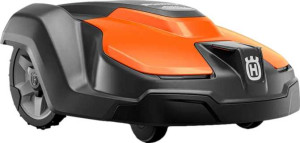
The Husqvarna Automower 520 EPOS is an electric robotic lawn mower with a cutting width of 24 cm and a maximum lawn area coverage of 7,689 m², though the recommended surface area sits at 5,059 m². It operates at 62 dB under standard conditions, dropping to a quieter 56 dB in eco mode. The unit measures 320 mm in height, 559 mm in width, and 719 mm in thickness, with a total volume of approximately 128,614.72 cm³ and a weight of 13,608 g. Connectivity is well covered, with built-in Wi-Fi and Bluetooth, a dedicated smartphone app, and support for remote smartphone control.
The Automower 520 EPOS comes equipped with a broad set of features suited to largely hands-off lawn maintenance. It includes an obstacle sensor and a rain sensor, and is also fitted with a frost sensor that allows it to respond to seasonal ground conditions alongside its broader weather adaptation capability — meaning it can adjust its behavior based on prevailing conditions rather than running to a fixed pattern regardless of the environment. The mower works in rain and supports mowing schedule programming, while auto docking ensures it returns to its charging station without manual intervention. A built-in display is present for on-device interaction, and anti-theft features are included for security. It supports mulching and is compatible with both Amazon Alexa and Google Assistant for voice control integration.
In terms of performance, the Automower 520 EPOS delivers a working area capacity of 175 m² per hour and a mowing time of 75 minutes per charge cycle. Cutting height is adjustable across five settings, spanning a range from 20 mm at the lowest to 61 mm at the highest, offering reasonable flexibility for different grass conditions and preferences. The mower is capable of handling slopes of up to 15%, making it suitable for lawns with moderate inclines.
The Automower 520 EPOS runs on an 18V removable battery that reaches a full charge in approximately one hour, keeping downtime between mowing sessions relatively brief. The unit draws 126W during operation, reflecting the power demands of its autonomous cutting system.