Inno3D GeForce RTX 4070 Super X3 OC specifications and in-depth review

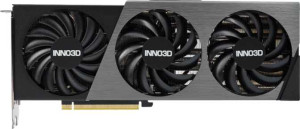
Inno3D GeForce RTX 4070 Super X3 OC

Manufacturer: Inno3D

The Inno3D GeForce RTX 4070 Super X3 OC is a graphics card built on NVIDIA's Ada Lovelace architecture, fabricated at 5 nm with 35,800 million transistors. It operates at a base clock of 1980 MHz and a boost clock of 2505 MHz, producing 35.91 TFLOPS of floating-point performance, a pixel rate of 200.4 GPixel/s, and a texture rate of 561.1 GTexels/s. RGB lighting is included, and the card can drive up to four displays simultaneously.

The memory setup consists of 12GB of GDDR6X running across a 192-bit bus at an effective speed of 21,000 MHz, delivering a maximum bandwidth of 504 GB/s, with ECC memory support also present. On the feature side, the card covers DirectX 12 Ultimate, OpenGL 4.6, OpenCL 3, ray tracing, DLSS, stereoscopic 3D, and Intel Resizable BAR, while XeSS is not included. Connectivity is handled through one HDMI 2.1a port and three DisplayPort outputs, with no USB-C, DVI, or mini DisplayPort available. The card carries a TDP of 220W, connects via PCIe 4.0, uses air cooling exclusively, and measures 297 mm in width by 118 mm in height.

Pros
  • Ray tracing and DLSS support enable compatibility with modern rendering techniques and upscaling workflows out of the box
  • DirectX 12 Ultimate and OpenCL 3 coverage keeps the card well-aligned with current graphics and compute application requirements
  • At 220W TDP, the card's power draw is relatively contained for its class, making system power planning more manageable
  • ECC memory support provides a useful degree of data integrity for workloads where memory reliability matters
  • Intel Resizable BAR support allows the CPU to access the full GPU frame buffer, which can improve frame delivery on compatible platforms
  • A slim 118 mm height makes the card easier to fit in chassis with limited vertical clearance compared to taller designs
Cons
  • The 192-bit memory bus restricts maximum bandwidth to 504 GB/s, which may become a bottleneck under sustained memory-intensive workloads
  • XeSS upscaling is not supported, limiting options for users whose applications or games rely on that technology
  • Water cooling is not available on this model, confining thermal management entirely to the air cooling solution
  • At 297 mm in length, chassis compatibility should be checked carefully, particularly for compact mid-tower or small form factor builds
  • No USB-C display output is provided, which may not suit users with monitors or devices that depend on that connection type
Who is this for?

This card is well-suited to users engaged in ray-traced rendering and DLSS-accelerated workloads, where its 35.91 TFLOPS of floating-point throughput and 2505 MHz boost clock provide reliable headroom for sustained GPU-intensive tasks. The 220W TDP makes it accessible to systems with standard power configurations, and the combination of DirectX 12 Ultimate, OpenCL 3, and Intel Resizable BAR support covers a broad range of modern graphics and compute applications. Users who need to run up to four displays simultaneously will also find the output configuration fully accommodating, and the card's slim 118 mm height eases fitment in builds with restricted vertical clearance.

Who is this NOT for?

Users handling workloads where memory bandwidth is a sustained bottleneck may find the 192-bit bus and 504 GB/s ceiling limiting, particularly in scenarios that push GPU memory throughput continuously. Those who rely on XeSS-based upscaling or require water cooling integration will find neither option available here, narrowing the card's appeal for those specific use cases. Additionally, at 297 mm in length, users building into compact enclosures should verify chassis clearance carefully before committing to this card.

Performance:

GPU clock speed 1980 MHz
GPU turbo 2505 MHz
pixel rate 200.4 GPixel/s
floating-point performance 35.91 TFLOPS
texture rate 561.1 GTexels/s
GPU memory speed 1313 MHz
shading units 7168
texture mapping units (TMUs) 224
render output units (ROPs) 80
Has Double Precision Floating Point (DPFP)

The GPU operates at a base clock of 1980 MHz, boosting up to 2505 MHz, with floating-point throughput of 35.91 TFLOPS, a pixel rate of 200.4 GPixel/s, and a texture rate of 561.1 GTexels/s. Its 7,168 shading units are backed by 224 texture mapping units and 80 render output units, with GPU memory running at 1313 MHz. Double Precision Floating Point is supported on this card.

Memory:

effective memory speed 21000 MHz
maximum memory bandwidth 504 GB/s
VRAM 12GB
GDDR version GDDR6X
memory bus width 192-bit
Supports ECC memory

This card is fitted with 12GB of GDDR6X memory across a 192-bit bus, running at an effective speed of 21,000 MHz and reaching a maximum bandwidth of 504 GB/s. ECC memory support is also present, providing an additional layer of data reliability for accuracy-sensitive workloads.

Features:

DirectX version DirectX 12 Ultimate
OpenGL version 4.6
OpenCL version 3
Supports multi-display technology
supports ray tracing
Supports 3D
supports DLSS
has XeSS (XMX)
AMD SAM / Intel Resizable BAR Intel Resizable BAR
has LHR
has RGB lighting
supported displays 4

The card supports DirectX 12 Ultimate, OpenGL 4.6, and OpenCL 3, along with ray tracing, DLSS, and stereoscopic 3D, providing a well-rounded foundation for modern rendering and compute workloads. Multi-display output is supported for up to four screens simultaneously, Intel Resizable BAR is included, and RGB lighting is present. XeSS and LHR are both absent from this model.

Ports:

has an HDMI output
HDMI ports 1
HDMI version HDMI 2.1a
DisplayPort outputs 3
USB-C ports 0
DVI outputs 0
mini DisplayPort outputs 0

The card's display outputs consist of one HDMI 2.1a port alongside three DisplayPort outputs, accounting for all four supported display connections. USB-C, DVI, and mini DisplayPort are not featured on this model.

General info:

GPU architecture Ada Lovelace
Thermal Design Power (TDP) 220W
PCI Express (PCIe) version 4
semiconductor size 5 nm
number of transistors 35800 million
Has air-water cooling
width 297 mm
height 118 mm

This card is founded on the Ada Lovelace architecture, produced using a 5 nm process with 35,800 million transistors, and connects to the host system via PCIe 4.0. It has a TDP of 220W and relies entirely on air cooling, as water cooling is not supported. The card measures 297 mm in width and 118 mm in height, giving it a relatively slim profile for its length.
Final Verdict

The Inno3D GeForce RTX 4070 Super X3 OC is a well-specified Ada Lovelace graphics card that brings together ray tracing, DLSS, and DirectX 12 Ultimate support within a 220W power envelope, making it a practical option for users running modern rendering pipelines without demanding high-end power infrastructure. Its slim 118 mm height and broad feature coverage — including Intel Resizable BAR and ECC memory — add further utility for a range of workloads and system configurations. Users who can work within the constraints of its 192-bit memory bus and air-only cooling will find the X3 OC a capable and thoughtfully equipped card that covers the essentials of current GPU workloads reliably.

Popular Comparisons

Inno3D GeForce RTX 4070 Super X3 OC
VS
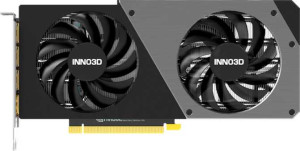
Inno3D GeForce RTX 4070 Ti Super Twin X2 OC