Inno3D GeForce RTX 5060 Low Profile specifications and in-depth review

Inno3D GeForce RTX 5060 Low Profile

Manufacturer: Inno3D

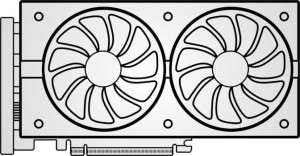
The Inno3D GeForce RTX 5060 Low Profile is a graphics card designed around Nvidia's Blackwell architecture, targeting systems where space is a constraint. Built on a 5 nm semiconductor process and housing 21,900 million transistors, it fits into a low-profile form factor measuring just 178 mm in width and 69 mm in height, making it suitable for compact builds that still require a capable discrete GPU.

On the memory side, the card carries 8GB of GDDR7 across a 128-bit bus, delivering an effective memory speed of 28,000 MHz and a maximum bandwidth of 448 GB/s. Clock speeds sit at 2,280 MHz base and 2,497 MHz in turbo mode, contributing to a floating-point performance figure of 19.18 TFLOPS. The card supports DirectX 12 Ultimate, OpenGL 4.6, ray tracing, and DLSS, and outputs to up to four displays through one HDMI 2.1b port and two DisplayPort connections. Intel Resizable BAR support is included, and the TDP is rated at 145W with a PCIe 5.0 interface.

Pros
  • The low-profile form factor at 178 mm wide and 69 mm tall makes it compatible with compact and small form factor cases that cannot accommodate full-size cards
  • GDDR7 memory with 448 GB/s of bandwidth and an effective speed of 28,000 MHz represents a fast memory configuration for this class of card
  • Support for ray tracing and DLSS broadens its capability for modern rendering workloads
  • The card can drive up to four displays simultaneously, which is a practical advantage for multi-monitor setups in space-constrained environments
  • ECC memory support adds a layer of data integrity useful in workloads where accuracy matters
  • A 3-year warranty provides reasonable long-term coverage for the product
Cons
  • The 128-bit memory bus width is relatively narrow and may limit memory throughput in scenarios that push bandwidth demands beyond what the bus can sustain
  • At 145W TDP, thermal management in tight low-profile cases may require careful airflow planning, especially since the card lacks air-water cooling
  • With only 8GB of VRAM, memory capacity could become a bottleneck in workloads that require larger texture sets or datasets
  • The absence of USB-C output limits display compatibility with newer monitors and devices that rely on that connection type
  • Only one HDMI port is available, which restricts direct HDMI connectivity to a single display at a time
Who is this for?

This card is well-suited to users building or upgrading compact or small form factor systems where a full-size GPU simply won't fit, thanks to its low-profile dimensions of 178 mm by 69 mm. The combination of GDDR7 memory, ray tracing support, and DLSS makes it a reasonable fit for light to moderate gaming and creative workloads in space-constrained builds. Its four-display output capability and multi-display support also make it practical for productivity-focused setups requiring multiple monitors within a slim desktop or mini-PC chassis.

Who is this NOT for?

Users pursuing demanding or memory-intensive workloads — such as high-resolution texture rendering, large dataset processing, or complex 3D scene creation — may find the 8GB VRAM and 128-bit memory bus insufficient to sustain consistent performance. The card is also not well-suited to environments where thermal headroom is severely restricted, as its 145W TDP without air-water cooling requires adequate case airflow that some ultra-compact enclosures cannot reliably provide. Additionally, users who depend on USB-C display connectivity or need multiple simultaneous HDMI outputs will find the port selection limiting for their setup.

Performance:

GPU clock speed 2280 MHz
GPU turbo 2497 MHz
pixel rate 119.9 GPixel/s
floating-point performance 19.18 TFLOPS
texture rate 299.6 GTexels/s
GPU memory speed 1750 MHz
shading units 3840
texture mapping units (TMUs) 120
render output units (ROPs) 48
Has Double Precision Floating Point (DPFP)

The card operates at a base clock of 2,280 MHz, boosting up to 2,497 MHz in turbo mode, and delivers a floating-point performance of 19.18 TFLOPS alongside a texture rate of 299.6 GTexels/s and a pixel rate of 119.9 GPixel/s. These figures are backed by 3,840 shading units, 120 texture mapping units, and 48 render output units. GPU memory runs at 1,750 MHz, and the card includes support for Double Precision Floating Point (DPFP), rounding out a well-specified performance profile for this form factor.

Memory:

effective memory speed 28000 MHz
maximum memory bandwidth 448 GB/s
VRAM 8GB
GDDR version GDDR7
memory bus width 128-bit
Supports ECC memory

The card is equipped with 8GB of GDDR7 VRAM running across a 128-bit memory bus, reaching an effective memory speed of 28,000 MHz and a maximum bandwidth of 448 GB/s. ECC memory support is included, which helps maintain data integrity in error-sensitive workloads.

Features:

DirectX version DirectX 12 Ultimate
OpenGL version 4.6
OpenCL version 3
Supports multi-display technology
supports ray tracing
Supports 3D
supports DLSS
has XeSS (XMX)
AMD SAM / Intel Resizable BAR Intel Resizable BAR
has LHR
has RGB lighting
supported displays 4

The card supports DirectX 12 Ultimate, OpenGL 4.6, and OpenCL 3, covering a broad range of graphics and compute workloads. Ray tracing and DLSS are both supported, while XeSS (XMX) is not present. Multi-display output is available for up to four screens, and stereoscopic 3D is also supported. Intel Resizable BAR is included, though LHR is not. RGB lighting is featured on the card, rounding out its software and hardware feature set.

Ports:

has an HDMI output
HDMI ports 1
HDMI version HDMI 2.1b
DisplayPort outputs 2
USB-C ports 0
DVI outputs 0
mini DisplayPort outputs 0

The card's output configuration consists of one HDMI 2.1b port and two DisplayPort outputs, providing a total of three physical connectors. There are no USB-C, DVI, or mini DisplayPort outputs present on this model.

General info:

GPU architecture Blackwell
Thermal Design Power (TDP) 145W
PCI Express (PCIe) version 5
semiconductor size 5 nm
number of transistors 21900 million
warranty period 3 years
Has air-water cooling
width 178 mm
height 69 mm

Built on the Blackwell architecture using a 5 nm manufacturing process, the GPU integrates 21,900 million transistors and connects via a PCIe 5.0 interface. It carries a TDP of 145W and does not include air-water cooling. The card measures 178 mm in width and 69 mm in height, and comes with a 3-year warranty.
Final Verdict

The Inno3D GeForce RTX 5060 Low Profile carves out a clear niche as a graphics card built specifically for systems where physical space is the primary constraint. Its low-profile form factor paired with GDDR7 memory and DLSS support gives it a meaningful feature set for compact builds that would otherwise be limited to far less capable options. That said, the 8GB VRAM ceiling and 128-bit bus width mean it is best understood as a solution for moderate workloads rather than a card for pushing the upper limits of modern rendering or data-heavy compute tasks. For users who need a capable, multi-display-ready GPU that fits where larger cards cannot, the RTX 5060 Low Profile delivers a well-rounded specification within its intended constraints.