Kamrui Essenx E1 specifications and in-depth review

Kamrui Essenx E1

Manufacturer: Kamrui

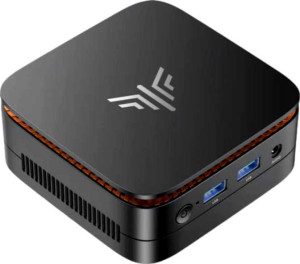
The Kamrui Essenx E1 is a compact Mini PC built around a low-power processor and a Micro-ATX form factor, making it a space-conscious desktop option for everyday computing tasks. With dimensions of 128 × 128 × 52 mm and a total volume of roughly 852 cm³, the unit occupies a notably small footprint. It ships with 16GB of DDR4 RAM running at 3200 MHz and a 512GB NVMe SSD, offering a ready-to-use storage and memory configuration without requiring immediate upgrades.

On the connectivity side, the Essenx E1 includes one HDMI 2.0 port, one DisplayPort output, and two USB 3.2 Gen 1 Type-A ports alongside two USB 2.0 ports, with a single RJ45 Ethernet port rounding out the wired options. Wireless connectivity is handled by Wi-Fi 5 (802.11ac) and Bluetooth 4.2, while the integrated GPU supports up to three displays simultaneously and is compatible with DirectX 12 Ultimate and OpenGL 4.6. The processor carries a 6W TDP, operates with a turbo clock of 3.6 GHz across four threads, and tops out at a maximum operating temperature of 105 °C. A one-year warranty is included.

Pros
  • Supports up to three simultaneous display outputs, useful for multi-monitor desktop setups
  • Includes both a DisplayPort and an HDMI 2.0 output, offering flexibility for different monitor types
  • The NVMe SSD interface delivers faster storage access compared to SATA-based alternatives within the same form factor
  • Wi-Fi 5 and Bluetooth 4.2 are built in, removing the need for additional wireless adapters
  • Integrated graphics support DirectX 12 Ultimate and OpenCL 3, covering a broad range of compute and display tasks
  • The very low 6W TDP keeps heat output minimal, which suits a fanless or low-noise compact enclosure
Cons
  • Memory is limited to a single channel and capped at 16GB with no upgrade path beyond that maximum
  • No USB-C ports of any kind are available, including USB 3.2 Gen 1 or Gen 2 Type-C
  • Bluetooth version 4.2 is older and lacks the energy efficiency and range improvements found in newer Bluetooth standards
  • There is no external memory card slot, so storage expansion options are restricted
  • The single-core PassMark score of 1906 reflects limited per-thread processing capability for demanding single-threaded tasks
  • The warranty period covers only one year
Who is this for?

This Mini PC is well suited to users looking for a compact, low-power desktop for everyday computing tasks such as web browsing, document work, and light media consumption. Its 6W TDP and small physical footprint make it a practical fit for space-constrained environments like home offices, reception desks, or living room setups. The ability to drive up to three displays simultaneously also makes it a reasonable choice for users who need a multi-monitor arrangement without requiring a dedicated discrete GPU, while built-in Wi-Fi 5 and Bluetooth 4.2 keep the setup tidy with minimal cabling.

Who is this NOT for?

Users with demanding workloads will find this unit limiting — the low single-core performance and 4-thread processor without multithreading support make it unsuitable for tasks like video editing, software compilation, or running virtual machines. The memory configuration is capped at 16GB in a single channel with no expansion slots, which rules it out for memory-intensive professional applications. Similarly, the absence of any USB-C or Thunderbolt ports makes it a poor fit for users who rely on modern high-speed peripherals, external GPUs, or fast external storage solutions.

General info:

SSD storage capacity 512GB
form factor Micro-ATX
Is an NVMe SSD
thickness 128 mm
height 52 mm
width 128 mm
volume 851.968 cm³

The Kamrui Essenx E1 follows a Micro-ATX form factor and occupies a compact physical footprint, measuring 128 mm in both width and thickness with a height of just 52 mm, resulting in a total volume of approximately 851.97 cm³. Storage is handled by a 512GB NVMe SSD, which uses the faster NVMe interface rather than a traditional SATA drive, offering quicker data access within that small chassis.

CPU:

Thermal Design Power (TDP) 6W
CPU speed 4 x 0.1 GHz
turbo clock speed 3.6GHz
CPU threads 4 threads
Has integrated graphics
uses multithreading
L3 cache 6 MB
L3 core 1.5 MB/core
clock multiplier 1
Has an unlocked multiplier
Supports 64-bit
CPU temperature 105 °C

The processor in this unit carries a 6W Thermal Design Power (TDP), reflecting its low-power design, and operates across 4 threads with a base clock speed of 4 x 0.1 GHz and a turbo clock that reaches up to 3.6 GHz. It does not use multithreading and has a fixed clock multiplier of 1 with no unlocked multiplier, meaning clock speed adjustments are not supported. The CPU includes 6 MB of L3 cache (1.5 MB per core), supports 64-bit processing, comes with integrated graphics, and is rated for a maximum operating temperature of 105 °C.

Graphics card:

GPU turbo 1000 MHz
PCI Express (PCIe) version 3
DirectX version DirectX 12 Ultimate
OpenGL version 4.6
OpenCL version 3
semiconductor size 10 nm
supported displays 3

The integrated graphics solution runs at a turbo clock of 1000 MHz and is built on a 10 nm semiconductor process, with PCIe 3 handling the interface connection. It supports DirectX 12 Ultimate, OpenGL 4.6, and OpenCL 3, covering a solid range of graphics and compute APIs. The GPU can drive up to three displays simultaneously, making multi-monitor setups a viable option within this compact system.

Memory:

RAM 16GB
RAM speed 3200 MHz
DDR memory version 4

The system comes equipped with 16GB of DDR4 RAM running at a speed of 3200 MHz, providing a single-generation memory configuration suited to the unit's low-power profile.

Connectivity:

Wi-Fi version Wi-Fi 5 (802.11ac), Wi-Fi 4 (802.11n)
supports Wi-Fi
Has Bluetooth
Bluetooth version 4.2
USB 2.0 ports 2
USB 3.2 Gen 2 ports (USB-A) 0
USB 3.2 Gen 1 ports (USB-A) 2
USB 3.2 Gen 2 ports (USB-C) 0
USB 4 40Gbps ports 0
USB 4 20Gbps ports 0
USB 3.2 Gen 2x2 ports 0
USB 3.2 Gen 1 ports (USB-C) 0
Thunderbolt 4 ports 0
Thunderbolt 3 ports 0
DisplayPort outputs 1
HDMI version HDMI 2.0
HDMI ports 1
RJ45 ports 1
has a socket for a 3.5 mm audio jack
has a VGA connector
Has S/PDIF Out port

Wireless connectivity is provided through Wi-Fi 5 (802.11ac) and Wi-Fi 4 (802.11n) alongside Bluetooth 4.2, while wired networking is covered by a single RJ45 Ethernet port. For USB, the unit offers two USB 2.0 ports and two USB 3.2 Gen 1 Type-A ports; there are no USB-C ports of any generation, and neither Thunderbolt 3 nor Thunderbolt 4 is supported. Display output is handled by one HDMI 2.0 port and one DisplayPort output, with no VGA connector present. Audio connectivity includes a 3.5 mm headset jack, though there is no S/PDIF output.

Benchmarks:

PassMark result 5416
PassMark result (single) 1906
PassMark result (overclocked) 5754

In PassMark testing, the processor scores 5416 in the multi-core benchmark and 1906 in the single-core test, reflecting the performance profile of a low-TDP mobile-class chip. An overclocked PassMark result of 5754 is also recorded, representing a modest uplift over the standard multi-core score.

Miscellaneous:

maximum memory amount 16GB
has an external memory slot
Type Laptop
Uses big.LITTLE technology
instruction sets MMX, F16C, FMA3, AES, AVX, SSE 4.1, AVX2, SSE 4.2
Has NX bit
GPU execution units 24
Supports ECC memory
memory channels 1
RAM speed (max) 4800 MHz
warranty period 1 years

The CPU is a laptop-type processor that does not use big.LITTLE technology, and it supports a range of instruction sets including MMX, AVX, AVX2, FMA3, F16C, AES, SSE 4.1, and SSE 4.2, along with NX bit for hardware-level memory protection. Memory is handled through a single channel, with a maximum supported capacity of 16GB and a top RAM speed of 4800 MHz; ECC memory is not supported, and there is no external memory slot. The integrated GPU includes 24 execution units, and the unit comes with a one-year warranty.
Final Verdict

The Kamrui Essenx E1 is a focused Mini PC that delivers exactly what its specifications promise: a compact, energy-efficient desktop solution built around a low-power laptop-class processor and a tidy set of connectivity options. Its support for up to three simultaneous displays, combined with a 512GB NVMe SSD and 16GB of DDR4 RAM, gives it enough capability to handle everyday productivity and light multi-monitor use cases without overreaching. Where it falls short is equally clear — single-channel memory capped at 16GB, limited USB port variety, and modest single-threaded performance mean it is not positioned for users with intensive computing demands. For those whose needs align with its design intent — a space-saving, low-noise desktop for general use — the Essenx E1 is a coherent and well-specified option; for anyone requiring heavier workloads or modern high-speed peripheral support, its limitations will become apparent quickly.