Keychron V1 Max QMK/VIA Wireless specifications and in-depth review

Keychron V1 Max QMK/VIA Wireless

Manufacturer: Keychron

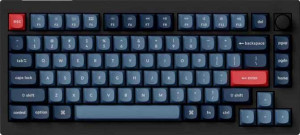
The Keychron V1 Max QMK/VIA Wireless is a compact 75% mechanical keyboard designed for users who want flexible connectivity without sacrificing customization depth. It supports Bluetooth, 2.4GHz wireless, and wired USB operation, making it practical across a range of setups. The board ships with a gasket mount construction, which contributes to a softer typing feel compared to traditional tray or top-mount designs. Available in black with a polycarbonate plate and plastic case, it also includes RGB backlighting with south-facing LEDs and adjustable feet for positioning preference.

On the technical side, the V1 Max runs on Bluetooth 5.1 and offers up to 100 hours of battery life in wireless mode. It uses Gateron Jupiter Red linear switches with a 2mm actuation point, 45g actuation force, and 4mm total travel distance, and the hot-swap sockets allow switch changes without soldering. The keyboard has full QMK and VIA support for deep key remapping and macro configuration, and NKRO ensures every simultaneous keypress is registered accurately. Keycaps are PBT double-shot in an OEM profile with a standard ANSI layout, and a rotary dial is included for quick on-the-fly adjustments.

Pros
  • Hot-swappable switches allow users to change out Gateron Jupiter Red linears for other compatible switches without any soldering
  • Triple connectivity via Bluetooth 5.1, 2.4GHz wireless, and USB offers flexibility across different workstation setups
  • 100-hour battery life provides extended wireless use before requiring a recharge
  • QMK and VIA support enable deep keyboard customization including key remapping and macro configuration directly from the firmware level
  • NKRO ensures every simultaneous keypress is accurately registered, which matters in fast-paced typing or gaming scenarios
  • The gasket mount design and polycarbonate plate work together to produce a softer, more cushioned typing feel
Cons
  • No wrist rest is included, which may require a separate purchase for users who prefer wrist support during long sessions
  • The case is made from plastic, which is less rigid than aluminum alternatives in the same keyboard category
  • Rapid trigger, adjustable actuation, and dual actuation are all absent, limiting compatibility with certain advanced gaming workflows
  • Media controls are only accessible through the Fn key layer rather than dedicated keys, which can slow down common media interactions
  • ZMK support is not available, restricting wireless firmware customization options compared to boards that support it
  • There is no USB passthrough port, so the keyboard does not double as a hub for connecting other peripherals
Who is this for?

This keyboard is a solid fit for users who want flexible wireless connectivity without being locked into a single mode, making it practical for those who switch between devices or alternate between wired and wireless setups regularly. The QMK and VIA support appeals to enthusiasts who enjoy configuring their layout, macros, and firmware behavior at a granular level. The hot-swappable gasket-mount build also suits users who like to experiment with different switch feels over time without committing to a soldered configuration, while the compact 75% layout works well for those who want a smaller desk footprint without losing the function row or arrow keys.

Who is this NOT for?

Users who rely on advanced gaming-oriented switch features such as rapid trigger, adjustable actuation points, or dual actuation will find this keyboard lacking, as none of those capabilities are present. It is also a poor match for those who need dedicated media keys for quick, one-press access during workflows that involve frequent audio or playback control, since all media functions require navigating through the Fn layer. Additionally, users who prefer a more rigid, premium-feeling build may be underwhelmed by the plastic case construction, and anyone seeking ZMK support for wireless firmware customization will need to look elsewhere.

General info:

Keyboard type Gaming, Mechanical
Keyboard layout size Compact (75%)
Profile Standard
connectivity Wireless & wired
connection type Bluetooth, 2.4GHz wireless, USB
polling rate 1000 Hz
Mount type Gasket mount
Battery life 100 hours
designed for Mac
has a detachable cable
height 148.7 mm
width 328.5 mm
thickness 29.4 mm
weight 770 g
Bluetooth version 5.1
warranty period 1 years

The Keychron V1 Max is a compact 75% mechanical keyboard with a standard profile, built for both gaming and general use. It connects via Bluetooth 5.1, 2.4GHz wireless, or USB, and is also designed for Mac compatibility alongside other platforms. Wireless use is backed by a 100-hour battery life, and the keyboard includes a detachable cable for wired operation. It uses a gasket mount and polls at 1000 Hz, while its physical footprint measures 328.5 mm wide, 148.7 mm deep, and 29.4 mm thick, with a total weight of 770 g. The warranty period covers one year from purchase.

Design:

has RGB lighting
Has a backlit keyboard
Case material Plastic
Plate material Polycarbonate
Case colors Black
has adjustable feet
includes a wrist rest
Backlight facing direction South-facing

The keyboard features a plastic case in black with a polycarbonate plate, giving the build a consistent and understated appearance. It includes RGB backlighting with south-facing LEDs, allowing light to shine through the bottom of the keycaps for a defined lighting effect. Adjustable feet are included to modify the typing angle, though no wrist rest is bundled with the keyboard.

Switches:

Switch type Mechanical
Switch feel Linear
Hot-swappable switches
Switch name Gateron Jupiter Red
Actuation distance (min) 2 mm
Actuation distance (max) 2 mm
Actuation force 45 g
Total travel distance 4 mm

This keyboard comes equipped with Gateron Jupiter Red mechanical switches, which offer a linear feel with no tactile bump or audible click during actuation. They actuate at 2 mm with a force of 45 g and have a total travel distance of 4 mm, making for a smooth and consistent keystroke from top to bottom. The switches are hot-swappable, meaning they can be replaced without soldering, allowing the user to change to different compatible switches at any time.

Features:

has analog input
has rapid trigger
has dual actuation
has adjustable actuation
has NKRO
has USB passthrough
Has a display
has QMK support
has ZMK support
has VIA support

The keyboard supports QMK and VIA, giving users access to deep key remapping, macro assignment, and layout customization through open-source firmware and a graphical interface respectively, though ZMK is not supported. NKRO (N-Key Rollover) is included, ensuring every simultaneous keypress is individually registered without conflict. The board does not offer analog input, rapid trigger, dual actuation, or adjustable actuation point functionality, and there is no USB passthrough port or onboard display.

Keys & layout:

Keyboard layout ANSI (United States)
Keycap type PBT, Double-shot
Keycap profile OEM
uses a standard key layout
Media keys Via Fn key
has a rotary dial

The keyboard uses an ANSI (United States) layout with a standard key arrangement, so keycap compatibility is broad and replacements are straightforward to source. Keycaps are PBT double-shot in an OEM profile, which provides a familiar sculpted feel across the rows and legends that resist fading over time. Media functions are accessible via the Fn key rather than dedicated keys, and a rotary dial is included for quick input adjustments without navigating software menus.
Final Verdict

The Keychron V1 Max QMK/VIA Wireless brings together a well-rounded set of specifications for users who want a customizable, wireless-capable mechanical keyboard in a compact form factor. Its triple connectivity with 100-hour battery life, combined with hot-swappable switches and full QMK and VIA firmware support, make it a genuinely versatile option for those who prioritize personalization and flexibility in their setup. The gasket mount and polycarbonate plate add a degree of typing comfort that goes beyond what basic tray-mount boards offer. Where it falls short — namely the absence of advanced actuation features and a plastic case — reflects deliberate trade-offs rather than oversights, and users whose needs align with its strengths will find it a capable and well-specified daily driver.