Leica D-Lux 8 specifications and in-depth review

Leica D-Lux 8

Manufacturer: Leica

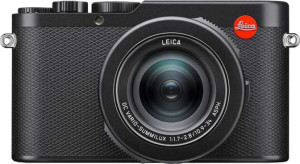
The Leica D-Lux 8 is a compact camera built around a 17 MP CMOS sensor and a fixed zoom lens covering a focal length range of 10.9 mm to 34 mm with a maximum aperture of f/1.7. It features a 3-inch touchscreen alongside a high-resolution 2360k dot electronic viewfinder with 100% coverage, making it a capable option for shooters who want an optical-style framing experience in a compact body. The camera weighs 397 g and measures 130 x 69 x 34 mm, and operates within a temperature range of 0 °C to 40 °C.

On the imaging side, the Leica D-Lux 8 supports RAW capture, manual controls for shutter speed, ISO, exposure, and white balance, along with built-in optical image stabilization and a continuous shooting rate of 11 fps. It records 4K video at 2160 x 30 fps with a bitrate of 100 Mbps, a 24p cinema mode, and a stereo dual-microphone setup, though there is no microphone input or headphone jack. Connectivity includes Wi-Fi 4, Bluetooth 5, HDMI output, USB Type-C (USB 3), and an external memory slot, while the removable 1025 mAh battery and hot shoe round out a fairly complete feature set for a compact-class camera.

Pros
  • The f/1.7 maximum aperture at the wide end allows more light onto the sensor, which is useful in lower-light shooting conditions
  • A continuous shooting rate of 11 fps combined with AF tracking makes it capable of capturing fast-moving subjects in burst sequences
  • 4K video recording at 30 fps with a 100 Mbps bitrate and a 24p cinema mode gives videographers meaningful control over footage quality
  • The removable battery design allows users to carry and swap spare batteries during extended shooting sessions
  • RAW shooting support gives photographers full control over post-processing with maximum image data retained
  • Bluetooth 5 and Wi-Fi connectivity with remote smartphone support enable wireless image transfer and camera control without cables
Cons
  • The 1025 mAh battery capacity is modest for a camera, which may limit the number of shots per charge during intensive use
  • No weather sealing means the camera cannot be used reliably in rain or dusty outdoor environments
  • The absence of a microphone input and 3.5 mm audio jack limits audio quality options for video shooters who need external microphone support
  • Slow-motion video recording is not supported, restricting creative options for motion-oriented video work
  • Phase-detection autofocus is unavailable for both photos and video, which may affect autofocus speed and reliability in certain shooting situations
  • There is only a single card slot, with no dual-slot option for backup recording or overflow storage
Who is this for?

The Leica D-Lux 8 is well suited to photographers who want a capable compact camera for everyday and travel use, where its f/1.7 maximum aperture and built-in optical image stabilization help in a range of lighting conditions without the bulk of a larger system. The 11 fps continuous shooting, AF tracking, and full manual controls make it a reasonable fit for enthusiasts who want hands-on control over exposure, focus, and white balance in a pocketable form. Those who occasionally shoot video will also find value in the 4K 30 fps recording with 24p cinema mode and the built-in stereo microphones, making it a compact all-rounder for hybrid photo and video use.

Who is this NOT for?

Users who frequently shoot in challenging outdoor conditions will find the lack of weather sealing a significant drawback, as the camera offers no protection against rain, dust, or moisture. Dedicated video shooters who rely on external microphones or headphones for audio monitoring will be frustrated by the absence of both a microphone input and a 3.5 mm jack, and the lack of slow-motion video recording further limits its appeal for cinematic work. The modest 1025 mAh removable battery also makes this a poor fit for long uninterrupted shooting sessions without access to spare batteries, and the single card slot offers no redundancy for photographers who need backup recording in professional settings.

Design:

Type Compact
viewfinder Electronic viewfinder (EVF)
is weather-sealed (splashproof)
screen resolution 1843k dots
EVF resolution 2360k dots
Has a flip-out screen
viewfinder coverage 100%
screen size 3"
weight 397 g
has a touch screen
Has a hot shoe
volume 304.98 cm³
is a system camera
has a flash
lowest potential operating temperature 0 °C
maximum operating temperature 40 °C
Has a tilting viewfinder
EVF refresh rate (max) 60fps
Includes lens hood
width 130 mm
height 69 mm
thickness 34 mm

The Leica D-Lux 8 is a compact camera body measuring 130 x 69 x 34 mm with a volume of 304.98 cm³ and a weight of 397 g. It features a 3-inch touchscreen with a resolution of 1843k dots alongside a built-in electronic viewfinder (EVF) offering 2360k dot resolution, 100% coverage, and a maximum refresh rate of 60fps. The EVF is fixed and does not tilt, and the rear screen does not flip out. A hot shoe is present for attaching external flash accessories, as the camera has no built-in flash, and a lens hood is not included. The device is not weather-sealed and is not a system camera, with a specified operating temperature range of 0 °C to 40 °C.

Optics:

focus points 49
megapixels (main camera) 17 MP
maximum ISO 25000 ISO
has sensor shift stabilization
continuous shooting (mechanical) 11 fps
has AF tracking
Has phase-detection autofocus for photos
fastest shutter speed 0.00025 s
has built-in optical image stabilization
has manual focus
has touch autofocus
has manual shutter speed
has a BSI sensor
has manual exposure
has a two-stage shutter
has a serial shot mode
has a CMOS sensor
has manual ISO
flash sync speed 0.00025 s
optical zoom 3.1x
wide aperture (main camera) 1.7f
has manual white balance
exposure time 30 s
Maximum electronic shutter speed 6.25E-5 s
maximum focal length 34 mm
has a stacked CMOS sensor
minimum focal length 10.9 mm
widest aperture at maximum focal length 2.8f
minimum focus distance 0.5 m
Can focus to infinity
smallest aperture at maximum focal length 16f
smallest aperture at minimum focal length 16f

The Leica D-Lux 8 uses a 17 MP CMOS sensor — neither back-illuminated nor stacked — with a maximum ISO of 25000 and a fixed zoom lens offering 3.1x optical zoom across a focal range of 10.9 mm to 34 mm. The widest aperture is f/1.7 at the minimum focal length, narrowing to f/2.8 at the maximum, with both ends closing down to f/16 at their smallest. The lens can focus as close as 0.5 m and supports infinity focus. Autofocus is handled through a 49-point system with AF tracking and touch autofocus, though phase-detection autofocus is not available. Built-in optical image stabilization is present, while sensor-shift stabilization is not. Manual controls cover focus, shutter speed, ISO, exposure, and white balance, and a two-stage shutter is included alongside burst mode for continuous shooting at 11 fps. The fastest mechanical shutter speed reaches 1/4000 s, with the electronic shutter pushing to 1/16000 s, a flash sync speed of 1/4000 s, and a maximum exposure time of 30 seconds.

Videography:

video recording (main camera) 2160 x 30 fps
Has phase-detection autofocus for videos
has continuous autofocus when recording movies
has a microphone input
has a socket for a 3.5 mm audio jack
has a stereo microphone
movie bitrate 100 Mbps
number of microphones 2
has a 24p cinema mode
supports slow-motion video recording

The Leica D-Lux 8 records video at 4K (2160p) at 30 fps with a maximum bitrate of 100 Mbps, and also offers a 24p cinema mode for a more filmic frame rate. Continuous autofocus is available during recording, though phase-detection autofocus for video is not supported. Audio is captured through a built-in dual stereo microphone setup, but there is no external microphone input and no 3.5 mm audio jack. Slow-motion video recording is not available.

Battery:

has a removable battery
has a rechargeable battery
has a battery level indicator
battery power 1025 mAh

The Leica D-Lux 8 is powered by a removable and rechargeable 1025 mAh battery, allowing users to carry spares for extended shoots. A battery level indicator is built in to help monitor remaining charge during use.

Features:

supports Wi-Fi
Has Bluetooth
Has dual card slots
shoots raw
Wi-Fi version Wi-Fi 4 (802.11n)
supports a remote smartphone
has an HDMI output
has GPS
has first-party support for live streaming
has an advanced hot shoe
has NFC
has an external memory slot
Has USB Type-C
Bluetooth version 5

The Leica D-Lux 8 supports RAW shooting and offers Wi-Fi 4 (802.11n) and Bluetooth 5 for wireless connectivity, including remote smartphone control. It features a USB Type-C port, an HDMI output, and an external memory slot for storage expansion, though dual card slots are not available. NFC and GPS are absent, and the hot shoe is a standard rather than advanced type. First-party live streaming support is also not included.

Miscellaneous:

USB version 3

The Leica D-Lux 8 includes a USB 3 interface, enabling faster data transfer when connecting the camera to a computer or compatible device.
Final Verdict

The Leica D-Lux 8 is a compact camera that covers a solid range of photographic needs within a relatively portable form factor, with its f/1.7 aperture lens combined with optical image stabilization standing out as a genuine strength for everyday and travel shooting. The addition of 4K video with a 24p cinema mode, full manual controls, RAW support, and wireless connectivity rounds out a feature set that will satisfy enthusiasts looking for creative flexibility without carrying larger equipment. That said, the absence of weather sealing, external audio connectivity, and slow-motion video narrows its appeal for more specialized or demanding use cases. For photographers who prioritize portability and hands-on control in a compact body, the Leica D-Lux 8 delivers a coherent and well-equipped package — as long as its limitations are understood upfront.

Popular Comparisons

Leica D-Lux 8
Leica D-Lux 8
VS
Fujifilm X-E5
Fujifilm X-E5
Leica D-Lux 8
Leica D-Lux 8
VS
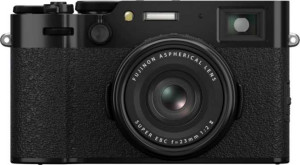
Fujifilm X100VI
Fujifilm X100VI
Leica D-Lux 8
Leica D-Lux 8
VS
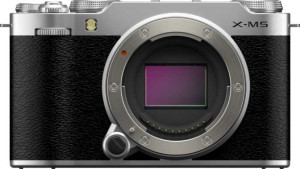
Fujifilm X-M5
Fujifilm X-M5
Leica D-Lux 8
Leica D-Lux 8
VS
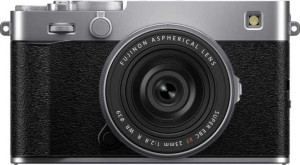
Fujifilm X-E5 + Fujifilm XF 23mm f/2.8 R WR
Leica D-Lux 8
Leica D-Lux 8
VS
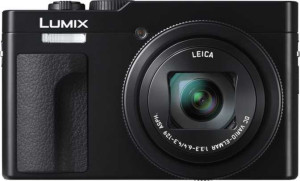
Panasonic Lumix DC-TZ99
Leica D-Lux 8
Leica D-Lux 8
VS
Leica Q3 43
Leica Q3 43