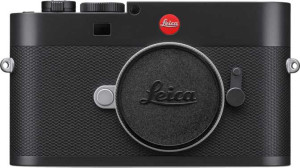
Leica M EV1 specifications and in-depth review

Leica M EV1

Manufacturer: Leica

The Leica M EV1 is a full-frame mirrorless camera built around a 60.3-megapixel back-illuminated CMOS sensor and paired with the Leica M lens mount, making it compatible with the brand's established range of optics. It carries a 5760k-dot electronic viewfinder with 100% coverage alongside a 2.95″ touchscreen display, and its body measures 139 × 80 × 38 mm at a weight of 495 g. Connectivity includes Wi-Fi 4 and Wi-Fi 5, Bluetooth 4.2, USB Type-C, and a hot shoe, while 64 GB of internal storage is complemented by an external memory slot.

On the imaging side, the Leica M EV1 supports a maximum ISO of 50,000 and a fastest mechanical shutter speed of 1/4000 s, with an electronic shutter reaching up to 1/16000 s. Continuous shooting is available at 4.5 fps, and the camera includes phase-detection autofocus with AF tracking and touch autofocus support. The Maestro III processor handles image processing duties, and the camera shoots in RAW format. Battery capacity sits at 1800 mAh with a CIPA-rated endurance of 244 shots per charge, and the removable battery supports in-camera recharging with a level indicator provided.

Pros
  • The 60.3 MP full-frame BSI CMOS sensor delivers exceptionally high resolution capture for a mirrorless camera in this category
  • The 5760k-dot EVF with 100% coverage and a 60fps refresh rate provides a detailed and responsive optical experience
  • Phase-detection autofocus with AF tracking and touch autofocus support offers flexible and reliable focusing options
  • 64 GB of internal storage combined with an external memory slot gives substantial flexibility for storing files without relying solely on memory cards
  • Wi-Fi 5 support alongside Bluetooth 4.2 and smartphone remote control enables convenient wireless workflows
  • The electronic shutter extends to 1/16000 s, allowing for shooting in very bright conditions without additional accessories
Cons
  • Battery life rated at 244 shots per CIPA standard is relatively modest for extended shooting sessions
  • The rear screen has no flip-out or tilting capability, limiting comfortable shooting from unusual angles
  • No sensor-shift image stabilization is present, which can be a practical limitation in low-light or handheld scenarios
  • The absence of a microphone input and 3.5 mm audio jack restricts audio options for any video use
  • No HDMI output limits direct connection to external monitors or displays
  • NFC, GPS, and first-party live streaming support are all absent, reducing the camera's connectivity and location-tagging capabilities
Who is this for?

The Leica M EV1 is well-suited to photographers who prioritize high-resolution still image capture, with its 60.3 MP full-frame BSI CMOS sensor making it a strong fit for studio, landscape, or portrait work where fine detail is critical. The phase-detection autofocus with AF tracking, touch autofocus, and full manual control over exposure, ISO, shutter speed, and white balance cater to experienced shooters who prefer hands-on control over automation. Its Wi-Fi 5 connectivity and smartphone remote support also make it practical for tethered or remote shooting workflows, while the 64 GB of internal storage plus an external memory slot suits users who shoot large RAW files regularly.

Who is this NOT for?

This camera is not well-suited to users who require in-body image stabilization, as no sensor-shift system is present, making handheld shooting in low light more demanding. Videographers or content creators will find it limiting due to the absence of a microphone input, a 3.5 mm audio jack, HDMI output, and any first-party live streaming support, making it a poor fit for video-focused workflows. Additionally, the fixed rear screen with no tilt or flip mechanism and a CIPA-rated battery life of just 244 shots make it a difficult choice for extended fieldwork or run-and-gun shooting situations where adaptability and endurance are priorities.

Design:

Type Mirrorless
viewfinder Electronic viewfinder (EVF)
screen resolution 2333k dots
EVF resolution 5760k dots
Has a flip-out screen
viewfinder coverage 100%
screen size 2.95"
weight 495 g
has a touch screen
Has a hot shoe
volume 422.56 cm³
is a system camera
has a flash
lowest potential operating temperature 0 °C
maximum operating temperature 40 °C
Has a tilting viewfinder
EVF refresh rate (max) 60fps
width 139 mm
height 80 mm
thickness 38 mm

The Leica M EV1 is a mirrorless system camera built around an electronic viewfinder with a 5760k-dot resolution and 100% coverage, refreshing at up to 60fps for a responsive viewing experience. It features a 2.95″ touchscreen rated at 2333k dots, though it is fixed in place with no flip-out or tilting capability. The body measures 139 × 80 × 38 mm and weighs 495 g, giving it a volume of 422.56 cm³. A hot shoe is included for external flash accessories, while a built-in flash is absent. Operating temperatures range from 0 °C to 40 °C, and the camera does not feature a tilting viewfinder.

Optics:

sensor size Full frame
lens mount Leica M
megapixels (main camera) 60.3 MP
maximum ISO 50000 ISO
has sensor shift stabilization
continuous shooting (mechanical) 4.5 fps
has AF tracking
Has phase-detection autofocus for photos
fastest shutter speed 0.00025 s
has manual focus
has touch autofocus
has manual shutter speed
has a BSI sensor
has manual exposure
has a two-stage shutter
has a serial shot mode
has a CMOS sensor
has manual ISO
flash sync speed 0.00555556 s
has manual white balance
exposure time 30 s
Maximum electronic shutter speed 6.25E-5 s
has a stacked CMOS sensor

The Leica M EV1 uses a full-frame 60.3 MP back-illuminated CMOS sensor paired with the Leica M lens mount, reaching a maximum ISO of 50,000 without sensor-shift stabilization or a stacked CMOS design. Autofocus options include phase-detection, touch autofocus, and AF tracking, and manual focus is also supported alongside full manual control over shutter speed, ISO, exposure, and white balance. The mechanical shutter reaches a fastest speed of 1/4000 s with a flash sync speed of approximately 1/180 s, while the electronic shutter extends to 1/16000 s; maximum exposure time stretches to 30 seconds. Continuous shooting is available at 4.5 fps via a two-stage shutter with burst mode support.

Videography:

has a microphone input
has a socket for a 3.5 mm audio jack

From an audio connectivity standpoint, the Leica M EV1 includes neither a microphone input nor a 3.5 mm headset jack, meaning external audio accessories cannot be connected directly to the camera.

Battery:

Battery life (CIPA) 244 shots
has a removable battery
has a rechargeable battery
has a battery level indicator
battery power 1800 mAh

The Leica M EV1 is powered by a removable and rechargeable 1800 mAh battery rated for 244 shots per charge according to CIPA standards. A battery level indicator is built in, allowing users to monitor remaining power during use.

Features:

processor Maestro III
supports Wi-Fi
Has Bluetooth
shoots raw
Wi-Fi version Wi-Fi 4 (802.11n), Wi-Fi 5 (802.11ac)
supports a remote smartphone
has an HDMI output
has GPS
has first-party support for live streaming
has an advanced hot shoe
has NFC
has an external memory slot
internal storage 64GB
Has USB Type-C
Bluetooth version 4.2

The Leica M EV1 runs on a Maestro III processor and offers 64 GB of internal storage alongside an external memory slot for expanded capacity. Wireless connectivity covers Wi-Fi 4 (802.11n) and Wi-Fi 5 (802.11ac) as well as Bluetooth 4.2, with smartphone remote control supported through these connections. The camera shoots in RAW format and includes a USB Type-C port for data transfer and charging. On the other hand, it lacks HDMI output, NFC, GPS, an advanced hot shoe, and first-party live streaming support.

Final Verdict

The Leica M EV1 is a highly specialized mirrorless camera that makes a clear statement about its priorities: still image quality above all else. Its 60.3 MP full-frame BSI CMOS sensor, paired with a high-resolution EVF, phase-detection autofocus, and extensive manual controls, positions it firmly as a tool for experienced photographers who demand precision and resolving power in their work. That focus, however, comes with trade-offs — the absence of sensor stabilization, limited battery endurance, and stripped-down video capabilities mean it asks users to work within a defined set of boundaries. For those whose workflow aligns with those boundaries, the Leica M EV1 delivers a cohesive and capable shooting experience; for anyone needing versatility across stills and video or extended fieldwork, its limitations will be felt.