Leica Q3 43 specifications and in-depth review

Leica Q3 43

Manufacturer: Leica

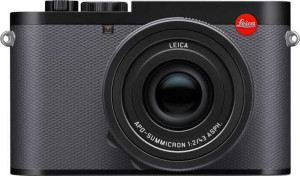
The Leica Q3 43 is a compact camera built around a full-frame sensor and a fixed 43 mm focal length lens, making it a distinctive option for photographers who prefer a single, carefully considered perspective. It carries a 60.3 MP back-illuminated CMOS sensor paired with the Maestro IV processor, and the body is weather-sealed for use in varied conditions. The 3″ flip-out touchscreen and a high-resolution 5760k-dot electronic viewfinder with a 120 fps refresh rate give flexible framing options, while the overall build weighs 772 g.

On the optical side, the fixed lens offers a widest aperture of f/2, a minimum focus distance of 0.27 m, a silent built-in focus motor, and rounded aperture blades. Autofocus relies on a 315-point phase-detection system with tracking and touch AF support. Continuous shooting reaches 15 fps, and the camera records video up to 4320p at 30 fps with a 300 Mbps bitrate, phase-detection AF for video, and both a 3.5 mm microphone input and a stereo microphone. Connectivity includes Wi-Fi 5, Bluetooth 5, USB 3.2 Type-C, HDMI output, and wireless charging, with a removable 2200 mAh battery rated for approximately 350 shots per charge.

Pros
  • The full-frame 60.3 MP back-illuminated CMOS sensor delivers very high resolution capture with broad light sensitivity up to ISO 100000
  • A 5760k-dot electronic viewfinder with 100% coverage and a 120 fps refresh rate provides a detailed and fluid framing experience
  • The weather-sealed body with an operating range of 0 °C to 40 °C allows use in varied environmental conditions
  • Continuous shooting at 15 fps combined with a 315-point phase-detection autofocus system with tracking makes it capable of capturing fast-moving subjects
  • Video recording at 4320p 30 fps with a 300 Mbps bitrate, phase-detection AF, dual stereo microphones, a 3.5 mm input, and a 24p cinema mode covers a broad range of video needs
  • The 3-inch flip-out touchscreen adds compositional flexibility, and wireless charging alongside USB 3.2 Type-C simplifies the charging and data transfer workflow
Cons
  • The fixed 43 mm focal length offers no zoom flexibility, limiting framing options without physically repositioning
  • At 772 g and 1023 cm3 in volume, the body is relatively large and heavy for a compact camera
  • Battery life is rated at only 350 shots per charge under CIPA conditions, which may require carrying a spare for extended shooting sessions
  • There is no sensor-shift stabilization, leaving image stabilization entirely dependent on the optical system in the lens
  • The camera lacks GPS, NFC, and first-party live streaming support, which reduces its connectivity options compared to some alternatives in the category
  • A single memory card slot means there is no redundancy or overflow option during shooting
Who is this for?

This camera suits photographers who prioritize image quality above versatility, particularly those drawn to a fixed perspective and comfortable working within a single focal length. The 60.3 MP full-frame sensor with a maximum ISO of 100000 and phase-detection autofocus makes it well-suited to documentary, street, and portrait work where resolving fine detail matters. The weather-sealed body, flip-out touchscreen, and 4320p video recording at 300 Mbps with continuous AF also make it a practical tool for videographers and hybrid shooters who need reliable performance in varied conditions without managing interchangeable lenses.

Who is this NOT for?

Photographers who rely on flexible focal lengths or interchangeable lenses will find the fixed 43 mm constraint too limiting, as there is no way to adapt to different shooting distances or compositional needs without moving physically. The relatively modest CIPA battery rating of 350 shots per charge makes it less suitable for extended field work or travel where recharging opportunities are limited. Additionally, users who need built-in GPS for geotagging, dual memory card slots for backup redundancy, or sensor-shift stabilization for heavily stabilized handheld shooting will find those capabilities absent from this camera.

Design:

Type Compact
viewfinder Electronic viewfinder (EVF)
is weather-sealed (splashproof)
screen resolution 1843.2k dots
EVF resolution 5760k dots
Has a flip-out screen
viewfinder coverage 100%
screen size 3"
weight 772 g
has a touch screen
Has a hot shoe
volume 1023.022 cm³
is a system camera
has a flash
lowest potential operating temperature 0 °C
maximum operating temperature 40 °C
Has a tilting viewfinder
EVF refresh rate (max) 120fps
Includes lens hood
width 130 mm
height 80.3 mm
thickness 98 mm

The Leica Q3 43 is a compact camera measuring 130 × 80.3 × 98 mm and weighing 772 g, with a volume of 1023.022 cm³. It features a weather-sealed body rated for operating temperatures between 0 °C and 40 °C, and ships with a lens hood included. For framing, the camera offers both a 3″ flip-out touchscreen with a resolution of 1843.2k dots and a high-resolution electronic viewfinder with 5760k dots, 100% coverage, and a maximum refresh rate of 120 fps; there is no tilting viewfinder. A hot shoe is present for attaching external flash units, as the camera has no built-in flash. The camera is not a system camera, meaning it does not support interchangeable lenses.

Optics:

sensor size Full frame
focus points 315
megapixels (main camera) 60.3 MP
maximum ISO 100000 ISO
has sensor shift stabilization
continuous shooting (mechanical) 15 fps
has AF tracking
Has phase-detection autofocus for photos
fastest shutter speed 0.0005 s
has built-in optical image stabilization
has manual focus
has touch autofocus
has manual shutter speed
has a BSI sensor
has manual exposure
has a two-stage shutter
has a serial shot mode
has a CMOS sensor
has manual ISO
flash sync speed 0.0005 s
wide aperture (main camera) 2f
has manual white balance
exposure time 120 s
Maximum electronic shutter speed 6.25E-5 s
maximum focal length 43 mm
has a stacked CMOS sensor
minimum focal length 43 mm
widest aperture at maximum focal length 2f
minimum focus distance 0.27 m
Can focus to infinity
Has rounded aperture blades
Has full-time manual focus
has a silent focus motor built into the lens
smallest aperture at maximum focal length 16f
smallest aperture at minimum focal length 16f

The camera uses a full-frame 60.3 MP back-illuminated CMOS sensor — not a stacked design — with a maximum ISO of 100000 and exposure times reaching up to 120 s. The fixed lens has a focal length of 43 mm, a widest aperture of f/2, and a smallest aperture of f/16, with rounded aperture blades, a silent built-in focus motor, and a minimum focus distance of 0.27 m; it can also focus to infinity. Autofocus relies on a 315-point phase-detection system that supports AF tracking, touch autofocus, and full-time manual focus override, while built-in optical image stabilization is present though sensor-shift stabilization is not. The mechanical shutter reaches a fastest speed of 0.0005 s with a matching flash sync speed, while the electronic shutter tops out at 1/16000 s (6.25E-5 s). Continuous shooting is available at 15 fps via the two-stage shutter and burst mode, and full manual control extends to shutter speed, ISO, exposure, and white balance.

Videography:

video recording (main camera) 4320 x 30 fps
Has phase-detection autofocus for videos
has continuous autofocus when recording movies
has a microphone input
has a socket for a 3.5 mm audio jack
has a stereo microphone
Has timelapse function
movie bitrate 300 Mbps
number of microphones 2
has a 24p cinema mode
supports slow-motion video recording

The camera records video at up to 4320p at 30 fps with a movie bitrate of 300 Mbps, and also supports a 24p cinema mode, slow-motion recording, and a timelapse function. Autofocus during video capture is handled by a phase-detection system with continuous AF active throughout recording. For audio, the camera includes two built-in stereo microphones alongside a dedicated microphone input and a 3.5 mm headset jack, allowing for external audio sources as well.

Battery:

Battery life (CIPA) 350 shots
has a removable battery
has a rechargeable battery
has a battery level indicator
battery power 2200 mAh

The camera is powered by a removable and rechargeable 2200 mAh battery rated for approximately 350 shots per charge under CIPA standards, with a battery level indicator included to keep track of remaining power.

Features:

processor Maestro IV
supports Wi-Fi
Has Bluetooth
Has dual card slots
shoots raw
supports lossless compressed raw
Wi-Fi version Wi-Fi 5 (802.11ac), Wi-Fi 4 (802.11n)
supports a remote smartphone
has an HDMI output
has GPS
has first-party support for live streaming
has an advanced hot shoe
has NFC
has an external memory slot
Has USB Type-C
Bluetooth version 5

The camera runs on the Maestro IV processor and supports RAW file capture, though lossless compressed RAW is not available. It offers a single external memory slot rather than dual card slots. Wireless connectivity covers Wi-Fi 5 (802.11ac) and Wi-Fi 4 (802.11n) alongside Bluetooth 5, with smartphone remote control supported; NFC and GPS are not present. Wired connections include a USB Type-C port and an HDMI output, while the hot shoe is a standard type without advanced functionality. First-party live streaming is not supported, and the camera does not include an advanced hot shoe.

Miscellaneous:

USB version 3.2
has wireless charging

The camera uses a USB 3.2 connection and supports wireless charging.
Final Verdict

The Leica Q3 43 is a deliberate, opinionated camera built around a singular vision: a fixed 43 mm lens paired with a 60.3 MP full-frame back-illuminated CMOS sensor that prioritizes image resolution and optical consistency over versatility. Its weather-sealed body, high-resolution EVF, capable video specification at 4320p, and solid autofocus system make it a well-rounded tool for photographers and hybrid shooters who have already committed to working within a fixed focal length. Those who need interchangeable lenses, extended battery endurance, or built-in GPS will find it falls short of their requirements, but for users whose creative approach aligns with what this camera offers, its technical foundation is thorough and well-considered.

Popular Comparisons

Leica Q3 43
Leica Q3 43
VS
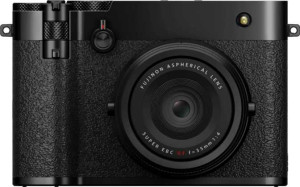
Fujifilm GFX100RF
Fujifilm GFX100RF
Leica Q3 43
Leica Q3 43
VS
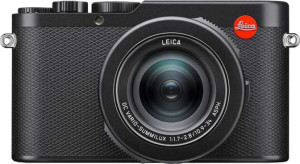
Leica D-Lux 8
Leica D-Lux 8
Leica Q3 43
Leica Q3 43
VS
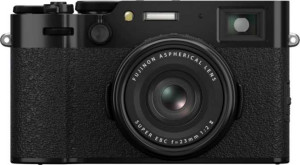
Fujifilm X100VI
Fujifilm X100VI
Leica Q3 43
Leica Q3 43
VS
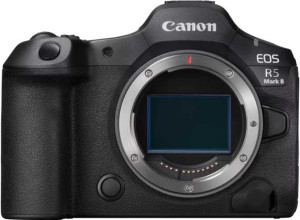
Canon EOS R5 II
Canon EOS R5 II
Leica Q3 43
Leica Q3 43
VS
Panasonic Lumix DC-S1R II
Leica Q3 43
Leica Q3 43
VS
Leica SL3-S
Leica SL3-S
Leica Q3 43
Leica Q3 43
VS
Nikon Z6 III
Nikon Z6 III
Leica Q3 43
Leica Q3 43
VS
Nikon Zf
Nikon Zf
Leica Q3 43
Leica Q3 43
VS
Nikon Zf + Nikon Nikkor Z 40mm f/2 (SE)