Leica SL3-S specifications and in-depth review

Leica SL3-S

Manufacturer: Leica

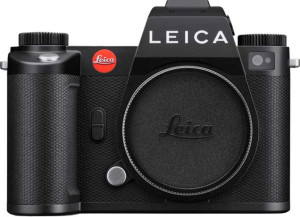
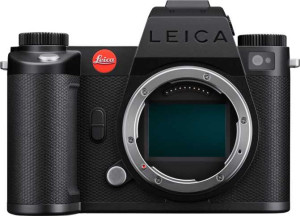
The Leica SL3-S is a full-frame mirrorless camera built around the Leica L lens mount, combining a weather-sealed magnesium body with a 3.2″ touchscreen, a fully articulating flip-out display, and a high-resolution electronic viewfinder with 100% coverage. At 768 g and with a volume of roughly 1261 cm³, it occupies a substantial but well-considered footprint, and its operating range spans from -10°C to 40°C, making it suitable for varied shooting conditions. The camera supports an external hot shoe, dual memory card slots, and connects via USB 3.2 Type-C alongside HDMI 2.1 output.

Imaging is handled by a 25.3 MP back-illuminated stacked CMOS sensor with 779 phase-detection autofocus points, AF tracking, and touch autofocus, with a native maximum ISO of 200,000. Continuous mechanical shooting reaches 7 fps, while the fastest mechanical shutter speed is 1/8000 s and the electronic shutter extends to 1/16000 s. The in-body stabilization system is rated at 5 stops CIPA and can be combined with compatible lens-based stabilization. On the video side, the SL3-S records up to 3968-pixel-wide footage at 30 fps with a bitrate of 800 Mbps, supports 24p cinema mode, slow-motion recording, continuous phase-detection autofocus during video, and includes both a 3.5 mm microphone input and a built-in stereo dual-microphone array. Wireless connectivity covers Wi-Fi 5, Bluetooth 5, and smartphone remote control, though NFC and GPS are not included.

Pros
  • The full-frame stacked BSI CMOS sensor with 779 phase-detection autofocus points supports AF tracking, touch autofocus, and continuous AF during video, covering a wide range of shooting scenarios
  • In-body sensor-shift stabilization rated at 5 stops CIPA can be combined with lens-based stabilization, offering meaningful hand-held shooting flexibility
  • The flip-out 3.2-inch touchscreen paired with a 100% coverage electronic viewfinder gives strong framing options across different shooting positions
  • Weather sealing allows use in challenging outdoor conditions, with an operating range extending down to -10°C
  • Video recording reaches up to 3968 pixels wide at 800 Mbps with phase-detection AF, 24p cinema mode, slow-motion support, and both a built-in stereo microphone and an external mic input
  • Dual card slots, RAW shooting, HDMI 2.1 output, USB 3.2, and Bluetooth 5 with Wi-Fi 5 make it well-equipped for professional workflows
Cons
  • CIPA-rated battery life of 315 shots per charge is relatively modest for a body of this size and intended use
  • No built-in GPS, which limits automatic geotagging of images without additional accessories
  • NFC is absent, removing the option for quick tap-based device pairing
  • Pixel shift shooting is not supported, ruling out high-resolution composite capture
  • The body weighs 768 g and has a volume of over 1261 cm³, making it one of the bulkier mirrorless options to carry over extended periods
Who is this for?

This camera is well-suited to professional and advanced photographers who need a versatile, weather-sealed body capable of handling varied outdoor conditions down to -10°C. The combination of a full-frame stacked sensor, 5-stop in-body stabilization, and 779 phase-detection autofocus points with tracking makes it a strong choice for editorial, documentary, and event work where reliability and image quality are essential. Videographers will also find it capable, given its 3968-pixel-wide recording at 800 Mbps, 24p cinema mode, continuous phase-detection AF during recording, and built-in stereo microphone alongside a dedicated external mic input — making it a practical dual-purpose tool for hybrid photo and video productions.

Who is this NOT for?

Users who require extended shooting sessions on a single charge may find the 315-shot CIPA battery rating a limiting factor, particularly in event or travel contexts where recharging opportunities are limited. The body's weight of 768 g and volume exceeding 1261 cm³ make it a less practical option for those prioritizing portability and lightweight everyday carry. Additionally, photographers who rely on built-in GPS for automatic geotagging, NFC for rapid wireless pairing, or pixel shift for ultra-high-resolution composite capture will find those capabilities absent here, making it a poor fit for workflows that depend on any of those specific features.

Design:

Type Mirrorless
viewfinder Electronic viewfinder (EVF)
is weather-sealed (splashproof)
screen resolution 2333k dots
Has a flip-out screen
viewfinder coverage 100%
screen size 3.2"
weight 768 g
has a touch screen
Has a hot shoe
volume 1261.14192 cm³
is a system camera
has a flash
lowest potential operating temperature -10 °C
maximum operating temperature 40 °C
Has a tilting viewfinder
width 141.2 mm
height 108 mm
thickness 82.7 mm

The Leica SL3-S is a mirrorless system camera with a body measuring 141.2 x 108 x 82.7 mm and weighing 768 g, built to operate in temperatures ranging from -10°C to 40°C thanks to its weather-sealed construction. It features a 3.2″ touchscreen with a resolution of 2333k dots and a flip-out design, complemented by an electronic viewfinder offering 100% coverage. The camera does not include a tilting viewfinder or a built-in flash, but it does provide a hot shoe for attaching external flash units. With a total volume of approximately 1261 cm³, it accommodates a well-rounded physical footprint for a full-featured mirrorless body.

Optics:

sensor size Full frame
lens mount Leica L
focus points 779
megapixels (main camera) 25.3 MP
maximum ISO 200000 ISO
has sensor shift stabilization
continuous shooting (mechanical) 7 fps
has AF tracking
Has phase-detection autofocus for photos
fastest shutter speed 0.000125 s
has manual focus
has touch autofocus
has manual shutter speed
has a BSI sensor
has manual exposure
has a two-stage shutter
has a serial shot mode
has a CMOS sensor
has manual ISO
flash sync speed 0.005 s
has manual white balance
exposure time 30 s
Maximum electronic shutter speed 6.25E-5 s
has a stacked CMOS sensor
image stabilization rating (CIPA) 5 stops
can combine image stabilization

The SL3-S is built around a full-frame back-illuminated stacked CMOS sensor resolving 25.3 MP, paired with the Leica L lens mount and covering 779 phase-detection autofocus points that support AF tracking, touch autofocus, and manual focus. Maximum ISO reaches 200,000, and the camera offers full manual control over shutter speed, ISO, exposure, and white balance, along with a two-stage shutter and serial burst shooting mode. The mechanical shutter tops out at 1/8000 s while the electronic shutter extends to 1/16000 s, with a flash sync speed of 1/200 s and a maximum long exposure of 30 s. In-body sensor-shift stabilization is rated at 5 stops CIPA and can be combined with compatible lens-based stabilization for an enhanced effect, with continuous mechanical shooting available at up to 7 fps.

Videography:

video recording (main camera) 3968 x 30 fps
Has phase-detection autofocus for videos
has continuous autofocus when recording movies
has a microphone input
has a socket for a 3.5 mm audio jack
has a stereo microphone
movie bitrate 800 Mbps
number of microphones 2
has a 24p cinema mode
supports slow-motion video recording

The SL3-S records video at up to 3968 pixels wide and 30 fps with a maximum bitrate of 800 Mbps, and supports a 24p cinema mode as well as slow-motion video recording. Autofocus during video is handled through phase-detection with continuous AF active throughout recording. For audio, the camera includes a built-in stereo microphone array with two microphones, a 3.5 mm jack for headset monitoring, and a dedicated external microphone input for more controlled sound capture.

Battery:

Battery life (CIPA) 315 shots
has a removable battery
has a rechargeable battery
has a battery level indicator
battery power 2200 mAh

The SL3-S uses a removable and rechargeable 2200 mAh battery with a CIPA-rated life of 315 shots per charge. A battery level indicator is built in, allowing the remaining charge to be monitored directly from the camera during use.

Features:

supports Wi-Fi
Has Bluetooth
Has dual card slots
has pixel shift shot
shoots raw
Wi-Fi version Wi-Fi 5 (802.11ac), Wi-Fi 4 (802.11n)
supports a remote smartphone
has an HDMI output
has GPS
has an advanced hot shoe
HDMI version HDMI 2.1
has NFC
has an external memory slot
Has USB Type-C
Bluetooth version 5

The SL3-S offers a broad set of connectivity and storage features, including Wi-Fi 5 (802.11ac) and Wi-Fi 4 (802.11n) alongside Bluetooth 5 for wireless communication and smartphone remote control. Wired connections are handled through a USB Type-C port and an HDMI 2.1 output, while dual card slots and an external memory slot provide flexible storage options. The camera shoots RAW files and supports external memory expansion, but does not include NFC, GPS, pixel shift shooting, or an advanced hot shoe.

Miscellaneous:

USB version 3.2

The SL3-S includes a USB 3.2 interface for data transfer and connectivity.
Final Verdict

The Leica SL3-S is a well-specified full-frame mirrorless camera that brings together a capable stacked BSI CMOS sensor, a robust autofocus system, and a weather-sealed build in a body designed for demanding professional use. Its hybrid photo and video capabilities — spanning 25.3 MP stills, 800 Mbps video recording, and 5-stop in-body stabilization — make it a credible tool for photographers and videographers who need reliable performance across a range of shooting conditions. While its battery endurance and body size call for some planning in the field, these are reasonable trade-offs for the level of capability on offer. For users invested in the Leica L ecosystem who need a dependable, feature-complete body for editorial, documentary, or hybrid production work, the SL3-S represents a coherent and technically thorough option.

Popular Comparisons

Leica SL3-S
Leica SL3-S
VS
Leica SL3
Leica SL3
Leica SL3-S
Leica SL3-S
VS
Leica Q3 43
Leica Q3 43
Leica SL3-S
Leica SL3-S
VS
Fujifilm X-E5
Fujifilm X-E5
Leica SL3-S
Leica SL3-S
VS
Panasonic Lumix DC-S1 II
Leica SL3-S
Leica SL3-S
VS
Panasonic Lumix DC-S1R II
Leica SL3-S
Leica SL3-S
VS
Nikon Zf
Nikon Zf
Leica SL3-S
Leica SL3-S
VS
Sony Alpha 7C II
Sony Alpha 7C II