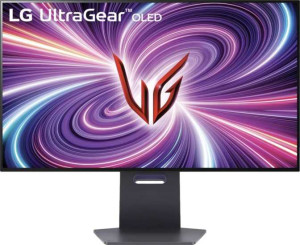
LG UltraGear 39GS95QE-B 39" specifications and in-depth review

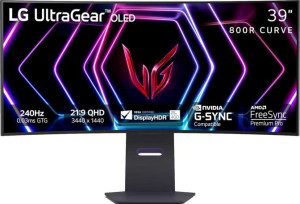
LG UltraGear 39GS95QE-B 39"

Manufacturer: LG

The LG UltraGear 39GS95QE-B is a 39-inch ultrawide gaming monitor built around an OLED/AMOLED panel, placing it in a category where pixel-level contrast and response precision are central to the experience. With a 240Hz refresh rate, it is clearly oriented toward users who prioritize smooth, fluid motion in fast-paced content. The matte panel with anti-glare coating helps manage reflections in a variety of lighting environments, and the stand supports both tilt and swivel adjustments for flexible positioning.

Driving the visual output is a 3440x1440 resolution across the 39-inch screen, yielding a pixel density of 95 ppi, alongside a contrast ratio rated at 1,500,000:1 and a color depth of 1.07 billion colors — figures consistent with OLED panel characteristics. Brightness is specified at 250 nits typical. Connectivity includes one HDMI port and one DisplayPort output, plus a 3.5mm audio jack, while adaptive sync support covers both Nvidia G-Sync and AMD FreeSync. The monitor also supports Picture-in-Picture and is VESA mount compatible, with overall dimensions of 887mm wide by 404mm tall and a total weight of approximately 10.4kg.

Pros
  • The OLED/AMOLED panel delivers a contrast ratio of 1,500,000:1, producing deep blacks and strong image depth without backlight bleed
  • A 0.03ms response time combined with a 240Hz refresh rate makes the display highly responsive for fast-paced content
  • Adaptive sync support covers both Nvidia G-Sync and AMD FreeSync, making it compatible with a wide range of graphics card setups
  • The stand supports both tilt and swivel adjustments, and VESA mount compatibility adds further flexibility in placement
  • Wide 178-degree viewing angles both horizontally and vertically ensure consistent image quality when viewed off-center
  • The matte panel with anti-glare coating reduces surface reflections in varied lighting conditions
Cons
  • Typical brightness is rated at only 250 nits, which may limit visibility in brightly lit environments
  • Color calibration is not supported, leaving users without built-in tools to adjust or verify color accuracy
  • The monitor carries an EU energy label of F, indicating relatively high power consumption
  • Connectivity is limited to a single HDMI port and one DisplayPort output, with no Thunderbolt, USB-C, or legacy video options
  • There are no built-in stereo speakers, requiring a separate audio solution for users without dedicated peripherals
  • Portrait mode is not supported, restricting how the display can be physically oriented
Who is this for?

This monitor is well-matched to users who spend significant time with fast-paced games, given its 240Hz refresh rate and 0.03ms response time, which together minimize motion blur and input lag during rapid on-screen action. The ultrawide 3440x1440 resolution across a 39-inch OLED panel also makes it a strong fit for users who work across multiple applications simultaneously, benefiting from the extra horizontal screen real estate and the deep contrast of the panel. Support for both Nvidia G-Sync and AMD FreeSync means it integrates smoothly into a broad range of gaming PC setups without tearing or stuttering, and the Picture-in-Picture functionality adds utility for those who regularly monitor multiple sources at once.

Who is this NOT for?

Users who require accurate, calibrated color output — such as those working in photography, video grading, or graphic design — will find this monitor limiting, as it does not support color calibration, leaving no built-in means to verify or adjust color fidelity. The typical brightness of only 250 nits also makes it a poor choice for well-lit workspaces or environments with significant ambient light, where screen visibility can become a practical concern. Additionally, users who depend on a self-contained audio setup will need to look elsewhere, as the monitor lacks built-in speakers, and those with limited desk space may find the 887mm width and nearly 10.4kg weight difficult to accommodate comfortably.

Display:

Display type OLED/AMOLED
response time 0.03 ms
screen size 39"
resolution 3440 x 1440 px
pixel density 95 ppi
Adaptive synchronization Nvidia G-Sync, AMD FreeSync, Nvidia G-Sync Compatible
has anti-glare coating
refresh rate 240Hz
maximum horizontal viewing angle 178º
maximum vertical viewing angle 178º
has a matte panel
has a glossy panel
has a touch screen

The display section of this monitor is built around an OLED/AMOLED panel measuring 39 inches, delivering a resolution of 3440x1440 pixels at a pixel density of 95 ppi. It operates at a 240Hz refresh rate with a remarkably low response time of 0.03ms, making it well-suited for fast-moving content. The panel is matte rather than glossy and features an anti-glare coating, while horizontal and vertical viewing angles both reach 178 degrees for consistent image quality across wide positions. Adaptive sync support spans Nvidia G-Sync, Nvidia G-Sync Compatible, and AMD FreeSync. The screen does not support touch input.

General info:

Type Ultrawide, Gaming
EU energy label F
supports total tilt
Has a swivel stand
Supports VESA mount
height 404 mm
width 887 mm
thickness 198 mm
weight 10387 g
supports portrait mode
volume 70952.904 cm³

This monitor is classified as an ultrawide gaming display and carries an EU energy label of F. Its physical dimensions come in at 887mm wide, 404mm tall, and 198mm deep, with a total weight of approximately 10.4kg. The stand supports both tilt and swivel adjustments, and the monitor is VESA mount compatible, offering flexibility in how it can be positioned or installed. Portrait mode is not supported. The unit holds an EU energy rating of F, which reflects its power consumption classification under current European labeling standards.

Colors:

brightness (typical) 250 nits
supports color calibration
display colors 1070 million
contrast ratio 1500000:1

The display is rated at a typical brightness of 250 nits and renders up to 1.07 billion colors, allowing for a wide tonal range across the color spectrum. The contrast ratio stands at 1,500,000:1, reflecting the deep black levels associated with OLED panel technology. Color calibration is not supported on this monitor.

Connectivity:

HDMI ports 1
supports Thunderbolt
DisplayPort outputs 1
has a socket for a 3.5 mm audio jack
has a DVI connector
supports Ethernet
supports Wi-Fi
has AirPlay
mini DisplayPort outputs 0
has a VGA connector

Connectivity on this monitor is straightforward, centered around one HDMI port and one DisplayPort output, covering the two most common modern video input standards. A 3.5mm audio jack is also present for headset or speaker use. There is no mini DisplayPort, DVI, or VGA connector, and the monitor does not support Thunderbolt, Ethernet, Wi-Fi, or AirPlay.

Power:

Features:

has PiP
has stereo speakers
has built-in smart TV
has a remote control
supports Dolby Digital
supports Dolby Digital Plus
has DTS Surround
has an ambient light sensor
has a front camera

Among the listed features, Picture-in-Picture (PiP) is the one supported function, allowing multiple signal sources to be displayed on screen simultaneously. The monitor does not include stereo speakers, a remote control, an ambient light sensor, or a front camera, and it has no built-in smart TV functionality. Audio formats such as Dolby Digital, Dolby Digital Plus, and DTS Surround are not supported.

Final Verdict

The LG UltraGear 39GS95QE-B positions itself as a purpose-built gaming monitor, and its specifications largely deliver on that premise. The combination of an OLED/AMOLED panel with a 240Hz refresh rate and 0.03ms response time gives it a strong foundation for fluid, responsive gameplay, while the ultrawide 3440x1440 resolution adds meaningful screen real estate for both gaming and productivity contexts. Broad adaptive sync compatibility further broadens its appeal across different GPU setups. Where it falls short — namely in brightness output, the absence of color calibration tools, and limited connectivity options — these are trade-offs that matter more to creative professionals than to the gaming audience this monitor is clearly designed for. For users whose primary concern is smooth, high-refresh OLED gaming on a large ultrawide canvas, the 39GS95QE-B is a well-specified and coherent choice.

Popular Comparisons

LG UltraGear 39GS95QE-B 39"
VS
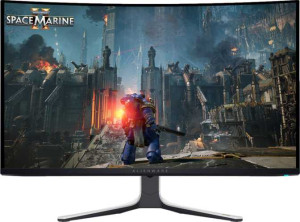
Dell Alienware AW3225QF 32"
LG UltraGear 39GS95QE-B 39"
VS
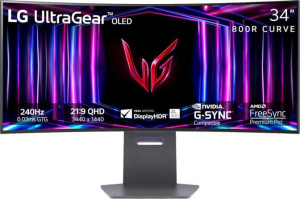
LG UltraGear 34GS95QE-B 34"
LG UltraGear 39GS95QE-B 39"
VS
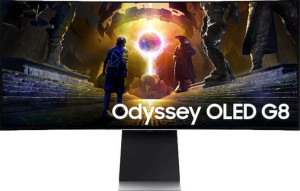
Samsung Odyssey OLED G8 (G85SD) 34"
LG UltraGear 39GS95QE-B 39"
VS
LG UltraGear OLED 32GS95UE-B 32"