Minix NR660 LP specifications and in-depth review

Minix NR660 LP

Manufacturer: Minix

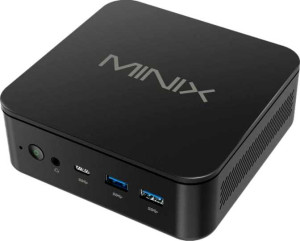
The Minix NR660 LP is a compact mini PC built around a Micro-ATX form factor, making it a space-conscious option for users who need a capable desktop in a smaller footprint. It comes equipped with 16GB of DDR5 RAM and a 1TB NVMe SSD, providing a reasonable foundation for everyday computing and moderate workloads. The system supports Wi-Fi 6E alongside dual-band legacy Wi-Fi standards, Bluetooth 5, and dual RJ45 ports, giving users both wireless and wired networking flexibility out of the box.

On the graphics side, the NR660 LP delivers 1.46 TFLOPS of floating-point performance through an RDNA 2.0 GPU running at a base clock of 1500 MHz with a turbo frequency of 1900 MHz. The GPU is built on a 6 nm process node and includes 384 shading units, 24 texture mapping units, and 16 render output units, with support for DirectX 12 Ultimate, OpenGL 4.6, and ray tracing. Display output is handled through one HDMI 2.1 port and one DisplayPort, while connectivity is further rounded out by three USB 3.2 Gen 2 Type-A ports, two USB 3.2 Gen 2 Type-C ports, a USB 2.0 port, and a 3.5 mm audio jack. The unit carries a one-year warranty.

Pros
  • Supports Wi-Fi 6E, covering the latest wireless standard alongside backwards compatibility with older Wi-Fi generations
  • Comes with 16GB of DDR5 RAM, the more recent memory standard offering higher bandwidth than DDR4
  • The 1TB NVMe SSD provides fast storage access in a compact form factor
  • Dual RJ45 ports allow simultaneous wired network connections, useful for networking or redundancy setups
  • Ray tracing support and DirectX 12 Ultimate compatibility are included despite the mini PC form factor
  • ECC memory support adds a layer of data integrity protection, which is rarely found in this product category
Cons
  • Only a one-year warranty period is provided
  • No Thunderbolt 3 or Thunderbolt 4 ports are available
  • DLSS upscaling is not supported, limiting certain graphics enhancement options
  • There is no S/PDIF audio output for users who need digital audio passthrough
  • The unit does not include an air-water cooling system, relying entirely on its built-in thermal solution
Who is this for?

The Minix NR660 LP is well suited to users who need a compact desktop that can handle everyday computing alongside light graphical workloads, thanks to its RDNA 2.0 GPU with ray tracing support and 16GB of DDR5 RAM. The dual RJ45 ports and Wi-Fi 6E make it a practical fit for home office or small business environments where both wired and wireless network flexibility matters. Users who also require ECC memory support for data-sensitive tasks, or who want a space-efficient machine with a 1TB NVMe SSD for responsive storage, will find this form factor a reasonable fit for their setup.

Who is this NOT for?

Users looking to run demanding gaming or GPU-intensive workloads will likely find the 1.46 TFLOPS of floating-point performance limiting, as this output is not geared toward high-resolution or frame-rate-heavy rendering scenarios. The absence of DLSS and XeSS upscaling further narrows its appeal for those seeking optimized graphics performance in modern titles. Similarly, professionals who depend on Thunderbolt connectivity for high-speed peripherals, external GPUs, or daisy-chained displays will find no such ports available on this unit, making it a poor match for workflows that rely on that level of interface bandwidth.

General info:

SSD storage capacity 1000GB
form factor Micro-ATX
release date February 2026
Is an NVMe SSD

The Minix NR660 LP is built around a Micro-ATX form factor, keeping its physical footprint compact while still offering meaningful internal capability. Storage is handled by a 1000GB NVMe SSD, which uses the faster NVMe interface rather than the older SATA standard, resulting in quicker data access and improved system responsiveness.

CPU:

Thermal Design Power (TDP) 40W

The processor in the Minix NR660 LP has a Thermal Design Power (TDP) of 40W, which reflects the amount of heat the cooling system is designed to dissipate under sustained load and gives a general indication of the CPU's power consumption envelope.

Graphics card:

floating-point performance 1.46 TFLOPS
GPU clock speed 1500 MHz
GPU turbo 1900 MHz
texture rate 45.6 GTexels/s
pixel rate 30.4 GPixel/s
supports ray tracing
supports DLSS
PCI Express (PCIe) version 4
texture mapping units (TMUs) 24
shading units 384
render output units (ROPs) 16
DirectX version DirectX 12 Ultimate
OpenGL version 4.6
OpenCL version 2
semiconductor size 6 nm
has LHR
Supports multi-display technology
Has Double Precision Floating Point (DPFP)
number of transistors 13100 million

The graphics solution in the Minix NR660 LP delivers 1.46 TFLOPS of floating-point performance, with a base GPU clock of 1500 MHz that can boost up to 1900 MHz under load. It is built on a 6 nm semiconductor process and packs 13,100 million transistors, with 384 shading units, 24 texture mapping units, and 16 render output units contributing to a texture rate of 45.6 GTexels/s and a pixel rate of 30.4 GPixel/s. The GPU connects via PCIe 4 and supports DirectX 12 Ultimate, OpenGL 4.6, and OpenCL 2, along with ray tracing and double precision floating point (DPFP). Multi-display output is supported, and the unit does not carry LHR restrictions, though DLSS is not available on this configuration.

Memory:

RAM 16GB
DDR memory version 5

The Minix NR660 LP is equipped with 16GB of DDR5 RAM, making use of the DDR5 memory standard, which operates at higher frequencies and offers greater bandwidth compared to its predecessors while also improving power efficiency at the module level.

Connectivity:

Wi-Fi version Wi-Fi 6E (802.11ax), Wi-Fi 6 (802.11ax), Wi-Fi 5 (802.11ac), Wi-Fi 4 (802.11n)
supports Wi-Fi
Has Bluetooth
Bluetooth version 5
USB 2.0 ports 1
USB 3.2 Gen 2 ports (USB-A) 3
USB 3.2 Gen 1 ports (USB-A) 0
USB 3.2 Gen 2 ports (USB-C) 2
USB 4 40Gbps ports 0
USB 4 20Gbps ports 0
USB 3.2 Gen 2x2 ports 0
USB 3.2 Gen 1 ports (USB-C) 0
Thunderbolt 4 ports 0
Thunderbolt 3 ports 0
DisplayPort outputs 1
HDMI version HDMI 2.1
HDMI ports 1
RJ45 ports 2
has a socket for a 3.5 mm audio jack
has a VGA connector
Has S/PDIF Out port

The Minix NR660 LP offers a broad range of connectivity options, starting with Wi-Fi 6E (802.11ax) support alongside backwards compatibility with Wi-Fi 6, Wi-Fi 5, and Wi-Fi 4, complemented by built-in Bluetooth 5 for wireless peripherals. Wired networking is covered by two RJ45 ports, while USB connectivity includes three USB 3.2 Gen 2 Type-A ports, two USB 3.2 Gen 2 Type-C ports, and one USB 2.0 port — there are no USB 3.2 Gen 1, USB 4, or Thunderbolt ports present. Display output is provided through one HDMI 2.1 port and one DisplayPort, with no VGA connector included. Audio is accessible via a 3.5 mm headset jack, though there is no S/PDIF output on this unit.

Benchmarks:

Miscellaneous:

GPU architecture RDNA 2.0
Has air-water cooling
Supports 3D
Supports ECC memory
has XeSS (XMX)
warranty period 1 years

The Minix NR660 LP features a GPU built on the RDNA 2.0 architecture and supports stereoscopic 3D output as well as ECC memory, the latter being useful in scenarios where data integrity is a priority. XeSS (XMX) upscaling is not available on this unit, and it does not include an air-water cooling system. The device does not ship with Thunderbolt or USB4 ports, and comes backed by a one-year warranty.
Final Verdict

The Minix NR660 LP presents itself as a compact Micro-ATX mini PC that punches reasonably well within its size constraints, offering a solid combination of DDR5 RAM, a 1TB NVMe SSD, and a Wi-Fi 6E-equipped connectivity suite that covers both modern wireless and dual wired networking needs. Its RDNA 2.0 GPU with ray tracing support and DirectX 12 Ultimate compatibility give it more graphical credibility than many systems in this form factor, while ECC memory support adds a practical edge for users with reliability-focused workloads. That said, the GPU's output ceiling and the absence of Thunderbolt ports or DLSS upscaling do define clear boundaries around its capabilities. For users seeking a space-efficient desktop for home office use, light creative tasks, or network-connected environments where data integrity matters, the NR660 LP is a coherent and well-specified option — provided expectations are aligned with what a compact, low-TDP system can realistically deliver.