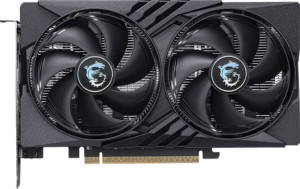
MSI GeForce RTX 3050 Gaming 6GB specifications and in-depth review

MSI GeForce RTX 3050 Gaming 6GB

Manufacturer: MSI

The MSI GeForce RTX 3050 Gaming 6GB sits within MSI's Gaming product line, offering a slightly larger footprint than the Ventus variants at 205mm × 109mm while retaining the same core GPU configuration. Built on NVIDIA's Ampere architecture using an 8nm fabrication process with 8,700 million transistors, it runs at a base clock of 1042 MHz and boosts up to 1470 MHz, connecting to the system via a PCIe 4 interface. The 70W TDP keeps power requirements accessible for a broad set of desktop configurations.

On the memory side, the card carries 6GB of GDDR6 VRAM at an effective speed of 14,000 MHz across a 96-bit bus, delivering up to 168 GB/s of bandwidth. Its 2,304 shading units, 72 TMUs, and 32 ROPs produce a floating-point throughput of 6.774 TFLOPS and a texture rate of 105.8 GTexels/s, with DPFP also supported. The feature set includes DirectX 12 Ultimate, OpenGL 4.6, OpenCL 3, ray tracing, DLSS, stereoscopic 3D, ECC memory, and Intel Resizable BAR, with display output provided through two HDMI 2.1 ports and one DisplayPort for up to three simultaneous monitors.

Pros
  • A 70W TDP keeps power consumption low, making the card compatible with a wide range of desktop system power supplies without requiring high-wattage units
  • Ray tracing and DLSS support bring access to current-generation rendering features within this performance tier
  • Two HDMI 2.1 ports and one DisplayPort allow up to three monitors to be connected simultaneously without requiring adapters
  • ECC memory support adds error-correction reliability useful for compute or workstation-adjacent tasks
  • Intel Resizable BAR is supported, enabling the CPU broader access to GPU memory for improved data throughput in compatible scenarios
  • DPFP support extends the card's usability to compute workloads that require double precision numerical accuracy
Cons
  • At 205mm in length, the card has a longer footprint than other variants in the same family, which may not fit all compact desktop cases
  • The 96-bit memory bus width limits total memory bandwidth headroom, which can become a constraint in memory-intensive workloads
  • 6GB of VRAM may prove insufficient for scenarios requiring larger framebuffers or for memory-heavy GPU compute tasks
  • The card relies solely on air cooling with no air-water hybrid option, which may limit sustained thermal performance under prolonged load
  • RGB lighting is absent, which may be a drawback for users who prioritize visual coordination in their system build
Who is this for?

The MSI GeForce RTX 3050 Gaming 6GB is a good fit for users building standard mid-tower or full-tower desktop systems who need a card with a low 70W TDP and broad system compatibility. Its support for ray tracing, DLSS, and DirectX 12 Ultimate makes it relevant for users who want access to modern rendering features without placing heavy demands on their power supply or cooling setup. The inclusion of ECC memory and DPFP support also makes it a reasonable choice for users with light compute or workstation-adjacent workloads where data precision and reliability matter. Those who need flexible multi-monitor output across up to three displays via HDMI 2.1 and DisplayPort will find the connectivity arrangement practical for both productivity and general desktop use.

Who is this NOT for?

Users who regularly push high-resolution gaming or rendering workloads will find the 6GB VRAM and 96-bit memory bus a tangible limitation, as these characteristics constrain both framebuffer capacity and peak memory throughput in demanding scenarios. The card is equally ill-suited for large-scale GPU compute tasks where dataset sizes frequently exceed the available VRAM, making memory capacity a hard bottleneck. Additionally, its 205mm length means it may not physically fit in all compact or small form factor cases, and users who need more thermal headroom during sustained workloads may find the air-only cooling arrangement a limiting factor over extended sessions.

Performance:

GPU clock speed 1042 MHz
GPU turbo 1470 MHz
pixel rate 47.04 GPixel/s
floating-point performance 6.774 TFLOPS
texture rate 105.8 GTexels/s
GPU memory speed 1750 MHz
shading units 2304
texture mapping units (TMUs) 72
render output units (ROPs) 32
Has Double Precision Floating Point (DPFP)

The GPU operates at a base clock of 1042 MHz and boosts up to 1470 MHz, with 2,304 shading units working in concert with 72 texture mapping units and 32 render output units to deliver a texture rate of 105.8 GTexels/s and a pixel rate of 47.04 GPixel/s. Floating-point performance stands at 6.774 TFLOPS, while GPU memory runs at 1750 MHz. Double Precision Floating Point (DPFP) support is present, which broadens the card's applicability to compute tasks requiring higher numerical precision alongside standard graphics workloads.

Memory:

effective memory speed 14000 MHz
maximum memory bandwidth 168 GB/s
VRAM 6GB
GDDR version GDDR6
memory bus width 96-bit
Supports ECC memory

Memory is configured as 6GB of GDDR6 VRAM running at an effective speed of 14,000 MHz, with a maximum bandwidth of 168 GB/s delivered through a 96-bit bus. The 96-bit interface keeps the memory subsystem within a defined throughput ceiling, though the GDDR6 standard maintains a solid data rate within those boundaries. ECC memory support is also present, providing error-correction capability that adds reliability for compute or precision-sensitive workloads.

Features:

DirectX version DirectX 12 Ultimate
OpenGL version 4.6
OpenCL version 3
Supports multi-display technology
supports ray tracing
Supports 3D
supports DLSS
has XeSS (XMX)
AMD SAM / Intel Resizable BAR Intel Resizable BAR
has LHR
has RGB lighting
supported displays 3

The card supports DirectX 12 Ultimate, OpenGL 4.6, and OpenCL 3, offering compatibility across a wide range of modern graphics and compute applications. Ray tracing and DLSS are both enabled, with stereoscopic 3D and multi-display technology also present, supporting up to three displays simultaneously. Intel Resizable BAR is included to give the CPU broader access to GPU memory. XeSS (XMX) and LHR are not supported, and the card does not feature RGB lighting.

Ports:

has an HDMI output
HDMI ports 2
HDMI version HDMI 2.1
DisplayPort outputs 1
USB-C ports 0
DVI outputs 0
mini DisplayPort outputs 0

The port layout includes two HDMI 2.1 outputs and one DisplayPort, covering the card's capacity to drive up to three displays without requiring any additional adapters for standard monitor setups. USB-C, DVI, and mini DisplayPort connections are not available on this model, keeping the bracket configuration straightforward and centered on current mainstream display standards.

General info:

GPU architecture Ampere
Thermal Design Power (TDP) 70W
PCI Express (PCIe) version 4
semiconductor size 8 nm
number of transistors 8700 million
Has air-water cooling
width 205 mm
height 109 mm

The card is built on the Ampere architecture, fabricated on an 8nm process node with 8,700 million transistors, and uses a PCIe 4 interface to connect to the host system. Its 70W TDP places it in a low power consumption bracket, making it accessible to a wide range of desktop configurations. Physically, it measures 205mm wide and 109mm tall, giving it a slightly longer footprint than some other variants in the same family. Cooling is managed through air alone, as no air-water hybrid solution is included.
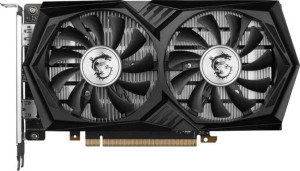
Final Verdict

The MSI GeForce RTX 3050 Gaming 6GB is a graphics card with a clearly defined scope, offering a modern feature set within a power-efficient package that suits a broad range of standard desktop builds. Its combination of ray tracing, DLSS, DirectX 12 Ultimate, and ECC memory support gives it genuine versatility across both graphics and light compute applications, while the 70W TDP ensures it remains accessible to systems without high-capacity power supplies. The 205mm length and air-only cooling are factors worth accounting for during system planning, and users should approach the 6GB VRAM and 96-bit bus with realistic expectations for more demanding workloads. Within its intended operating range, the Gaming 6GB delivers a coherent and well-specified package for users whose needs align with its capabilities.

Popular Comparisons

MSI GeForce RTX 3050 Gaming 6GB
VS
Gigabyte GeForce RTX 5050 OC Low Profile
MSI GeForce RTX 3050 Gaming 6GB
VS
MSI GeForce RTX 5050 Gaming