MSI GeForce RTX 3050 Gaming X 6GB specifications and in-depth review

MSI GeForce RTX 3050 Gaming X 6GB

Manufacturer: MSI

The MSI GeForce RTX 3050 Gaming X 6GB represents the higher-clocked variant within MSI's Gaming lineup for this GPU tier, sharing the same 205mm × 109mm form factor as the standard Gaming model while pushing the boost clock to 1507 MHz. Built on NVIDIA's Ampere architecture with an 8nm fabrication process and 8,700 million transistors, it uses a PCIe 4 interface and maintains the same 70W TDP, keeping power requirements manageable across a wide range of desktop system configurations.

The card is equipped with 6GB of GDDR6 VRAM running at an effective 14,000 MHz over a 96-bit bus, yielding up to 168 GB/s of memory bandwidth. Its 2,304 shading units, 72 TMUs, and 32 ROPs deliver a floating-point throughput of 6.944 TFLOPS and a texture rate of 108.5 GTexels/s, with DPFP also supported. The feature set covers DirectX 12 Ultimate, OpenGL 4.6, OpenCL 3, ray tracing, DLSS, stereoscopic 3D, ECC memory, and Intel Resizable BAR, while display output is handled by two HDMI 2.1 ports and one DisplayPort, supporting up to three simultaneous monitors.

Pros
  • The factory-tuned 1507 MHz boost clock delivers the highest out-of-box clock speed in the RTX 3050 Gaming lineup without requiring manual overclocking
  • A 70W TDP keeps power draw low, making the card viable in systems with modest power supplies and limited thermal headroom
  • Ray tracing and DLSS support provide access to current-generation rendering technologies within this GPU tier
  • Two HDMI 2.1 ports and one DisplayPort enable simultaneous output to up to three displays without requiring additional adapters
  • ECC memory support adds data integrity benefits relevant to users running compute or workstation-adjacent workloads
  • DPFP support extends the card's usefulness to applications requiring double precision numerical accuracy
Cons
  • The 205mm card length may not physically fit in all compact or small form factor desktop cases
  • The 96-bit memory bus limits total memory bandwidth and can become a bottleneck in memory-intensive scenarios
  • 6GB of VRAM is a modest framebuffer that may prove insufficient for high-resolution or texture-heavy workloads
  • The card uses air-only cooling with no hybrid option, which may constrain sustained thermal performance during prolonged high-load sessions
  • XeSS (XMX) upscaling is not supported, limiting upscaling options to DLSS alone
  • RGB lighting is absent, which may matter to users coordinating system aesthetics around illuminated components
Who is this for?

The MSI GeForce RTX 3050 Gaming X 6GB is well-matched for users building standard mid-tower or full-tower desktop systems who want the highest factory boost clock available in this lineup without manual tuning. Its 70W TDP makes it a practical fit for systems with moderate power supplies, and the inclusion of ray tracing, DLSS, and DirectX 12 Ultimate means it caters to users who want a current-generation feature set for everyday graphics workloads. ECC memory and DPFP support also make it relevant for users with light compute or workstation-adjacent needs where numerical precision and data reliability are priorities. Those running multi-monitor setups of up to three displays via HDMI 2.1 and DisplayPort will find the connectivity arrangement practical for both productivity and general use.

Who is this NOT for?

Users targeting high-resolution gaming or graphically intensive rendering tasks will find the 6GB VRAM and 96-bit memory bus limiting, as both cap the available framebuffer and sustained memory throughput in demanding workloads. The 205mm card length also means it may not physically fit in compact or small form factor cases, narrowing its compatibility compared to shorter variants. Additionally, those who require robust thermal headroom during extended high-load sessions may find the air-only cooling arrangement a constraint, given that no air-water hybrid solution is available to assist with heat dissipation over prolonged use.

Performance:

GPU clock speed 1042 MHz
GPU turbo 1507 MHz
pixel rate 48.22 GPixel/s
floating-point performance 6.944 TFLOPS
texture rate 108.5 GTexels/s
GPU memory speed 1750 MHz
shading units 2304
texture mapping units (TMUs) 72
render output units (ROPs) 32
Has Double Precision Floating Point (DPFP)

The GPU runs at a base clock of 1042 MHz and boosts up to 1507 MHz, supported by 2,304 shading units, 72 texture mapping units, and 32 render output units. These translate to a texture rate of 108.5 GTexels/s, a pixel rate of 48.22 GPixel/s, and an overall floating-point throughput of 6.944 TFLOPS, with GPU memory operating at 1750 MHz. Double Precision Floating Point (DPFP) is also supported, extending the card's utility to compute tasks that require greater numerical precision beyond standard graphics workloads.

Memory:

effective memory speed 14000 MHz
maximum memory bandwidth 168 GB/s
VRAM 6GB
GDDR version GDDR6
memory bus width 96-bit
Supports ECC memory

The card carries 6GB of GDDR6 VRAM operating at an effective speed of 14,000 MHz through a 96-bit memory bus, achieving a maximum bandwidth of 168 GB/s. The 96-bit interface sets a natural ceiling on total throughput, though the GDDR6 memory standard sustains a solid data rate within those parameters. ECC memory support is present as well, offering error-correction functionality that benefits users running compute or precision-sensitive tasks alongside graphics workloads.

Features:

DirectX version DirectX 12 Ultimate
OpenGL version 4.6
OpenCL version 3
Supports multi-display technology
supports ray tracing
Supports 3D
supports DLSS
has XeSS (XMX)
AMD SAM / Intel Resizable BAR Intel Resizable BAR
has LHR
has RGB lighting
supported displays 3

On the software and feature side, the card supports DirectX 12 Ultimate, OpenGL 4.6, and OpenCL 3, covering a wide range of modern graphics APIs and compute frameworks. Ray tracing and DLSS are both enabled, and stereoscopic 3D, multi-display technology, and Intel Resizable BAR are also present, with the card capable of driving up to three displays simultaneously. XeSS (XMX) and LHR are not supported, and no RGB lighting is included on this model.

Ports:

has an HDMI output
HDMI ports 2
HDMI version HDMI 2.1
DisplayPort outputs 1
USB-C ports 0
DVI outputs 0
mini DisplayPort outputs 0

The card offers two HDMI 2.1 ports and one DisplayPort as its complete display output configuration, providing enough connections to cover the card's three-display support without the need for adapters on most modern setups. USB-C, DVI, and mini DisplayPort outputs are not present, reflecting a straightforward port selection built around current mainstream display connectivity standards.

General info:

GPU architecture Ampere
Thermal Design Power (TDP) 70W
PCI Express (PCIe) version 4
semiconductor size 8 nm
number of transistors 8700 million
Has air-water cooling
width 205 mm
height 109 mm

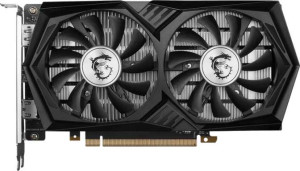
Underpinned by the Ampere architecture and produced on an 8nm process node, the card integrates 8,700 million transistors and connects to the host platform via PCIe 4. A 70W TDP keeps thermal and power demands at a moderate level, suiting a wide variety of standard desktop configurations. The physical dimensions of 205mm × 109mm place it in a conventional dual-slot footprint, and cooling is handled through air alone, as no air-water hybrid solution is part of this design.
Final Verdict

The MSI GeForce RTX 3050 Gaming X 6GB occupies a well-defined position as the highest-clocked card in this particular lineup, offering a factory boost of 1507 MHz alongside a modern feature set that includes ray tracing, DLSS, DirectX 12 Ultimate, ECC memory, and DPFP support — all within a 70W thermal envelope. These attributes make it a coherent choice for users building standard desktop systems who want current-generation capabilities without placing heavy demands on their power delivery or cooling setup. The 6GB VRAM, 96-bit bus, and 205mm length are factors that define its practical ceiling, and users should match their workload expectations accordingly. For those whose use cases align with what the card is designed to do, the Gaming X 6GB delivers a focused and capable package that requires no additional tuning to reach its performance potential.