MSI GeForce RTX 5080 Ventus 3X White specifications and in-depth review

MSI GeForce RTX 5080 Ventus 3X White

Manufacturer: MSI

The MSI GeForce RTX 5080 Ventus 3X White is a desktop graphics card based on NVIDIA's Blackwell architecture, fabricated on a 5nm process with 45.6 billion transistors. It operates at a base clock of 2295 MHz and reaches a boost clock of 2617 MHz, delivering 56.28 TFLOPS of floating-point performance alongside a texture rate of 879.3 GTexels/s. The card measures 303mm in length and 121mm in height, and carries a thermal design power rating of 360W.

On the memory side, the RTX 5080 Ventus 3X White is equipped with 16GB of GDDR7 VRAM across a 256-bit bus, reaching an effective memory speed of 30,000 MHz and a maximum bandwidth of 960 GB/s. It supports DirectX 12 Ultimate, OpenGL 4.6, OpenCL 3.0, ray tracing, and DLSS, along with Intel Resizable BAR and ECC memory. The card connects via PCIe 5.0 and provides four display outputs — three DisplayPort 2.1 connections and one HDMI 2.1b port — supporting up to four monitors simultaneously.

Pros
  • The 256-bit GDDR7 memory bus delivers up to 960 GB/s of bandwidth, which supports demanding rendering and compute workloads without memory bottlenecks
  • With 16GB of VRAM and ECC memory support, the card can handle large assets and maintains data integrity during extended operation
  • Hardware ray tracing and DLSS support are both present, enabling more realistic lighting in compatible titles while maintaining usable frame rates
  • Four simultaneous display outputs — three DisplayPort and one HDMI 2.1b — offer flexible multi-monitor setups without additional hardware
  • Intel Resizable BAR support allows the CPU to access the full GPU memory pool, which can improve frame delivery in compatible systems
  • The card supports DirectX 12 Ultimate, OpenGL 4.6, and OpenCL 3, covering both modern gaming workloads and general-purpose GPU compute tasks
Cons
  • A 360W TDP places significant demands on system power delivery and case airflow, requiring a well-specified PSU and chassis
  • The card relies entirely on air cooling with no water cooling option, which may limit thermal headroom in compact or thermally constrained builds
  • The absence of USB-C output reduces compatibility with certain modern monitors and displays that rely on that connection
  • No RGB lighting is present, which may not suit users who prioritize visual customization within their build
Who is this for?

This card is well-suited for users running demanding rendering, 3D visualization, or compute-heavy workloads that can take advantage of 56.28 TFLOPS of floating-point performance, ECC memory support, and OpenCL 3 compatibility. Content creators and technical users working with large scene files or high-resolution assets will benefit from the 16GB of GDDR7 VRAM and 960 GB/s of memory bandwidth. It is also a strong fit for those running multi-monitor setups, given the four simultaneous display outputs including three DisplayPort and one HDMI 2.1b connection, as well as for gamers using ray tracing and DLSS in compatible titles.

Who is this NOT for?

Users building in compact or small-form-factor cases may find this card difficult to accommodate, given its 303mm length, 121mm height, and reliance solely on air cooling with a 360W TDP that demands substantial airflow and power headroom. It is also a poor fit for those who require USB-C display output, as that connection is entirely absent from this card's port layout. Additionally, users who prioritize visual customization through RGB lighting will find nothing to work with here, as the card ships without any lighting features.

Performance:

GPU clock speed 2295 MHz
GPU turbo 2617 MHz
pixel rate 293.1 GPixel/s
floating-point performance 56.28 TFLOPS
texture rate 879.3 GTexels/s
GPU memory speed 1875 MHz
shading units 10752
texture mapping units (TMUs) 336
render output units (ROPs) 112
Has Double Precision Floating Point (DPFP)

The Performance section of the MSI GeForce RTX 5080 Ventus 3X White reflects a notably capable GPU configuration. It runs at a base clock of 2295 MHz, climbing to a boost clock of 2617 MHz under load, while delivering 56.28 TFLOPS of floating-point performance and a texture rate of 879.3 GTexels/s. The GPU includes 10,752 shading units, 336 texture mapping units, and 112 render output units, supporting a pixel rate of 293.1 GPixel/s. Memory clock speed sits at 1875 MHz, and the card supports Double Precision Floating Point (DPFP), making it capable of handling workloads that require 64-bit precision.

Memory:

effective memory speed 30000 MHz
maximum memory bandwidth 960 GB/s
VRAM 16GB
GDDR version GDDR7
memory bus width 256-bit
Supports ECC memory

The MSI GeForce RTX 5080 Ventus 3X White is equipped with 16GB of GDDR7 VRAM running across a 256-bit memory bus, with an effective memory speed of 30,000 MHz. This configuration yields a maximum memory bandwidth of 960 GB/s, enabling substantial data throughput for demanding rendering and compute tasks. The card also supports ECC memory, which provides error detection and correction to help maintain data integrity during operation.

Features:

DirectX version DirectX 12 Ultimate
OpenGL version 4.6
OpenCL version 3
Supports multi-display technology
supports ray tracing
Supports 3D
supports DLSS
has XeSS (XMX)
AMD SAM / Intel Resizable BAR Intel Resizable BAR
has LHR
has RGB lighting
supported displays 4

The MSI GeForce RTX 5080 Ventus 3X White supports DirectX 12 Ultimate, OpenGL 4.6, and OpenCL 3, covering a broad range of graphics and compute workloads. It includes hardware-accelerated ray tracing and DLSS support, along with stereoscopic 3D and multi-display technology for up to four simultaneous outputs. Intel Resizable BAR is supported to allow the CPU broader access to GPU memory, while XeSS (XMX) and LHR are not present on this card. The card does not feature RGB lighting.

Ports:

has an HDMI output
HDMI ports 1
HDMI version HDMI 2.1b
DisplayPort outputs 3
USB-C ports 0
DVI outputs 0
mini DisplayPort outputs 0

The MSI GeForce RTX 5080 Ventus 3X White offers a total of four video outputs: three DisplayPort connections and one HDMI 2.1b port. There are no USB-C, DVI, or mini DisplayPort outputs on this card, keeping the port layout straightforward and focused on the two most widely used modern display interfaces.

General info:

GPU architecture Blackwell
Thermal Design Power (TDP) 360W
PCI Express (PCIe) version 5
semiconductor size 5 nm
number of transistors 45600 million
Has air-water cooling
width 303 mm
height 121 mm

The MSI GeForce RTX 5080 Ventus 3X White is built on the Blackwell architecture, manufactured using a 5nm process node and housing 45,600 million transistors. It connects via PCIe 5.0 and carries a thermal design power rating of 360W, relying on air cooling without a water cooling option. The card measures 303mm in width and 121mm in height, giving a clear sense of its physical footprint within a system.

Final Verdict

The MSI GeForce RTX 5080 Ventus 3X White is a technically dense graphics card built around the Blackwell architecture, and its specification sheet reflects that clearly. The combination of 960 GB/s memory bandwidth with 16GB of GDDR7 VRAM positions it well for users who regularly push large datasets, complex scenes, or sustained GPU compute loads, while ray tracing, DLSS, and DirectX 12 Ultimate support round out its credentials for modern gaming use cases. Its substantial power draw and air-only cooling do place real expectations on the surrounding system, and the absence of USB-C output is worth noting for users with newer display setups. Taken as a whole, this card is a focused, capable option for workstation-leaning users and serious gamers who can accommodate its physical and power requirements.

Popular Comparisons

MSI GeForce RTX 5080 Ventus 3X White
VS
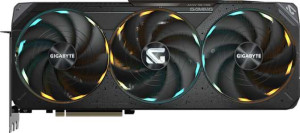
Gigabyte GeForce RTX 5080 Gaming OC
MSI GeForce RTX 5080 Ventus 3X White
VS
Intel Arc B570
Intel Arc B570
MSI GeForce RTX 5080 Ventus 3X White
VS
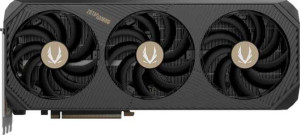
Zotac Gaming GeForce RTX 5080 Solid
MSI GeForce RTX 5080 Ventus 3X White
VS
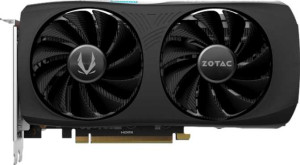
Zotac Gaming GeForce RTX 4070 Super Twin Edge