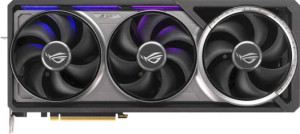
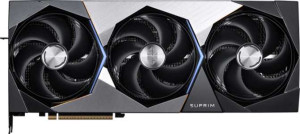
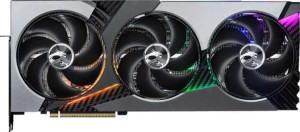
MSI GeForce RTX 5090 Suprim OC specifications and in-depth review

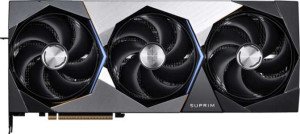
MSI GeForce RTX 5090 Suprim OC

Manufacturer: MSI

The MSI GeForce RTX 5090 Suprim OC is a high-end graphics card from MSI based on NVIDIA's Blackwell architecture, manufactured on a 5 nm process with 92,200 million transistors. It ships with 32GB of GDDR7 memory across a 512-bit bus, delivering a maximum memory bandwidth of 1,790 GB/s and an effective memory speed of 28,000 MHz. The card supports up to four displays simultaneously and includes RGB lighting, making it a visually distinctive addition to a build.

On the performance side, the RTX 5090 Suprim OC runs at a base GPU clock of 2,017 MHz with a turbo frequency of 2,482 MHz, yielding a floating-point throughput of 108 TFLOPS and a texture rate of 1,688 GTexels/s. Its 21,760 shading units are complemented by 680 texture mapping units and 176 render output units. The card carries a thermal design power of 575W, connects via PCIe 5.0, and offers a display output configuration of one HDMI 2.1b port alongside three DisplayPort outputs. It also supports ray tracing, DLSS, DirectX 12 Ultimate, OpenGL 4.6, and Intel Resizable BAR, with ECC memory support included as well.

Pros
  • A 512-bit memory bus paired with 32GB of GDDR7 VRAM delivers substantial memory capacity suited to memory-intensive workloads
  • Support for ray tracing and DLSS broadens rendering and upscaling capabilities within compatible applications
  • Four simultaneous display outputs via one HDMI 2.1b port and three DisplayPort connections offers flexible multi-monitor setups
  • ECC memory support adds a layer of data integrity useful in compute-oriented tasks
  • Double Precision Floating Point (DPFP) support extends the card's usefulness beyond standard graphics rendering
  • Intel Resizable BAR support allows the CPU broader access to GPU memory, which can improve data transfer efficiency
Cons
  • A TDP of 575W places significant demands on system power delivery and cooling infrastructure
  • The card measures 359 mm in length, which may not fit in smaller or mid-tower chassis without careful planning
  • Air-water cooling is not included, leaving thermal management entirely dependent on the bundled air cooler
  • No USB-C output is available, limiting direct connectivity options for displays or devices that rely on that interface
  • XeSS (XMX) is not supported, restricting upscaling options to DLSS exclusively
Who is this for?

This card is well matched to users who run compute-intensive or professional workloads that benefit from Double Precision Floating Point support and ECC memory, such as scientific simulations or data processing tasks. The 32GB of GDDR7 memory across a 512-bit bus also makes it a strong fit for those working with large rendering scenes, high-resolution textures, or machine learning workflows where memory capacity and bandwidth are critical. Additionally, users looking to drive up to four displays simultaneously with modern connectivity through HDMI 2.1b and DisplayPort outputs will find the port configuration well suited to expansive multi-monitor setups.

Who is this NOT for?

The card's 575W TDP makes it poorly suited to users with limited power supply headroom or those operating in thermally constrained environments, as the demands on both power delivery and case airflow are substantial. Its 359 mm length also rules it out for compact or small form-factor builds where physical clearance inside the chassis is restricted. Users who rely on USB-C display output or require XeSS upscaling support will find those capabilities absent, making this card a poor match for workflows or display configurations that depend on either feature.

Performance:

GPU clock speed 2017 MHz
GPU turbo 2482 MHz
pixel rate 436.8 GPixel/s
floating-point performance 108 TFLOPS
texture rate 1688 GTexels/s
GPU memory speed 1750 MHz
shading units 21760
texture mapping units (TMUs) 680
render output units (ROPs) 176
Has Double Precision Floating Point (DPFP)

The Performance section of this card centers on a base GPU clock of 2,017 MHz that boosts up to 2,482 MHz in turbo mode, driving a floating-point throughput of 108 TFLOPS alongside a pixel rate of 436.8 GPixel/s and a texture rate of 1,688 GTexels/s. Underpinning these figures are 21,760 shading units, 680 texture mapping units, and 176 render output units, with a GPU memory speed of 1,750 MHz contributing to overall data throughput. The card also supports Double Precision Floating Point (DPFP), broadening its suitability for compute-oriented workloads beyond standard rendering tasks.

Memory:

effective memory speed 28000 MHz
maximum memory bandwidth 1790 GB/s
VRAM 32GB
GDDR version GDDR7
memory bus width 512-bit
Supports ECC memory

This card is equipped with 32GB of GDDR7 memory running across a 512-bit bus, achieving an effective memory speed of 28,000 MHz and a maximum memory bandwidth of 1,790 GB/s. The wide bus width and high-speed memory work together to sustain substantial data throughput across demanding workloads. ECC memory support is also included, adding a layer of data integrity protection relevant to compute and professional use cases.

Features:

DirectX version DirectX 12 Ultimate
OpenGL version 4.6
OpenCL version 3
Supports multi-display technology
supports ray tracing
Supports 3D
supports DLSS
has XeSS (XMX)
AMD SAM / Intel Resizable BAR Intel Resizable BAR
has LHR
has RGB lighting
supported displays 4

The card supports DirectX 12 Ultimate, OpenGL 4.6, and OpenCL 3, covering a broad range of graphics and compute APIs. Ray tracing and DLSS are both supported, while XeSS (XMX) is not present on this card. It is compatible with Intel Resizable BAR and does not include Lite Hash Rate (LHR) restrictions. Multi-display technology is supported across up to four displays simultaneously, stereoscopic 3D is also available, and RGB lighting is built in. It does not feature AMD SAM beyond the listed Intel Resizable BAR implementation.

Ports:

has an HDMI output
HDMI ports 1
HDMI version HDMI 2.1b
DisplayPort outputs 3
USB-C ports 0
DVI outputs 0
mini DisplayPort outputs 0

The card's output configuration consists of one HDMI 2.1b port and three DisplayPort outputs, providing a total of four display connections. There are no USB-C, DVI, or mini DisplayPort outputs present on this card.

General info:

GPU architecture Blackwell
Thermal Design Power (TDP) 575W
PCI Express (PCIe) version 5
semiconductor size 5 nm
number of transistors 92200 million
Has air-water cooling
width 359 mm
height 150 mm

Built on the Blackwell architecture and fabricated at a 5 nm process node, this card integrates 92,200 million transistors and connects to the host system via PCIe 5.0. It carries a Thermal Design Power of 575W and does not include an air-water cooling solution. The card measures 359 mm in width and 150 mm in height, giving a clear sense of its physical footprint within a system.
Final Verdict

The MSI GeForce RTX 5090 Suprim OC is a graphics card built around a demanding technical specification sheet, anchored by its 32GB of GDDR7 memory on a 512-bit bus and a floating-point throughput of 108 TFLOPS. These figures, combined with DPFP and ECC memory support, position it toward users with serious rendering, compute, or multi-display needs rather than general consumer use. Its physical size and 575W power requirement mean it demands a well-equipped system to operate as intended, and prospective users should plan accordingly. For those whose workloads and hardware can accommodate it, the RTX 5090 Suprim OC delivers a technically comprehensive feature set that covers modern graphics APIs, ray tracing, DLSS, and broad display connectivity in a single card.

Popular Comparisons

MSI GeForce RTX 5090 Suprim OC
VS
Asus TUF Gaming GeForce RTX 5090
MSI GeForce RTX 5090 Suprim OC
VS
Asus ROG Astral GeForce RTX 5090 OC Edition
MSI GeForce RTX 5090 Suprim OC
VS
MSI GeForce RTX 5090 Suprim SOC
MSI GeForce RTX 5090 Suprim OC
VS
MSI GeForce RTX 5090 Vanguard OC