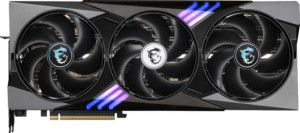
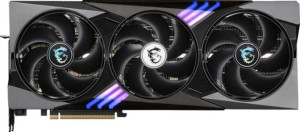
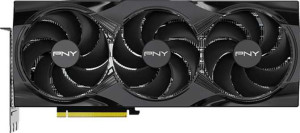
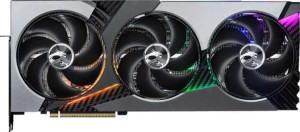
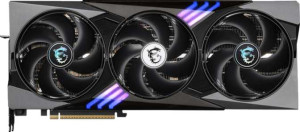
MSI GeForce RTX 5090 Suprim SOC specifications and in-depth review

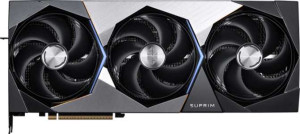
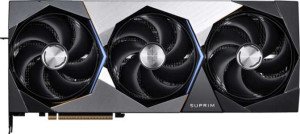
MSI GeForce RTX 5090 Suprim SOC

Manufacturer: MSI

The MSI GeForce RTX 5090 Suprim SOC is a high-end graphics card from MSI based on NVIDIA's Blackwell architecture, fabricated on a 5 nm process with 92,200 million transistors. It carries a base GPU clock of 2017 MHz with a boost ceiling of 2565 MHz, and supports ray tracing, DLSS, and DirectX 12 Ultimate out of the box. RGB lighting and multi-display support for up to four screens round out its feature set.

On the memory side, the card is equipped with 32GB of GDDR7 VRAM running across a 512-bit bus at an effective speed of 28,000 MHz, yielding a maximum bandwidth of 1790 GB/s. Its 21,760 shading units, 680 texture mapping units, and 176 render output units contribute to a texture rate of 1744 GTexels/s and a pixel rate of 451.4 GPixel/s. The card has a TDP of 575W, connects via PCIe 5.0, and outputs through one HDMI 2.1b port and three DisplayPort connections, measuring 359 mm in length and 150 mm in height.

Pros
  • With 32GB of GDDR7 VRAM running across a 512-bit bus, the card handles large memory workloads and high-resolution textures without hitting capacity limits quickly
  • A maximum memory bandwidth of 1790 GB/s ensures data moves between the GPU and its memory pool at a very high throughput
  • Support for ray tracing and DLSS together allows for hardware-accelerated lighting effects alongside AI-driven rendering optimizations
  • ECC memory support makes the card suitable for workloads where memory error correction is a practical requirement
  • The four-display output configuration, combining one HDMI 2.1b port and three DisplayPort connections, gives meaningful flexibility for multi-monitor setups
  • RGB lighting is included for users who want visual customization of their build
Cons
  • A TDP of 575W places significant demands on the power supply and system cooling infrastructure
  • At 359 mm in length, the card requires a large chassis with sufficient clearance, limiting compatibility with smaller form-factor cases
  • Air-water cooling is not supported, so users are limited to the card's built-in cooling solution without hybrid cooling options
  • There are no USB-C or DVI outputs, which restricts connectivity for users relying on those display interfaces
  • XeSS (XMX) is not supported, narrowing the upscaling options available compared to cards that offer multiple upscaling technologies
Who is this for?

This card is well-suited to users who work with demanding compute and rendering workloads, given its 111.6 TFLOPS of floating-point performance, ECC memory support, and Double Precision Floating Point capability. Content creators, 3D artists, and engineers running simulation or data-processing tasks will find the 32GB GDDR7 VRAM and 1790 GB/s memory bandwidth genuinely useful at scale. It also fits users who want a multi-monitor setup of up to four displays, with ray tracing and DLSS support making it equally relevant for high-fidelity visual work and GPU-accelerated rendering pipelines.

Who is this NOT for?

The 575W TDP and 359 mm card length make this a poor fit for anyone building in a compact or small form-factor case, as clearance and power delivery requirements will be difficult to meet in tighter enclosures. Users without a large, high-capacity power supply unit will also struggle to accommodate the card's demands reliably. Additionally, anyone who depends on USB-C display outputs or DVI connectivity will find the port selection restrictive, and the absence of air-water cooling support means there is no path to hybrid thermal solutions for users operating in thermally constrained environments.

Performance:

GPU clock speed 2017 MHz
GPU turbo 2565 MHz
pixel rate 451.4 GPixel/s
floating-point performance 111.6 TFLOPS
texture rate 1744 GTexels/s
GPU memory speed 1750 MHz
shading units 21760
texture mapping units (TMUs) 680
render output units (ROPs) 176
Has Double Precision Floating Point (DPFP)

The MSI GeForce RTX 5090 Suprim SOC operates at a base GPU clock of 2017 MHz, rising to 2565 MHz in turbo mode, while its GPU memory runs at 1750 MHz. With 21,760 shading units, 680 texture mapping units, and 176 render output units, the card delivers a texture rate of 1744 GTexels/s and a pixel rate of 451.4 GPixel/s. Floating-point performance reaches 111.6 TFLOPS, and the GPU also supports Double Precision Floating Point (DPFP), making it capable of handling workloads that require high numerical accuracy.

Memory:

effective memory speed 28000 MHz
maximum memory bandwidth 1790 GB/s
VRAM 32GB
GDDR version GDDR7
memory bus width 512-bit
Supports ECC memory

The card is equipped with 32GB of GDDR7 VRAM running across a 512-bit memory bus, with an effective memory speed of 28,000 MHz that translates to a maximum bandwidth of 1790 GB/s. ECC memory support is also included, allowing the GPU to detect and correct memory errors when accuracy is a priority.

Features:

DirectX version DirectX 12 Ultimate
OpenGL version 4.6
OpenCL version 3
Supports multi-display technology
supports ray tracing
Supports 3D
supports DLSS
has XeSS (XMX)
AMD SAM / Intel Resizable BAR Intel Resizable BAR
has LHR
has RGB lighting
supported displays 4

On the software and API side, the card supports DirectX 12 Ultimate, OpenGL 4.6, and OpenCL 3, covering a broad range of graphics and compute workloads. Ray tracing and DLSS are both supported, alongside stereoscopic 3D and multi-display technology spanning up to four screens simultaneously. Intel Resizable BAR is included, while XeSS (XMX) and LHR are not part of this card's feature set. RGB lighting is built in, rounding out the hardware extras on offer.

Ports:

has an HDMI output
HDMI ports 1
HDMI version HDMI 2.1b
DisplayPort outputs 3
USB-C ports 0
DVI outputs 0
mini DisplayPort outputs 0

The card's output configuration consists of one HDMI 2.1b port and three DisplayPort outputs, providing a total of four display connections. There are no USB-C, DVI, or mini DisplayPort outputs present on this model.

General info:

GPU architecture Blackwell
Thermal Design Power (TDP) 575W
PCI Express (PCIe) version 5
semiconductor size 5 nm
number of transistors 92200 million
Has air-water cooling
width 359 mm
height 150 mm

The MSI GeForce RTX 5090 Suprim SOC is built on the Blackwell architecture, using a 5 nm manufacturing process and housing 92,200 million transistors. It connects to the host system via PCIe 5.0 and carries a Thermal Design Power (TDP) of 575W. The card does not feature air-water cooling, and its physical footprint measures 359 mm in width and 150 mm in height.
Final Verdict

The MSI GeForce RTX 5090 Suprim SOC is a graphics card built around a clear set of priorities: raw throughput, large memory capacity, and broad feature support. Its 32GB of GDDR7 VRAM paired with 1790 GB/s of memory bandwidth positions it firmly toward users running workloads that genuinely stress both capacity and speed, from high-resolution rendering to compute-intensive tasks requiring ECC reliability. The physical footprint and 575W power requirement do narrow its compatibility, and prospective buyers will need a suitably large chassis and robust power infrastructure to deploy it properly. For those whose systems and workflows align with those demands, the Suprim SOC delivers a specification set that leaves little unaddressed in its category.

Popular Comparisons

MSI GeForce RTX 5090 Suprim SOC
VS
MSI GeForce RTX 5090 Suprim OC
MSI GeForce RTX 5090 Suprim SOC
VS
MSI GeForce RTX 5090 Gaming Trio
MSI GeForce RTX 5090 Suprim SOC
VS
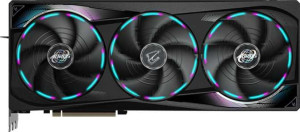
Gigabyte Aorus GeForce RTX 5090 Master
MSI GeForce RTX 5090 Suprim SOC
VS
MSI GeForce RTX 5090 Gaming Trio OC
MSI GeForce RTX 5090 Suprim SOC
VS
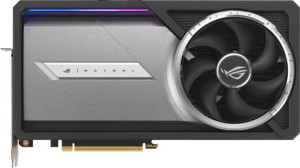
Asus ROG Astral LC GeForce RTX 5090 OC Edition
MSI GeForce RTX 5090 Suprim SOC
VS
MSI GeForce RTX 5090 Suprim Liquid SOC
MSI GeForce RTX 5090 Suprim SOC
VS
Gigabyte Aorus GeForce RTX 5090 Master Ice
MSI GeForce RTX 5090 Suprim SOC
VS
Asus ROG Astral GeForce RTX 5090
MSI GeForce RTX 5090 Suprim SOC
VS
Gigabyte Aorus GeForce RTX 5090 Xtreme WaterForce
MSI GeForce RTX 5090 Suprim SOC
VS
PNY GeForce RTX 5090 Triple Fan
MSI GeForce RTX 5090 Suprim SOC
VS
MSI GeForce RTX 5090 Vanguard OC
MSI GeForce RTX 5090 Suprim SOC
VS
MSI GeForce RTX 5090 Ventus 3X OC
MSI GeForce RTX 5090 Suprim SOC
VS
MSI GeForce RTX 5090 Vanguard SOC