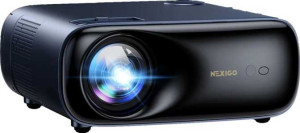
The NexiGo PJ40 Ultra uses a conventional lamp light source rather than a laser, with a rated lamp life of 30,000 hours in eco mode, offering extended usability before a replacement is needed. It draws 160W during operation, which is typical for a lamp-based projector at this output level. Physically, the unit measures 287 mm wide, 273 mm deep, and 121 mm tall, resulting in a total volume of approximately 9,480 cm³ — a moderately compact form factor that allows for flexible placement in most room setups.
The PJ40 Ultra projects at a native 1080p resolution with 800 ANSI lumens of brightness and a 3000:1 contrast ratio, delivering a reasonably defined image across a wide range of screen sizes up to 300″. The minimum throw distance starts at 1.4 m, and focus is handled manually — neither motorized focus nor motorized zoom are available. Image depth is rendered at 8-bit, and the projector supports HDR10, HDR10+, and HLG, ensuring compatibility with the most common high dynamic range formats found on modern content sources. 3D content can also be displayed when used with compatible glasses.
The PJ40 Ultra offers a well-rounded set of wired and wireless connectivity options. On the physical side, it includes two HDMI ports, two USB ports, and one RJ45 ethernet port, while VGA, DVI, and S/PDIF outputs are absent. Wireless connectivity covers Wi-Fi, Bluetooth, AirPlay, Chromecast built-in, and Miracast, allowing content to be cast or mirrored from a broad range of devices without cables. The projector is also DLNA-certified, enabling media sharing from compatible devices on the same network.
The PJ40 Ultra includes built-in smart TV functionality and comes with a remote control for straightforward navigation. Audio is handled by an integrated stereo speaker system rated at 2 x 10W, though there is no 3.5 mm headphone jack, no audio input ports, and no Dolby Atmos support, so audio routing options are limited. There is no external memory slot for local storage expansion. On the optical side, neither vertical nor horizontal lens shift is available, meaning image positioning relies entirely on physical placement of the unit.