Nikon Z50 II specifications and in-depth review

Nikon Z50 II

Manufacturer: Nikon

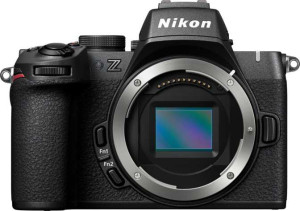
The Nikon Z50 II is a mirrorless camera built around an APS-C sensor and the Nikon Z lens mount, making it a capable system camera for photographers who want access to a wide range of native optics. It features a flip-out touchscreen measuring 3.2″ with a resolution of 1040k dots, an electronic viewfinder with 100% coverage, and a built-in flash alongside a hot shoe for external units. At 550 g, the body is moderately compact, with dimensions of 127 × 96.8 × 66.5 mm.

Imaging performance centers on a 20.9 MP CMOS sensor paired with an Expeed 7 processor, offering a native maximum ISO of 51200 and an expanded ceiling of 204800. The autofocus system covers 231 focus points with phase-detection support for both photos and video, along with AF tracking and touch autofocus. Continuous shooting reaches 11 fps, and video capture extends to 2160p at 60 fps with phase-detection autofocus active during recording. Audio connections include a 3.5 mm microphone input and a stereo two-microphone array, while connectivity options cover Wi-Fi 5, Bluetooth 5, HDMI output, and USB Type-C.

Pros
  • The flip-out touchscreen with 100% EVF coverage gives flexible shooting options for a range of angles and compositions
  • Phase-detection autofocus with 231 focus points, AF tracking, and touch autofocus works across both photos and video
  • 4K 60fps video recording is supported alongside a 24p cinema mode, slow-motion, and continuous autofocus during recording
  • A 3.5 mm microphone input and built-in stereo microphone with two capsules provide solid audio flexibility for video work
  • Wi-Fi 5 and Bluetooth 5 enable wireless connectivity and smartphone remote control without additional accessories
  • Raw file capture and full manual control over exposure, shutter speed, ISO, and white balance give detailed control over image output
Cons
  • No sensor-shift image stabilization, leaving the camera reliant on lens-based or digital stabilization
  • Battery life is rated at only 250 shots per charge, which may require carrying a spare for extended shooting sessions
  • The body is not weather-sealed, limiting usability in rain or dusty environments
  • Only a single memory card slot is available, with no backup or overflow option
  • GPS and NFC are absent, removing location tagging and tap-to-connect functionality
  • No first-party live streaming support is included
Who is this for?

The Z50 II suits photographers and video creators who want a capable mirrorless body within the Nikon Z ecosystem, particularly those who value flexible shooting with a flip-out touchscreen and reliable autofocus across both stills and video. The 4K 60fps recording, continuous phase-detection AF, 3.5 mm microphone input, and 24p cinema mode make it a practical choice for content creators and vloggers who need solid video functionality without dedicated cinema hardware. Shooters who work primarily in controlled or indoor environments will also find the feature set — including full manual controls, raw capture, and 11 fps burst shooting — well matched to studio, event, or casual outdoor use where weather protection is not a concern.

Who is this NOT for?

Users who shoot frequently in rain, dust, or harsh outdoor conditions will find the lack of weather sealing a significant limitation, as the body offers no splash or dust resistance. The 250-shot battery life makes the camera a poor fit for long events, travel days, or extended shooting sessions where recharging or swapping batteries frequently is impractical. Additionally, photographers who rely on in-body image stabilization for handheld low-light shooting or telephoto work will be hindered by the absence of sensor-shift stabilization, and professionals requiring a dual card slot setup for redundancy or overflow will find the single-slot configuration insufficient for critical assignments.

Design:

Type Mirrorless
viewfinder Electronic viewfinder (EVF)
is weather-sealed (splashproof)
screen resolution 1040k dots
Has a flip-out screen
viewfinder coverage 100%
screen size 3.2"
weight 550 g
has a touch screen
Has a hot shoe
volume 817.5244 cm³
is a system camera
has a flash
lowest potential operating temperature 0 °C
maximum operating temperature 40 °C
Has a tilting viewfinder
width 127 mm
height 96.8 mm
thickness 66.5 mm

The Nikon Z50 II is a mirrorless system camera equipped with an electronic viewfinder offering 100% coverage and a 3.2″ touchscreen with 1040k dots of resolution that flips out for flexible framing. The body measures 127 × 96.8 × 66.5 mm with a volume of 817.5244 cm³ and weighs 550 g, and it includes both a built-in flash and a hot shoe for external flash units. It is not weather-sealed and lacks a tilting viewfinder. Operating temperatures range from 0 °C to 40 °C, and as a system camera it is designed to work with a broader ecosystem of compatible lenses and accessories.

Optics:

sensor size APS-C
lens mount Nikon Z
focus points 231
megapixels (main camera) 20.9 MP
maximum ISO 51200 ISO
maximum expanded ISO 204800 ISO
has sensor shift stabilization
continuous shooting (mechanical) 11 fps
has AF tracking
Has phase-detection autofocus for photos
fastest shutter speed 0.00025 s
has manual focus
has touch autofocus
has manual shutter speed
has a built-in HDR mode
has manual exposure
has a two-stage shutter
has a serial shot mode
has a CMOS sensor
has manual ISO
flash sync speed 0.004 s
has manual white balance
exposure time 30 s
Maximum electronic shutter speed 0.00025 s
has a stacked CMOS sensor

The Z50 II uses an APS-C CMOS sensor — not a stacked variant — with a resolution of 20.9 MP and a Nikon Z lens mount. Sensitivity runs natively to 51200 ISO and can be expanded to 204800 ISO, while exposure times extend up to 30 s with full manual control over shutter speed, ISO, and white balance. The autofocus system spans 231 focus points with phase-detection support for photos, AF tracking, and touch autofocus, though sensor-shift image stabilization is not included. Both mechanical and electronic shutter top out at 0.00025 s, the flash sync speed is 0.004 s, and continuous shooting reaches 11 fps in burst mode via the two-stage shutter. Additional shooting options include manual focus, HDR mode, and a serial shot mode.

Videography:

video recording (main camera) 2160 x 60 fps
Has phase-detection autofocus for videos
has continuous autofocus when recording movies
has a microphone input
has a socket for a 3.5 mm audio jack
has a stereo microphone
number of microphones 2
has a 24p cinema mode
supports slow-motion video recording

The Z50 II records video at up to 2160p at 60 fps and includes a 24p cinema mode alongside slow-motion recording support. Autofocus during video is handled by a phase-detection system with continuous AF active throughout recording. For audio, the camera features a built-in stereo microphone with two microphone capsules, a 3.5 mm jack for connecting an external microphone, and a dedicated microphone input.

Battery:

Battery life (CIPA) 250 shots
has a removable battery
has a rechargeable battery
has a battery level indicator
battery power 1250 mAh

The Z50 II is powered by a removable, rechargeable battery rated at 1250 mAh, with a CIPA-rated battery life of 250 shots per charge. A battery level indicator is built in, allowing users to monitor remaining power during use.

Features:

processor Expeed 7
supports Wi-Fi
Has Bluetooth
Has dual card slots
shoots raw
Wi-Fi version Wi-Fi 5 (802.11ac), Wi-Fi 4 (802.11n)
supports a remote smartphone
has an HDMI output
has GPS
has first-party support for live streaming
has an advanced hot shoe
has NFC
has an external memory slot
Has USB Type-C
Bluetooth version 5

The Z50 II runs on an Expeed 7 processor and supports raw file capture alongside an external memory slot for storage. Wireless connectivity covers Wi-Fi 5 (802.11ac) and Wi-Fi 4 (802.11n) as well as Bluetooth 5, with smartphone remote control available through the latter. Physical connections include a USB Type-C port and an HDMI output, while the hot shoe is a standard rather than advanced variant. The camera does not offer dual card slots, NFC, GPS, or first-party live streaming support.
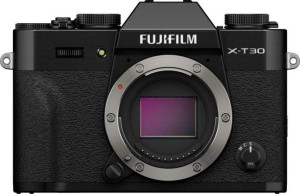
Final Verdict

The Nikon Z50 II is a well-rounded APS-C mirrorless camera that delivers a strong combination of stills and video capabilities within the Nikon Z ecosystem. Its 20.9 MP sensor, phase-detection autofocus across 231 points, and 4K 60fps video recording with continuous AF make it a genuinely versatile tool for photographers and content creators who need reliable performance across a range of shooting scenarios. The flip-out touchscreen, full manual controls, raw capture, and solid wireless connectivity round out a feature set that covers most everyday creative needs. That said, the absence of weather sealing, in-body stabilization, and a dual card slot means it is best suited to users working in predictable conditions rather than demanding professional environments. For those whose requirements align with its strengths, the Z50 II represents a capable and practical entry into the Nikon Z mirrorless lineup.

Popular Comparisons

Nikon Z50 II
Nikon Z50 II
VS
Fujifilm X-T30 III
Fujifilm X-T30 III
Nikon Z50 II
Nikon Z50 II
VS
Nikon Z5 II
Nikon Z5 II
Nikon Z50 II
Nikon Z50 II
VS
Fujifilm X100VI
Fujifilm X100VI
Nikon Z50 II
Nikon Z50 II
VS
Panasonic Lumix S9
Panasonic Lumix S9