Nvidia GeForce RTX 4090 D specifications and in-depth review

Nvidia GeForce RTX 4090 D

Manufacturer: Nvidia

The Nvidia GeForce RTX 4090 D is a high-specification graphics card based on the Ada Lovelace architecture, fabricated on a 5 nm process and packed with 76,300 million transistors. It carries 24GB of GDDR6X VRAM across a 384-bit memory bus, delivering a maximum memory bandwidth of 1010 GB/s — figures that reflect a card designed for demanding rendering workloads and high-resolution output. It supports up to four displays simultaneously and includes ECC memory support for workloads where data integrity matters.

On the performance side, the RTX 4090 D runs a base GPU clock of 2280 MHz with a turbo frequency of 2520 MHz, producing 73.54 TFLOPS of floating-point performance alongside a pixel rate of 443.5 GPixels/s and a texture rate of 1149.1 GTexels/s. The card features 14,592 shading units, 456 texture mapping units, and 176 render output units. It supports DirectX 12 Ultimate, OpenGL 4.6, OpenCL 3, ray tracing, DLSS, stereoscopic 3D, and Intel Resizable BAR. Connectivity is handled through one HDMI 2.1 port and three DisplayPort outputs, with no USB-C or DVI outputs. The card has a TDP of 425W and uses PCIe 4.0, measuring 304 × 137 mm in physical dimensions.

Pros
  • 73.54 TFLOPS of floating-point performance combined with 14,592 shading units points to substantial compute throughput for rendering and workstation tasks
  • 24GB of GDDR6X VRAM on a 384-bit bus with 1010 GB/s memory bandwidth supports memory-intensive workloads at high resolutions
  • ECC memory support makes the card viable for professional and compute workloads where data accuracy is critical
  • Double Precision Floating Point (DPFP) support extends usability to scientific and numerical computing applications
  • Hardware ray tracing and DLSS support are both present, enabling advanced rendering techniques in compatible workloads
  • Support for up to four simultaneous displays with three DisplayPort and one HDMI 2.1 output provides flexible multi-monitor configurations
Cons
  • A 425W TDP places significant demands on system power delivery and case cooling infrastructure
  • The card does not include a built-in air-water cooling solution, leaving thermal management entirely dependent on the board's bundled cooler
  • No USB-C output is available, limiting direct connectivity options for displays or devices that rely on that port type
  • The physical size of 304 x 137 mm may create compatibility issues in smaller or mid-tower cases
Who is this for?

The Nvidia GeForce RTX 4090 D is well suited to users running demanding rendering, 3D visualization, or GPU compute workloads that benefit from 24GB of GDDR6X VRAM and over 1 TB/s of memory bandwidth. The presence of DPFP support and ECC memory also makes it a practical fit for scientific computing and workstation applications where numerical precision and memory integrity are requirements. Users who need to drive up to four high-resolution displays simultaneously through a mix of DisplayPort and HDMI 2.1 outputs will also find the connectivity well suited to multi-monitor setups.

Who is this NOT for?

Users working within systems that have constrained power delivery or limited airflow will struggle with the card's 425W TDP, which demands a well-specced power supply and case with adequate thermal headroom. The physical dimensions of 304 × 137 mm may also create compatibility issues in compact or mid-tower cases where GPU clearance is tight. Additionally, users who rely on USB-C display connectivity will find the port selection restrictive, as no USB-C output is available on this card.

Performance:

GPU clock speed 2280 MHz
GPU turbo 2520 MHz
pixel rate 443.5 GPixel/s
floating-point performance 73.54 TFLOPS
texture rate 1149.1 GTexels/s
GPU memory speed 1313 MHz
shading units 14592
texture mapping units (TMUs) 456
render output units (ROPs) 176
Has Double Precision Floating Point (DPFP)

The GPU runs at a base clock of 2280 MHz, boosting up to a turbo frequency of 2520 MHz, and delivers 73.54 TFLOPS of floating-point performance alongside a pixel rate of 443.5 GPixels/s and a texture rate of 1149.1 GTexels/s. It is equipped with 14,592 shading units, 456 texture mapping units, and 176 render output units, with a GPU memory speed of 1313 MHz rounding out the internal throughput figures. Double Precision Floating Point (DPFP) is supported, extending the card's suitability to workloads that require high-accuracy numerical computation.

Memory:

effective memory speed 21000 MHz
maximum memory bandwidth 1010 GB/s
VRAM 24GB
GDDR version GDDR6X
memory bus width 384-bit
Supports ECC memory

The card is equipped with 24GB of GDDR6X VRAM running at an effective memory speed of 21000 MHz across a 384-bit memory bus, resulting in a maximum memory bandwidth of 1010 GB/s. ECC memory is supported, making the card suitable for workloads where memory error correction is a requirement.

Features:

DirectX version DirectX 12 Ultimate
OpenGL version 4.6
OpenCL version 3
Supports multi-display technology
supports ray tracing
Supports 3D
supports DLSS
has XeSS (XMX)
AMD SAM / Intel Resizable BAR Intel Resizable BAR
has LHR
has RGB lighting
supported displays 4

The card supports DirectX 12 Ultimate, OpenGL 4.6, and OpenCL 3, covering a broad range of rendering and compute workloads. Hardware-accelerated ray tracing and DLSS are both supported, along with stereoscopic 3D and multi-display output across up to four screens simultaneously. Intel Resizable BAR is enabled for improved CPU-to-GPU data access, while XeSS and LHR are not present. The card does not include RGB lighting.

Ports:

has an HDMI output
HDMI ports 1
HDMI version HDMI 2.1
DisplayPort outputs 3
USB-C ports 0
DVI outputs 0
mini DisplayPort outputs 0

The card offers a total of four display outputs, consisting of three DisplayPort connectors and one HDMI 2.1 port. There are no USB-C, DVI, or mini DisplayPort outputs present on this configuration.

General info:

GPU architecture Ada Lovelace
Thermal Design Power (TDP) 425W
PCI Express (PCIe) version 4
semiconductor size 5 nm
number of transistors 76300 million
Has air-water cooling
width 304 mm
height 137 mm

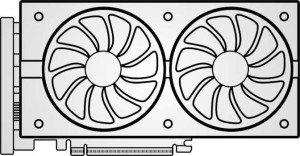
Built on the Ada Lovelace architecture using a 5 nm manufacturing process, the GPU integrates 76,300 million transistors and connects via PCIe 4.0. It carries a Thermal Design Power of 425W, reflecting the substantial power draw associated with this level of silicon density. The card measures 304 × 137 mm and does not include a built-in air-water cooling solution, relying instead on the cooler configuration of the specific board design.
Final Verdict

The Nvidia GeForce RTX 4090 D is a specification-dense graphics card built for users whose workloads genuinely push the boundaries of GPU memory, compute throughput, and rendering capability. Its 24GB of GDDR6X VRAM paired with 1010 GB/s of memory bandwidth makes it a credible tool for high-resolution rendering, GPU compute, and professional visualization work, while ECC memory and DPFP support extend its reach into workstation and scientific applications. The 425W TDP and large physical footprint mean it demands a carefully matched system build, and the absence of USB-C output is a minor but real limitation for some users. For those with the infrastructure to support it, the RTX 4090 D represents one of the most fully specified consumer-grade graphics cards available within its architecture generation.